
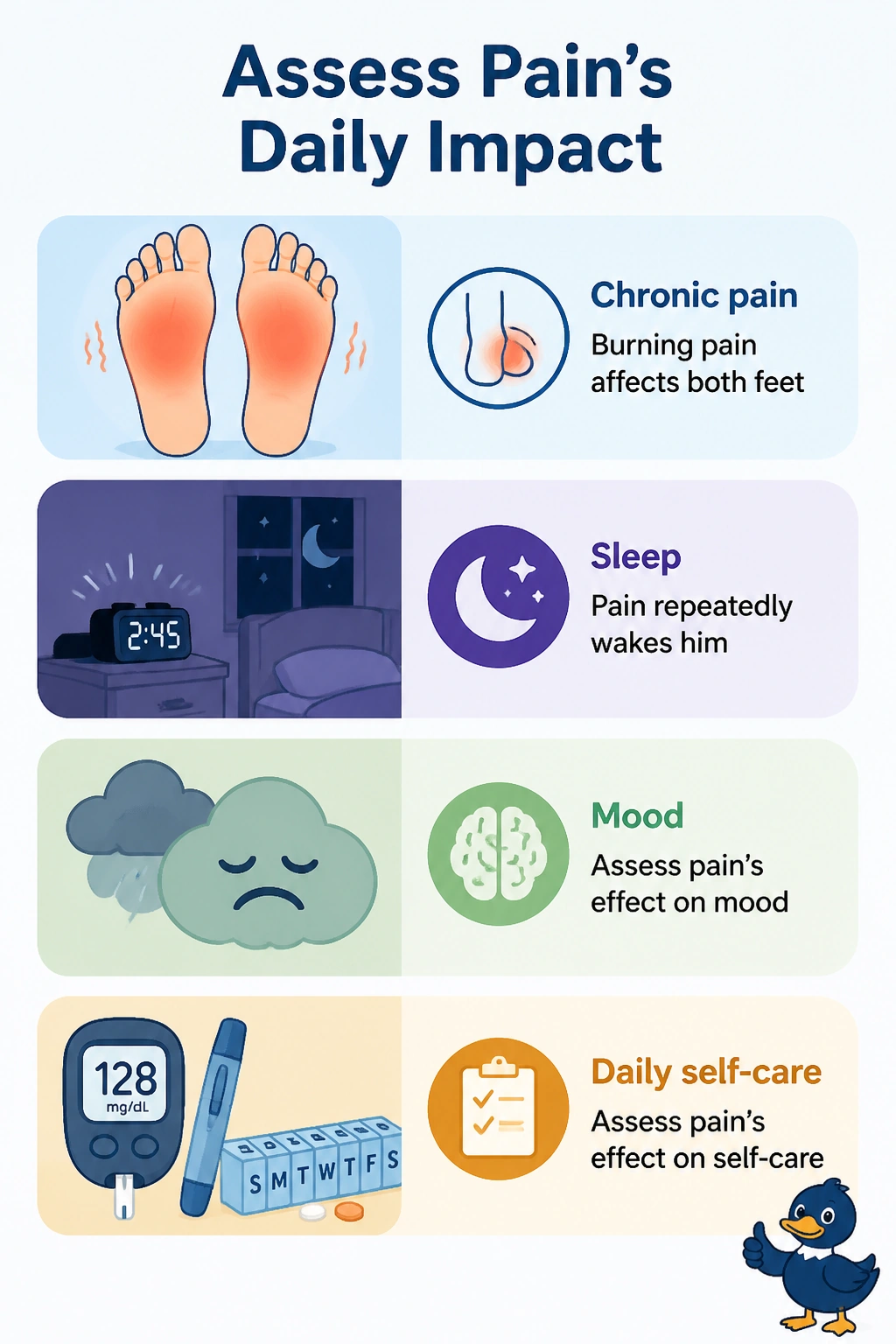
During a comprehensive diabetes assessment, a 63-year-old man with longstanding type 2 diabetes reports burning pain in both feet every night that wakes him repeatedly. Which follow-up assessment priority should the diabetes care and education specialist address next?
Select an answer to reveal the explanation.
Short Explanation
Nighttime nerve pain is like an alarm clock that never turns off, draining energy for everything the next day. The trap is treating foot pain in isolation, so you need to assess how it spills over into sleep, mood, and daily self-management.
Full Explanation
Painful diabetic peripheral neuropathy frequently worsens at night and can severely fragment sleep, worsen depressive symptoms, and undermine energy for medication adherence, meal planning, and physical activity. Prioritizing "Evaluating how chronic pain disrupts his sleep, mood, and daily self-care" captures the biopsychosocial impact needed to guide referrals and realistic goal setting. Choosing "Assess footwear preferences before asking how pain affects sleep and daily function." reverses priorities because footwear assessment is useful but secondary to understanding how pain impairs function and self-management. Selecting "Focus only on monofilament sensation without assessing pain-related distress." is incomplete because monofilament testing evaluates loss of protective sensation, not the severity and distress of painful symptoms. Choosing "Repeat nutrition education before exploring the pain’s effect on self-care." misses the immediate barrier, since unaddressed pain and sleep loss will undermine any nutrition plan. As a caveat, non-diabetes causes of neuropathy such as vitamin B12 deficiency should also be considered in collaboration with the prescribing clinician. For an operational check, document the pain pattern, sleep disruption, and mood screening results and communicate them to the primary care team.
Prefer to study offline? Printable PDF study book + test engine ($7.50, unofficial). These questions stay free here.