
During an outpatient assessment, an 82-year-old woman with type 2 diabetes reports unintentional weight loss of 10 pounds over six months, slower walking speed, and difficulty rising from a chair without using her arms. Which clinical factor should the diabetes care and education specialist prioritize in the assessment?
Select an answer to reveal the explanation.
Short Explanation
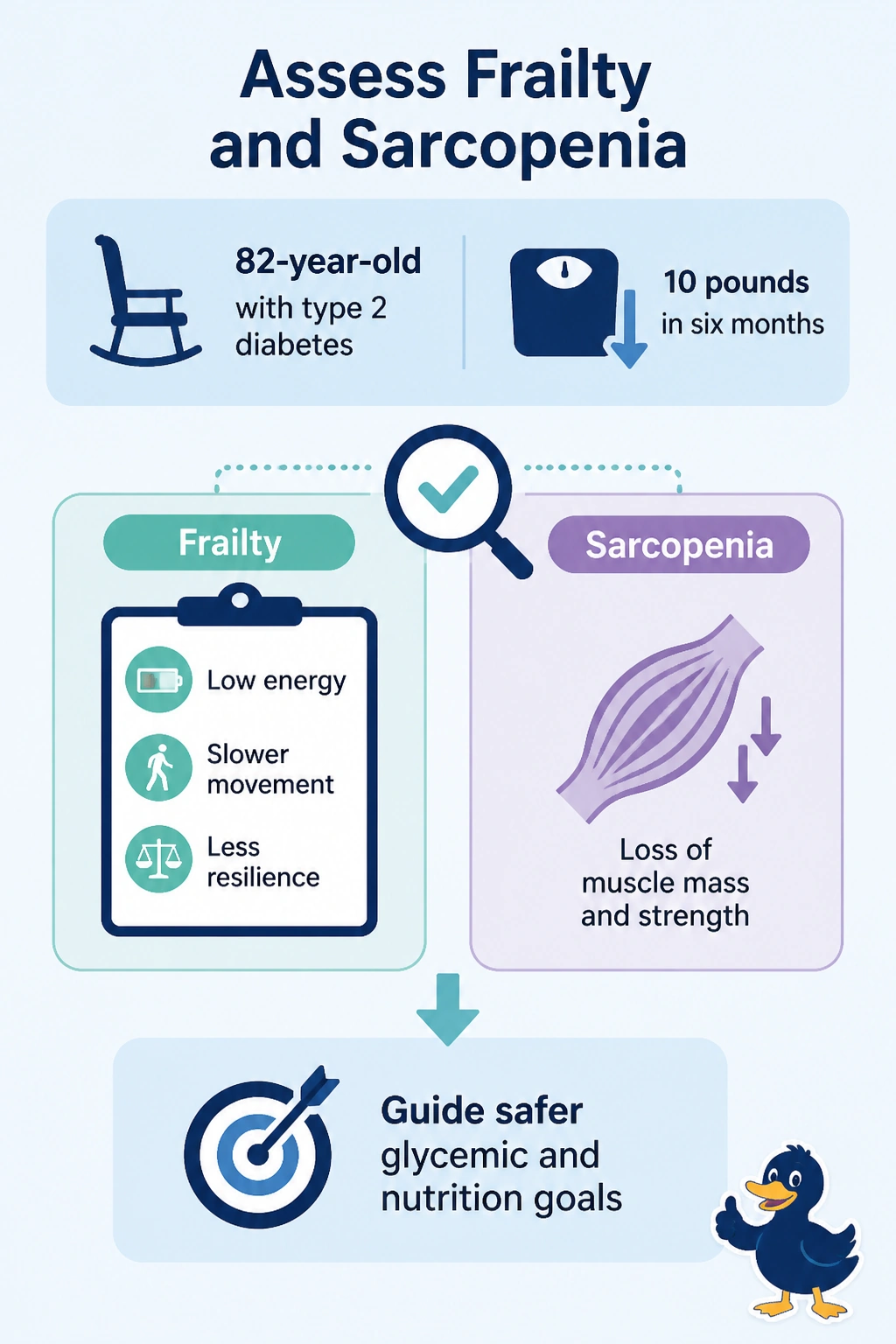
You’re right to pause when an older adult has unexplained weight loss, slower walking, and difficulty rising from a chair; these are frailty warning signs, not a reason to celebrate a lower weight. Assessing frailty and sarcopenia first helps you set safer nutrition and glycemic goals while protecting strength and reducing the risk of dangerous lows.
Full Explanation
Evaluating for frailty and sarcopenia to guide safer glycemic and nutrition goals is appropriate because unintentional weight loss, slowed gait, and muscle weakness increase vulnerability to hypoglycemia, falls, and functional decline in older adults. Identifying frailty supports collaboration with the care team to relax overly strict glycemic targets, prioritize adequate protein intake, and incorporate gentle functional strength work. Prioritizing intentional weight-loss goals before assessing the unintended weight loss confuses potentially pathologic loss with therapeutic benefit and delays evaluation for malnutrition, sarcopenia, or underlying illness. Prescribing a generic endurance program before assessing strength and functional safety risks falls and cardiovascular strain, while failing to address weakness and gait instability that warrant supervised functional assessment. Reviewing glycemic averages alone before investigating nutritional and functional decline overlooks inadequate intake, muscle loss, and hypoglycemia risk that should shape safer targets. As a caveat, unintentional weight loss in an older adult with diabetes also warrants medical evaluation for non-glycemic causes such as malignancy, malabsorption, or depression. As a practical check, assess grip strength or chair-stand ability and review recent dietary protein intake and hypoglycemia frequency at the visit.
Prefer to study offline? Printable PDF study book + test engine ($7.50, unofficial). These questions stay free here.