
A 35-year-old woman with type 1 diabetes asks about switching from multiple daily injections to an automated insulin delivery system. Which readiness factor should the diabetes care and education specialist assess before device selection?
Select an answer to reveal the explanation.
Short Explanation
An automated pump is a helpful co-pilot, not a hands-off autopilot, so you need to check readiness before takeoff. The trap is focusing only on the gadget's features while overlooking backup plans, skin health, and alert fatigue.
Full Explanation
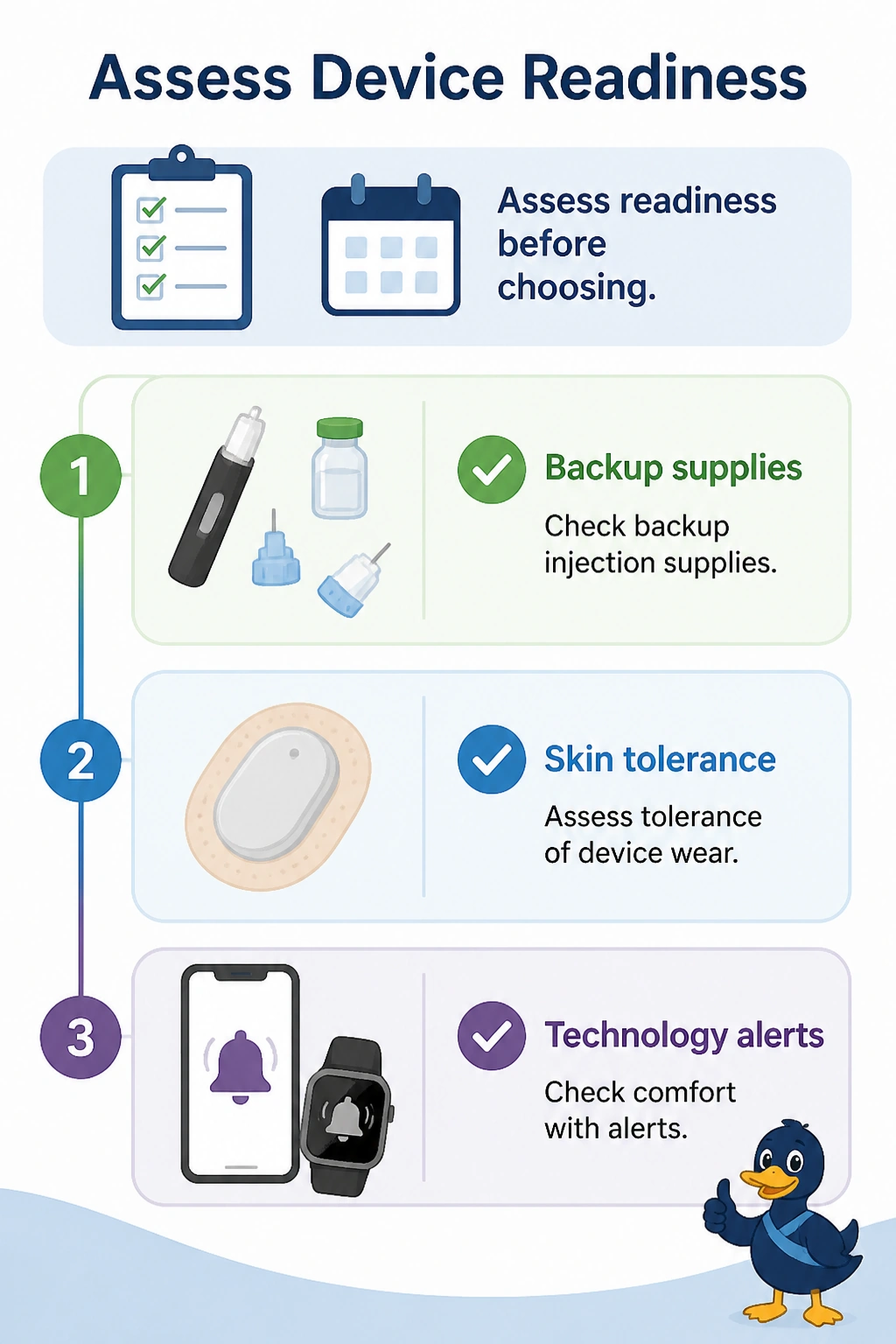
Successful initiation of automated insulin delivery depends on matching technology to the user's daily life, expectations, and safety preparedness. Evaluating backup injection supplies, skin tolerance, and comfort with technology alerts ensures the patient can manage infusion-set or sensor failures safely and tolerate wearable adhesives and alarms. Confirming the patient expects the device to eliminate all mealtime carbohydrate awareness reinforces an unrealistic expectation, since current systems still require timely meal announcements or bolusing for optimal control. Requiring a particular A1C level before discussing device preferences and support needs creates an inappropriate gatekeeping barrier not supported by clinical guidelines, which emphasize individualized assessment of needs and preferences. Selecting a device primarily by its automation features before assessing the patient’s daily routine ignores usability, dexterity, work and lifestyle fit, and support resources critical for long-term success. As a caveat, readiness is an ongoing conversation rather than a pass-fail test, and barriers like alarm fatigue can often be coached. For an operational check, verify the patient has unexpired backup basal and rapid-acting insulin pens or syringes and a written pump-failure plan prior to training.
Prefer to study offline? Printable PDF study book + test engine ($7.50, unofficial). These questions stay free here.