
During an annual physical assessment, a 58-year-old woman with type 2 diabetes for nine years says her feet feel completely normal, yet she has never had a sensory foot exam. Which assessment technique should the diabetes care and education specialist perform to screen for loss of protective sensation?
Select an answer to reveal the explanation.
Short Explanation
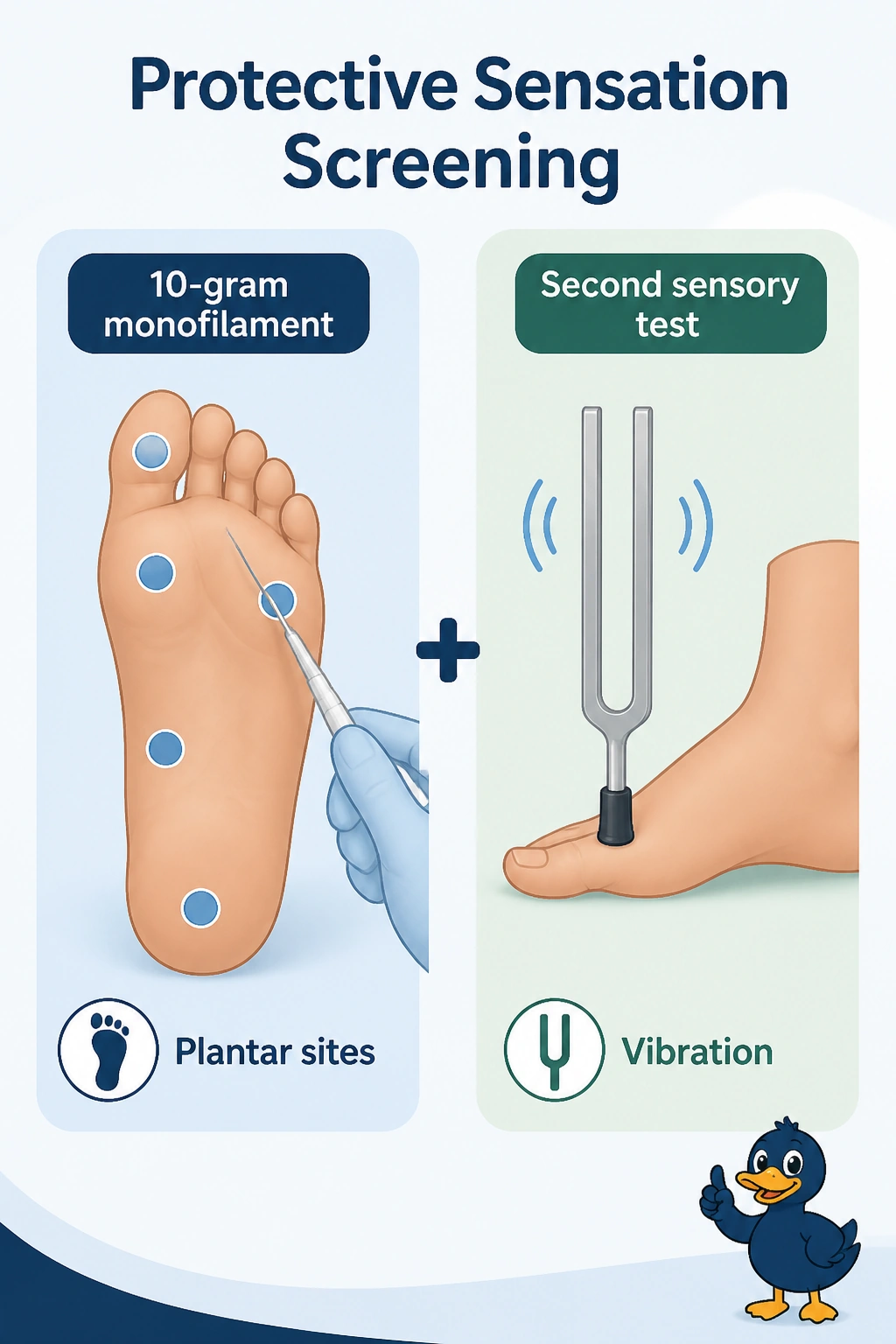
Healthy-looking feet can still hide silent nerve damage, which is why asking how your feet feel is never enough on its own. You should screen directly for loss of protective sensation using a 10-gram monofilament paired with a second sensory check. The trap is mistaking a pulse check or quick visual look for a complete neuropathy assessment.
Full Explanation
Apply a 10-gram monofilament to plantar sites alongside a second sensory test such as vibration. Peripheral neuropathy often progresses without pain or numbness, so annual objective screening is essential to identify loss of protective sensation before a foot ulcer develops. Guidelines recommend combining the 10-gram monofilament with at least one other test, such as a 128-Hz tuning fork for vibration, pinprick, temperature, or ankle reflexes. Palpate the dorsalis pedis and posterior tibial pulses while checking capillary refill time in the toes. This assesses arterial blood flow and peripheral vascular status rather than protective nerve sensation. Inspect the skin between the toes for maceration, fungal scaling, and early callus formation. Visual skin inspection is an important part of every foot exam, yet intact skin does not rule out underlying nerve loss. Measure bilateral ankle-brachial index pressures using a handheld Doppler ultrasound probe. This vascular test evaluates suspected peripheral arterial disease, especially when pulses are diminished or claudication is present, not sensory neuropathy. Caveat: avoid testing directly over thick calluses or open lesions, which can produce misleading sensory results. Operational check: document the exact plantar sites tested and refer promptly for protective footwear if sensation is reduced.
Prefer to study offline? Printable PDF study book + test engine ($7.50, unofficial). These questions stay free here.