
During an annual comprehensive assessment, a 64-year-old man with type 2 diabetes and a history of smoking reports cramping pain in his calves when walking two blocks that resolves quickly with rest. Which focused physical assessment finding should the diabetes care and education specialist prioritize?
Select an answer to reveal the explanation.
Short Explanation
Calf pain that shows up on a two-block walk and fades when you stop is your classic clue for reduced blood flow, not nerve damage. The trap is defaulting to a routine neuropathy screen when the symptom story points straight to circulation. Match your physical exam to the vascular warning signs first.
Full Explanation
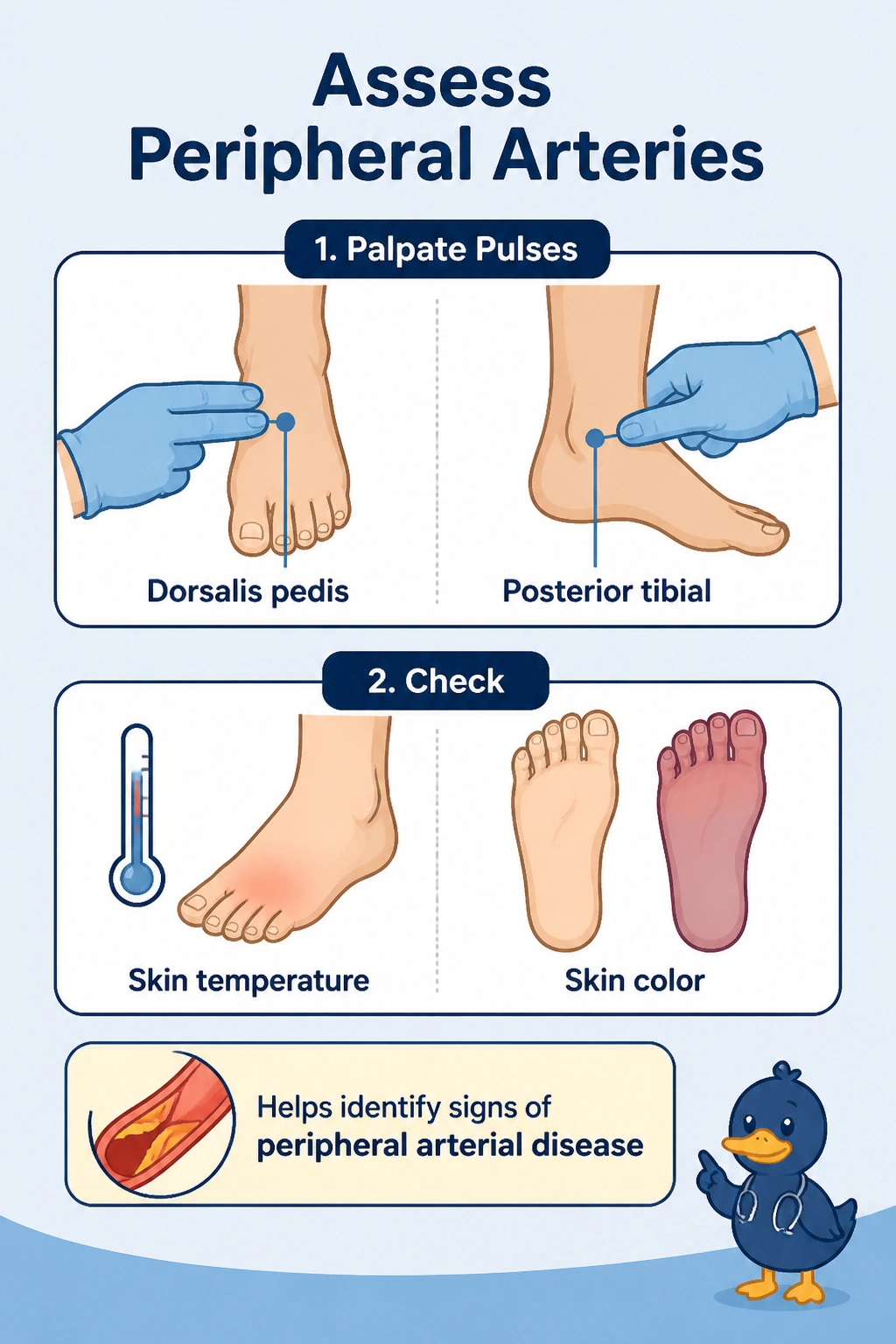
Intermittent claudication—exertional calf cramping relieved promptly by rest—is a hallmark symptom of peripheral arterial disease (PAD), which is strongly linked to diabetes and smoking. Prioritizing Palpating dorsalis pedis and posterior tibial pulses and checking skin temperature and color for peripheral arterial disease directly evaluates lower-extremity arterial perfusion and guides timely vascular referral. While Testing ankle deep tendon reflexes and vibratory sensation with a tuning fork evaluates large-fiber sensory neuropathy, it does not assess arterial blood flow causing exertional claudication. Similarly, Inspecting between the toes for interdigital fungal maceration and nail thickening identifies superficial skin or nail conditions rather than vascular insufficiency. Checking plantar foot surfaces with a 10-g monofilament for protective sensation is essential for detecting loss of protective sensation in diabetic neuropathy, but it misses the arterial occlusion driving his walking pain. Palpable pulses do not exclude PAD; symptomatic patients warrant vascular assessment, and noncompressible calcified arteries can make ABI falsely elevated, requiring appropriate toe pressures or other testing. As an operational check, document bilateral pulse quality, capillary refill, and claudication distance and communicate findings to the primary care provider.
Prefer to study offline? Printable PDF study book + test engine ($7.50, unofficial). These questions stay free here.