
A project lead is turning a proof of concept into a governed production workflow. Which approach best demonstrates drift monitoring in a IBM Certified watsonx Governance Lifecycle Advisor environment?
Select an answer to reveal the explanation.
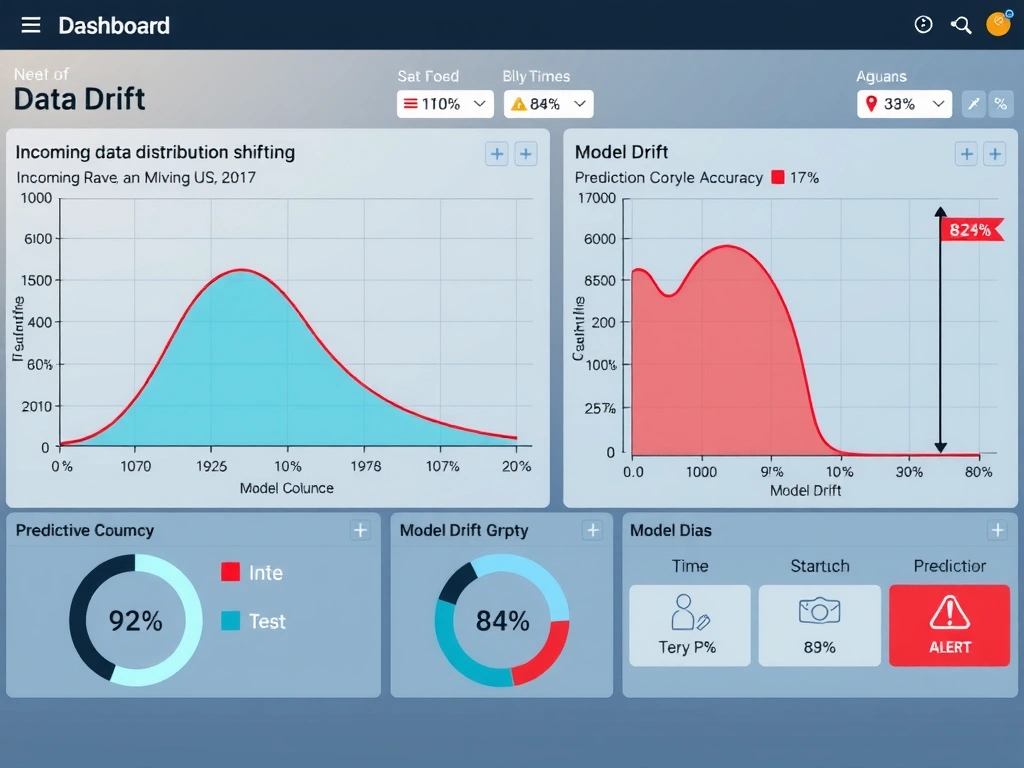
Short Explanation and Infographic
Drift monitoring is like checking your car's alignment after years of driving—the road changes, the car changes, and performance drifts! Monitor both data and model drift continuously so teams spot behavior changes quickly. Catch drift early and you can recalibrate before problems hit production. Stay vigilant, stay informed!
Full explanation below image
Full Explanation
The correct answer is B. Monitoring data and model drift after deployment enables teams to detect performance degradation and behavioral changes in real time. Option A is naive; training performance is never permanent—data distribution shifts, user behavior changes, and model assumptions decay over time. Option C is wrong because disabling drift alerts to reduce noise creates a false sense of security and invites silent failures. Option D misses the point entirely; application infrastructure is secondary—what matters is whether the model's predictions remain valid and fair. IBM watsonx.governance requires active drift monitoring so teams can respond to degradation and maintain model performance and compliance over time.