
During a design review, an architect asks which choice best matches the IBM guidance. For IBM Certified watsonx Governance Lifecycle Advisor, the topic is drift monitoring. What should the team do?
Select an answer to reveal the explanation.
Short Explanation and Infographic
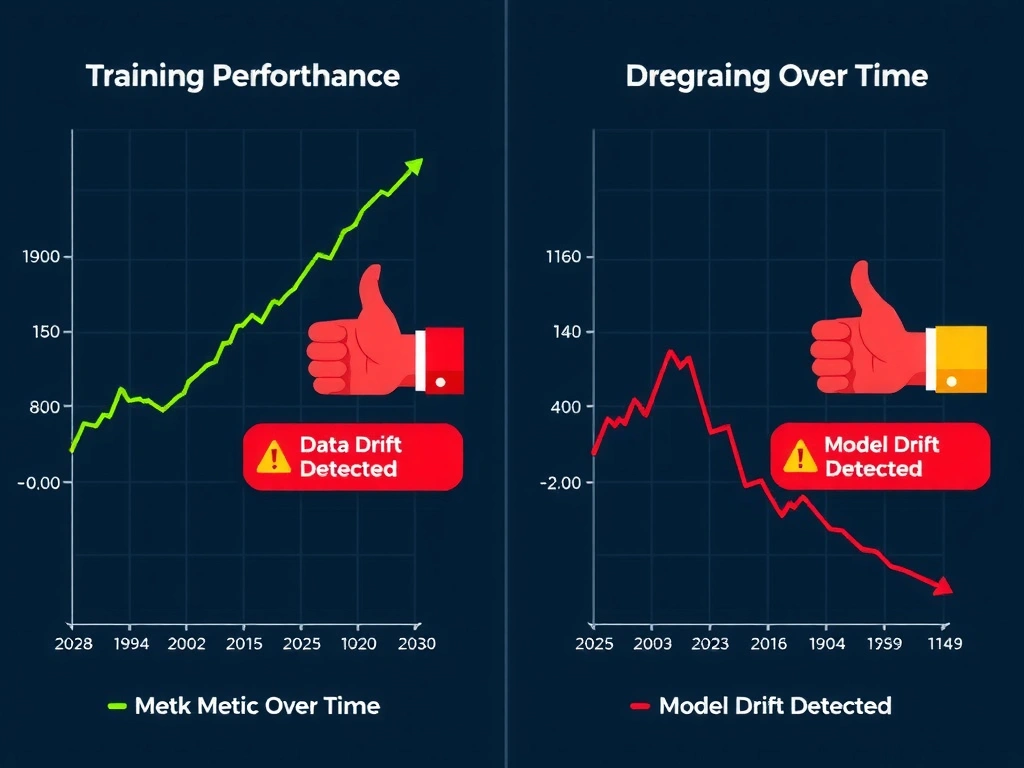
Models are like milk—they have a shelf life! The world changes, data changes, user patterns shift, and suddenly your model isn't performing like it did on day one. Option B is spot on: actively monitor data and model drift so you catch behavior changes the moment they happen. It's the difference between being proactive and cleaning up a disaster later.
Full explanation below image
Full Explanation
The correct answer is B. Drift monitoring detects when model behavior degrades due to changes in the data distribution (data drift) or the model's internal decision boundaries (model drift) after deployment. Early detection allows teams to retrain, adjust thresholds, or take other corrective actions. Option A (assuming forever validity) ignores the reality of changing environments. Option C (disabling alerts) removes your warning system—noise is a feature, not a bug. Option D (CPU monitoring) misses the AI-specific signals; infrastructure metrics don't tell you if predictions are failing.