
A senior engineer reviews the current plan and notices that one key control is missing. The team is focused on approval workflow. Which recommendation is most appropriate?
Select an answer to reveal the explanation.
Short Explanation and Infographic
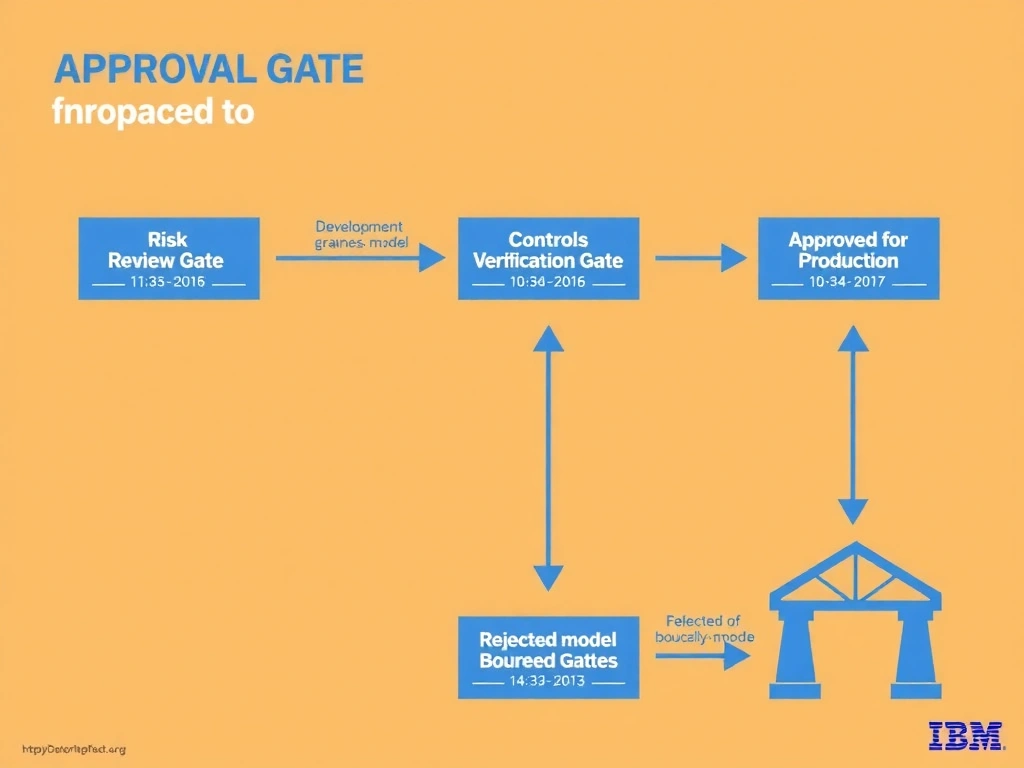
Approving AI through informal email threads is like signing a contract over text message — it might feel resolved, but it does not hold up when challenged. Option B is the formal contract: structured workflows that review risk, controls, and sign-offs at key lifecycle stages. Email-only approvals are non-auditable. Developer self-approval on high-risk models is signing your own permission slip. Skipping review when accuracy is high conflates performance with governance. Structured, tracked, multi-party approval workflows — option B!
Full explanation below image
Full Explanation
The correct answer is B. Use structured workflows to review risk, controls, and sign-offs at key lifecycle stages. aligns directly with the 2.0 AI Lifecycle Governance exam objective and reflects how IBM watsonx.governance operationalizes this practice in enterprise environments. IBM watsonx.governance is designed to provide the tooling, workflows, and evidence collection mechanisms that make AI trustworthy and auditable from intake through retirement. Choosing this option ensures the implementation is both defensible to regulators and maintainable by governance teams across the full AI lifecycle. Option A is incorrect because it relies on an informal, non-auditable mechanism that cannot support enterprise governance at scale. Option C is incorrect because it does not address the core governance requirement described in the scenario and would leave an important control gap in production. Option D is incorrect because it eliminates a required control and leaves the governance program without a critical safeguard. On scenario-based exam questions, the correct answer is consistently the one that operationalizes the IBM governance practice with structured controls rather than approximating it with shortcuts, manual workarounds, or oversimplified rules.