
During a design review, an architect asks which choice best matches the IBM guidance. Which approach best demonstrates drift monitoring in a IBM Certified watsonx Governance Lifecycle Advisor environment?
Select an answer to reveal the explanation.
Short Explanation and Infographic
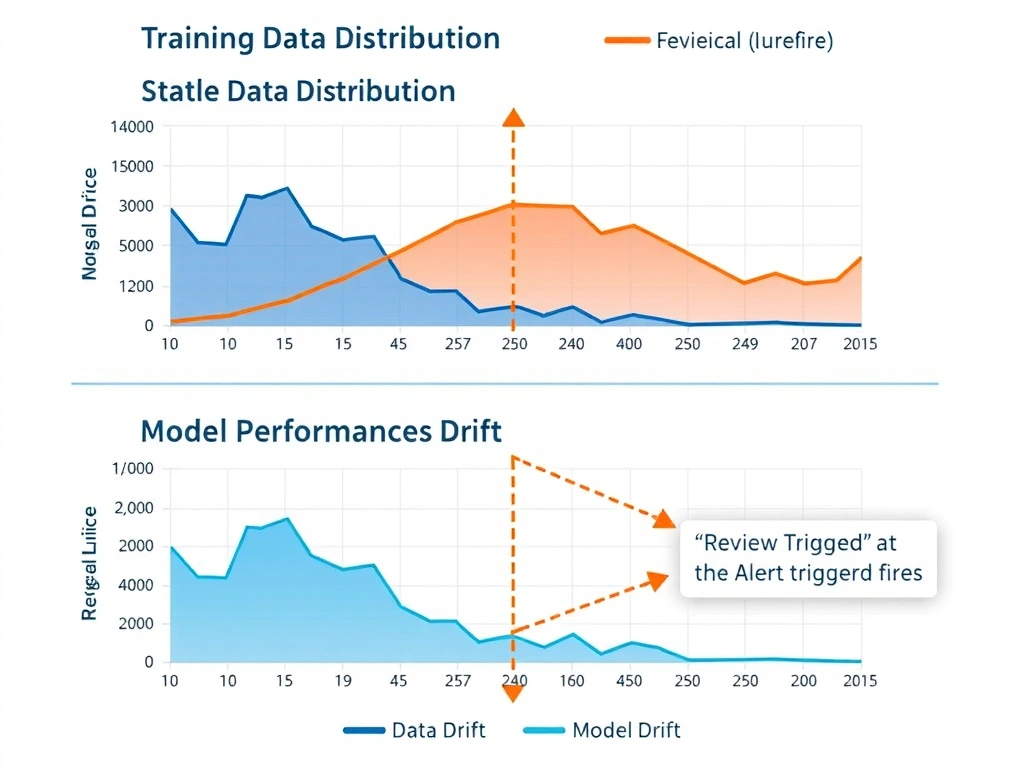
Assuming training performance holds forever is like believing the weather forecast from last Tuesday is still valid today — the world has moved on, and so has your model. Option B is the continuous weather service: monitor data and model drift so teams know when behavior changes after deployment. Frozen-in-time assumptions miss distribution shift. Disabling drift alerts for noise reduction removes early warning. CPU monitoring catches server load, not model decay. Monitor the model, not just the machine — option B!
Full explanation below image
Full Explanation
The correct answer is B. Monitor data and model drift so teams know when behavior changes after deployment. aligns directly with the 4.0 Configure Evaluation and Monitoring exam objective and reflects how IBM watsonx.governance operationalizes this practice in enterprise environments. IBM watsonx.governance is designed to provide the tooling, workflows, and evidence collection mechanisms that make AI trustworthy and auditable from intake through retirement. Choosing this option ensures the implementation is both defensible to regulators and maintainable by governance teams across the full AI lifecycle. Option A is incorrect because it assumes static conditions and eliminates the reassessment that IBM watsonx.governance explicitly requires. Option C is incorrect because it eliminates a required control and leaves the governance program without a critical safeguard. Option D is incorrect because it substitutes an irrelevant proxy metric for the governance dimension the question actually requires. On scenario-based exam questions, the correct answer is consistently the one that operationalizes the IBM governance practice with structured controls rather than approximating it with shortcuts, manual workarounds, or oversimplified rules.