
Three years after a high-risk fraud detection model is retired, financial regulators request evidence of its complete validation history, approval chain, and production performance data during its operational life. Which watsonx.governance capability ensures this information remains available?
Select an answer to reveal the explanation.
Short Explanation and Infographic
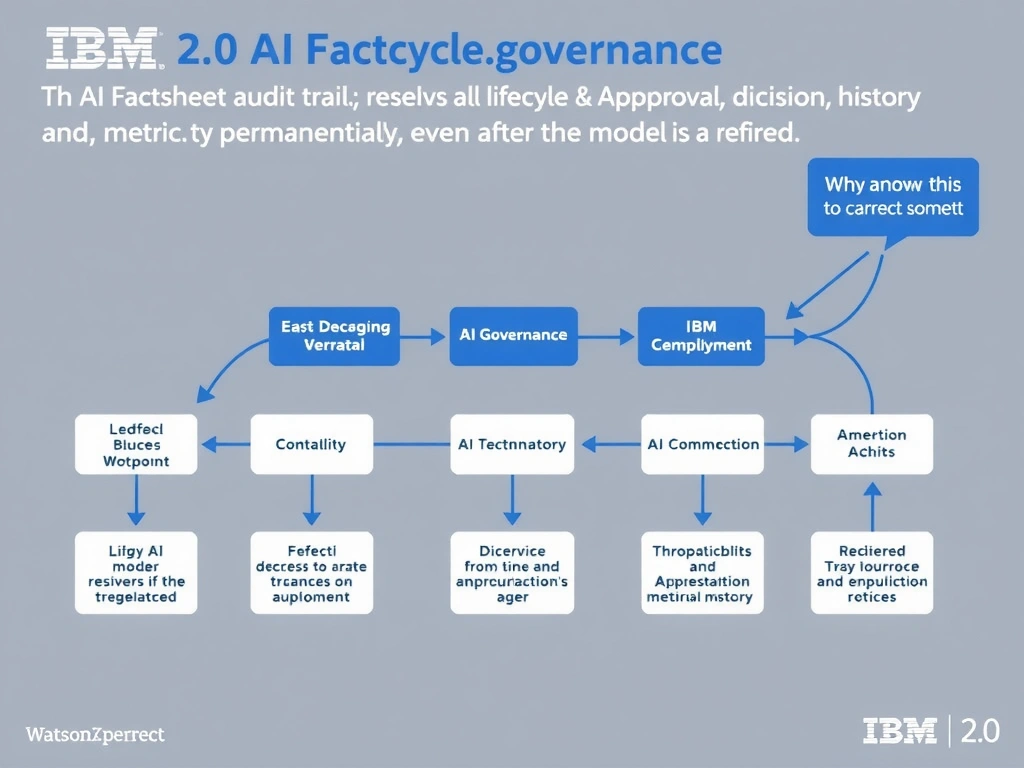
Think of it this way: in real-world AI governance, the ai factsheet audit trail that retains all lifecycle events, approval decisions, and metric history permanently even after the model is retired is exactly what teams reach for when they need to handle this scenario. AI Factsheets in watsonx. On the exam, remember that this falls squarely under the 2.0 AI Lifecycle Governance domain.
Full explanation below image
Full Explanation
AI Factsheets in watsonx.governance are designed to be persistent, immutable records that capture every lifecycle event from initial use case creation through retirement. Approval decisions with approver identities and timestamps, validation results, monitoring metric histories, and retirement documentation are all preserved in the Factsheet audit trail. This permanent retention capability is essential for regulated industries where regulators may review models years after they have been decommissioned, ensuring that the organization can demonstrate the full governance evidence chain for any model in their historical portfolio. The correct answer, "The AI Factsheet audit trail that retains all lifecycle events, approval decisions, and metric history permanently even after the model is retired", directly addresses the scenario described because it aligns with the specific governance requirement in question. The incorrect options ("The compliance accelerator framework archive that preserves regulatory requirement mapping snapshots taken at model approval time", "The risk scorecard export function that generates PDF snapshots of historical risk scores at point in time", "The governance workflow completed-task log retained for a fixed 12-month period after workflow closure") may seem plausible but do not satisfy the core requirement. Understanding the distinction between these concepts is critical for IBM watsonx.governance implementations and is frequently tested in the 2.0 AI Lifecycle Governance section of the certification exam.