
A senior engineer reviews the current plan and notices that one key control is missing. Which approach best demonstrates modern architecture patterns in a IBM Certified watsonx Mainframe Modernization Architect environment?
Select an answer to reveal the explanation.
Short Explanation and Infographic
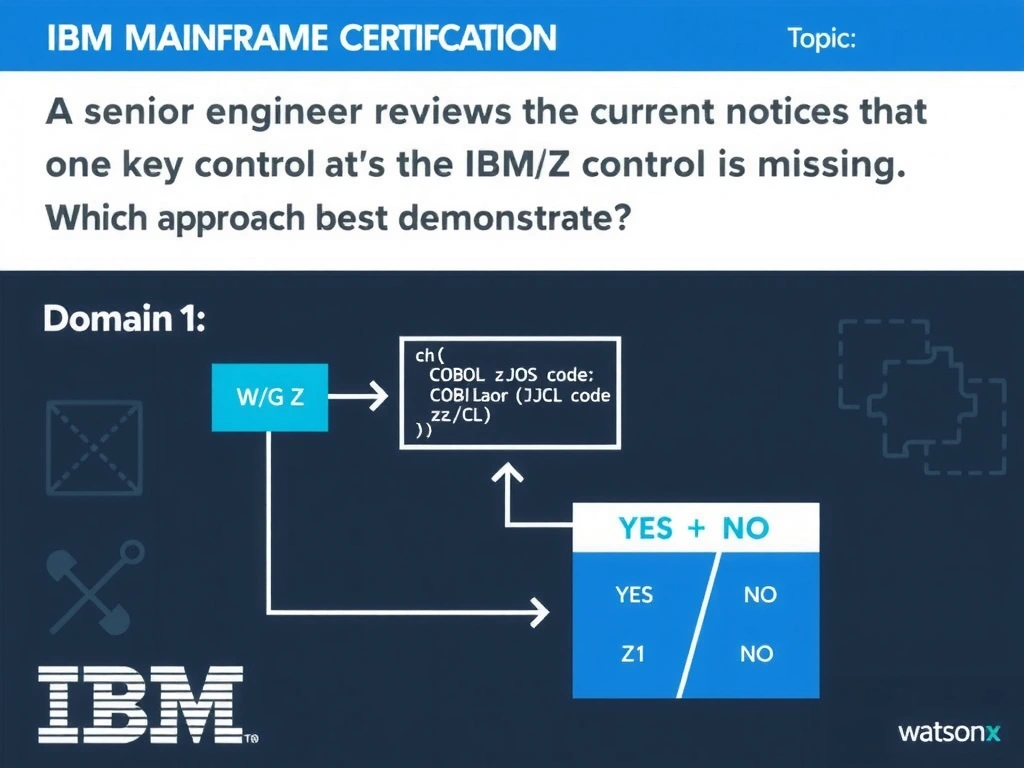
Here's the deal: modern architecture patterns is not just a checkbox; it is the difference between a clean handoff and a late-night recovery call. In this scenario, answer B is the practical move because it keeps the implementation tied to the real IBM capability instead of chasing a shortcut. The other choices sound tempting, but they either skip governance, ignore operational reality, or solve the wrong problem.
Full explanation below image
Full Explanation
Here's the deal: modern architecture patterns is not just a checkbox; it is the difference between a clean handoff and a late-night recovery call. In this scenario, answer B is the practical move because it keeps the implementation tied to the real IBM capability instead of chasing a shortcut. The other choices sound tempting, but they either skip governance, ignore operational reality, or solve the wrong problem.
The correct answer is B. Apply modular services, APIs, and hybrid-cloud patterns where they fit the business and technical constraints. That aligns with the Domain 1: watsonx Code Assistant for Z Overview objective because it applies the feature or practice in the context where IBM expects a practitioner to use it. It also keeps the design reviewable, supportable, and realistic for a production environment.
Let's examine why the other options are incorrect: - Option A is incorrect because it uses an overbroad rule instead of matching the design to the actual workload and risk. - Option C is incorrect because it narrows the solution to one artifact or metric and misses the broader modern architecture patterns requirement. - Option D is incorrect because it sounds related, but it does not solve the modern architecture patterns requirement described in the scenario. For the exam, connect the feature to the operational outcome: the right answer is the one that preserves control, accuracy, and maintainability instead of relying on a brittle shortcut.