
A project lead is turning a proof of concept into a governed production workflow. The team is focused on performance-sensitive code. Which recommendation is most appropriate?
Select an answer to reveal the explanation.
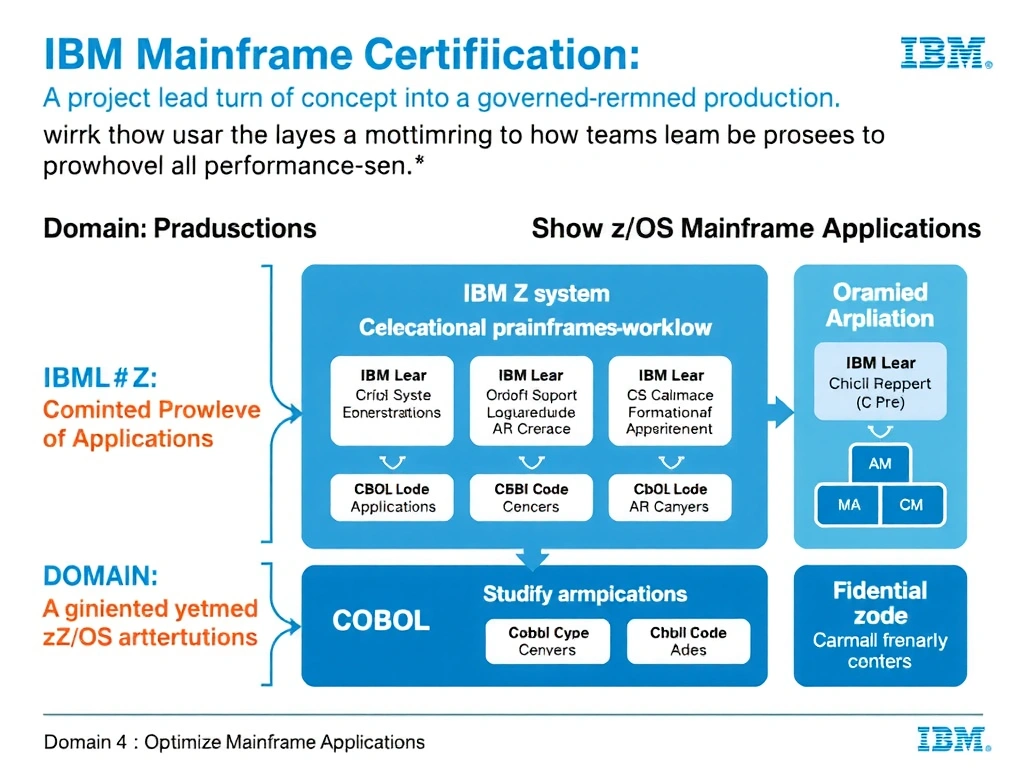
Short Explanation and Infographic
Think of it like working hands-on with IBM mainframe systems — the answer here is 'Review hotspots, data access patterns, and repeated logic before changing production behavior.'. Here's the deal: think of performance-sensitive code like labeling the cables before you close the rack door. If you skip that discipline, troubleshooting gets ugly fast. In this scenario, answer B is. On real mainframe exams, this concept comes up repeatedly so make sure you have it locked in.
Full explanation below image
Full Explanation
Here's the deal: think of performance-sensitive code like labeling the cables before you close the rack door. If you skip that discipline, troubleshooting gets ugly fast. In this scenario, answer B is the practical move because it keeps the implementation tied to the real IBM capability instead of chasing a shortcut. The other choices sound tempting, but they either skip governance, ignore operational reality, or solve the wrong problem.
The correct answer is B. Review hotspots, data access patterns, and repeated logic before changing production behavior. That aligns with the Domain 4: Optimize Mainframe Applications objective because it applies the feature or practice in the context where IBM expects a practitioner to use it. It also keeps the design reviewable, supportable, and realistic for a production environment.
Let's examine why the other options are incorrect: - Option A is incorrect because it sounds related, but it does not solve the performance-sensitive code requirement described in the scenario. - Option C is incorrect because it skips the control or validation that makes performance-sensitive code reliable in production. - Option D is incorrect because it sounds related, but it does not solve the performance-sensitive code requirement described in the scenario. For the exam, connect the feature to the operational outcome: the right answer is the one that preserves control, accuracy, and maintainability instead of relying on a brittle shortcut.