
An enterprise with 2,500 hosts spread across 8 data centers plans to deploy Instana agents. The architect is concerned about network bandwidth consumption and excessive direct connections to the central Instana backend over WAN links. Which deployment pattern should be incorporated into the agent deployment plan?
Select an answer to reveal the explanation.
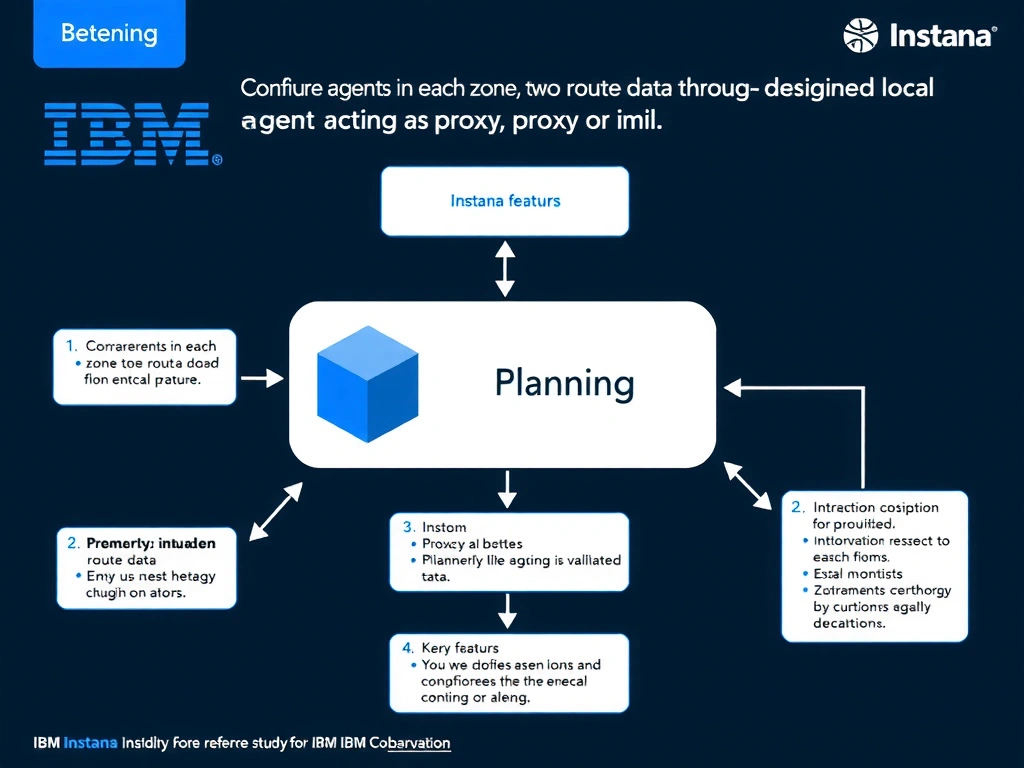
Short Explanation and Infographic
For large geographically distributed deployments, Instana supports agent proxy configurations where agents can route their telemetry through a designated local agent, reducing the number of direct WAN connections to the central backend and lowering cross-site bandwidth consumption. This pattern is particularly important in environments where direct connectivity from thousands of agents would saturate WAN links or exceed backend connection limits. Sampling is not recommended as it creates blind spots in observability.
Full explanation below image
Full Explanation
For large geographically distributed deployments, Instana supports agent proxy configurations where agents can route their telemetry through a designated local agent, reducing the number of direct WAN connections to the central backend and lowering cross-site bandwidth consumption. This pattern is particularly important in environments where direct connectivity from thousands of agents would saturate WAN links or exceed backend connection limits. Sampling is not recommended as it creates blind spots in observability. The correct answer is 'Configure agents in each zone to route data through a designated local agent acting as a proxy or mirror endpoint to aggregate traffic'. The incorrect options — 'Deploy a single Instana agent per data center that remotely scans all other hosts using agentless network polling', 'Install agents only on critical production hosts and use statistical sampling on remaining hosts to reduce connection count', 'Configure all 2,500 agents to connect directly to the Instana backend with connection pooling enabled at the firewall' — are wrong because they do not align with IBM Instana's architecture or recommended practices for this scenario. Understanding this concept is essential for the Domain 5: Planning domain of the IBM Instana Observability certification.