
A system administrator is evaluating the resource impact of deploying the Instana host agent on latency-sensitive production servers running financial transaction processing. The server team requests the expected CPU overhead of the Instana agent under normal operation. What is the correct characterization?
Select an answer to reveal the explanation.
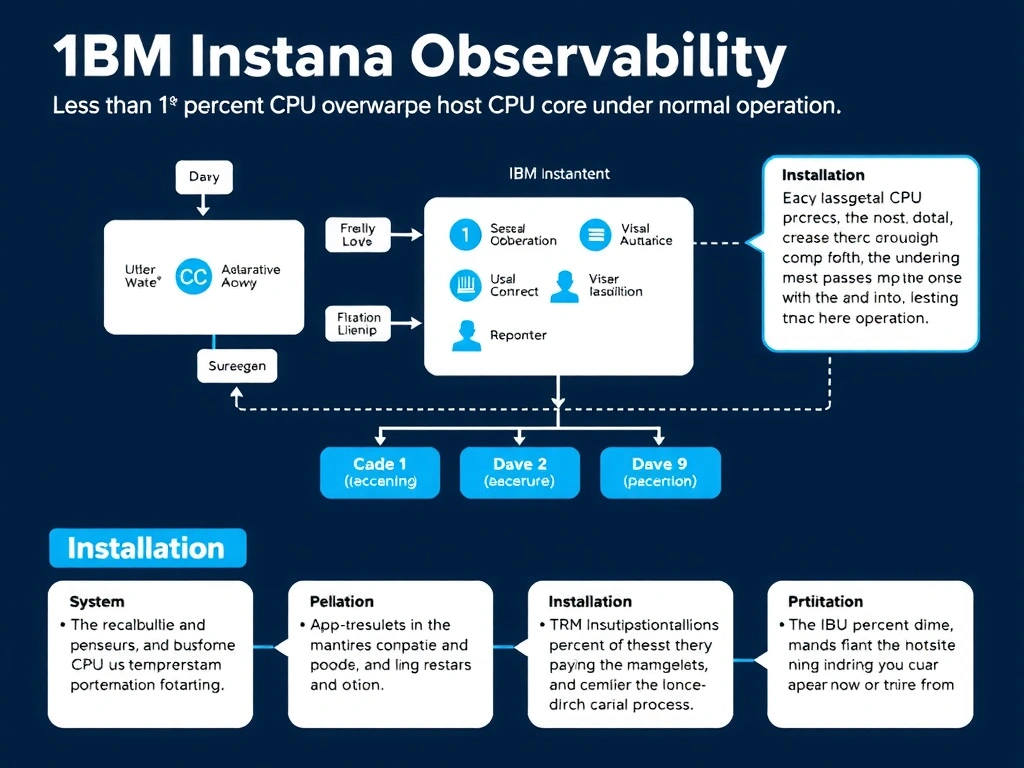
Short Explanation and Infographic
Instana is engineered for minimal production impact, with the agent designed to consume less than 1 percent CPU per core under normal operating conditions. This low overhead is achieved through the use of efficient native OS APIs for data collection and asynchronous sensor processing. If the Instana agent is observed consuming significantly more CPU than this, it typically indicates a misconfiguration, a sensor processing an unusually large workload, or a software defect.
Full explanation below image
Full Explanation
Instana is engineered for minimal production impact, with the agent designed to consume less than 1 percent CPU per core under normal operating conditions. This low overhead is achieved through the use of efficient native OS APIs for data collection and asynchronous sensor processing. If the Instana agent is observed consuming significantly more CPU than this, it typically indicates a misconfiguration, a sensor processing an unusually large workload, or a software defect. The correct answer is 'Less than 1 percent CPU overhead per host CPU core under normal operation'. The incorrect options — 'Up to 10 percent of total available CPU capacity under peak monitoring load', 'A fixed allocation of 2 dedicated CPU cores regardless of server CPU count', 'Up to 5 percent of total CPU capacity when all technology sensors are simultaneously active' — are wrong because they do not align with IBM Instana's architecture or recommended practices for this scenario. Understanding this concept is essential for the Domain 3: Installation domain of the IBM Instana Observability certification.