
A DevOps engineer needs to deploy the Instana host agent on a bare-metal Linux server running RHEL 8. The organization requires all software installations to use the system package manager (yum/dnf). The server has internet access. Which installation method should the engineer use?
Select an answer to reveal the explanation.
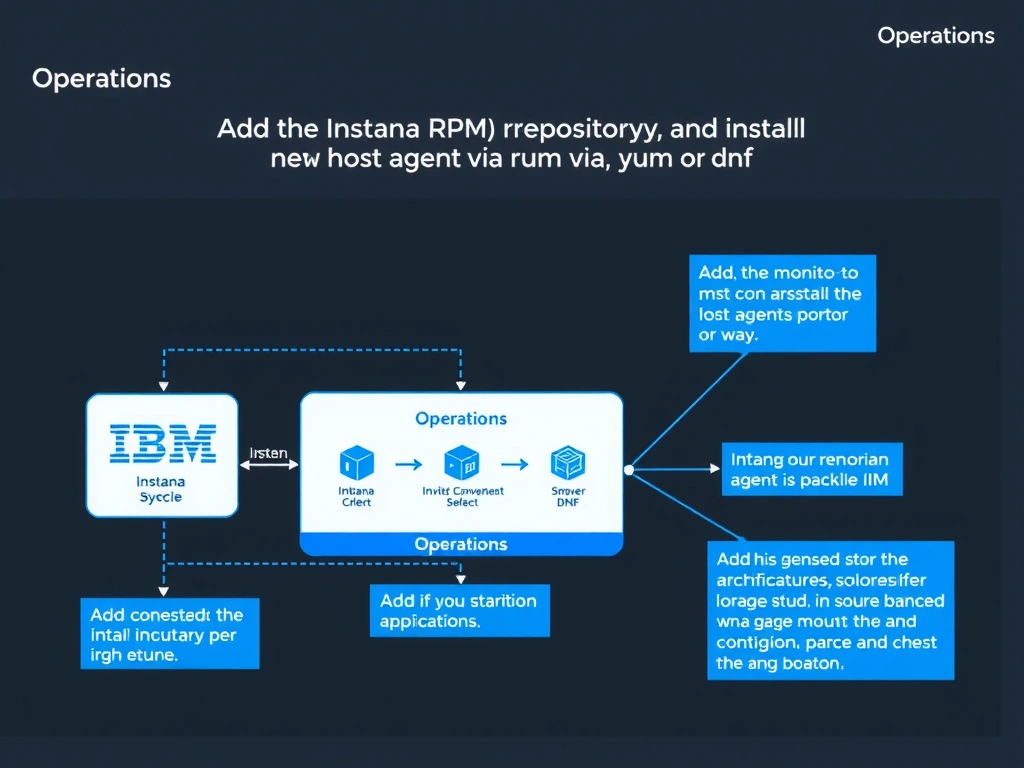
Short Explanation and Infographic
The Instana host agent is available through an RPM package repository, making yum/dnf the correct package-manager-based installation method for RHEL systems. The one-liner script is valid but does not use the system package manager as required. Docker and Kubernetes DaemonSet options are inappropriate for a bare-metal Linux host without container orchestration.
Full explanation below image
Full Explanation
The Instana host agent is available through an RPM package repository, making yum/dnf the correct package-manager-based installation method for RHEL systems. The one-liner script is valid but does not use the system package manager as required. Docker and Kubernetes DaemonSet options are inappropriate for a bare-metal Linux host without container orchestration. The correct answer is 'Add the Instana RPM repository and install the host agent via yum or dnf'. The incorrect options — 'Download and run the one-liner installer script directly from the Instana downloads page', 'Deploy the Instana agent as a Docker container on the bare-metal host', 'Apply the Instana Kubernetes DaemonSet manifest to the server' — are wrong because they do not align with IBM Instana's architecture or recommended practices for this scenario. Understanding this concept is essential for the Domain 1: Operations domain of the IBM Instana Observability certification.