
An administrator is troubleshooting a pilot deployment and wants the most appropriate next step. For IBM Certified watsonx Data Lakehouse Engineer, the topic is open lakehouse architecture. What should the team do?
Select an answer to reveal the explanation.
Short Explanation and Infographic
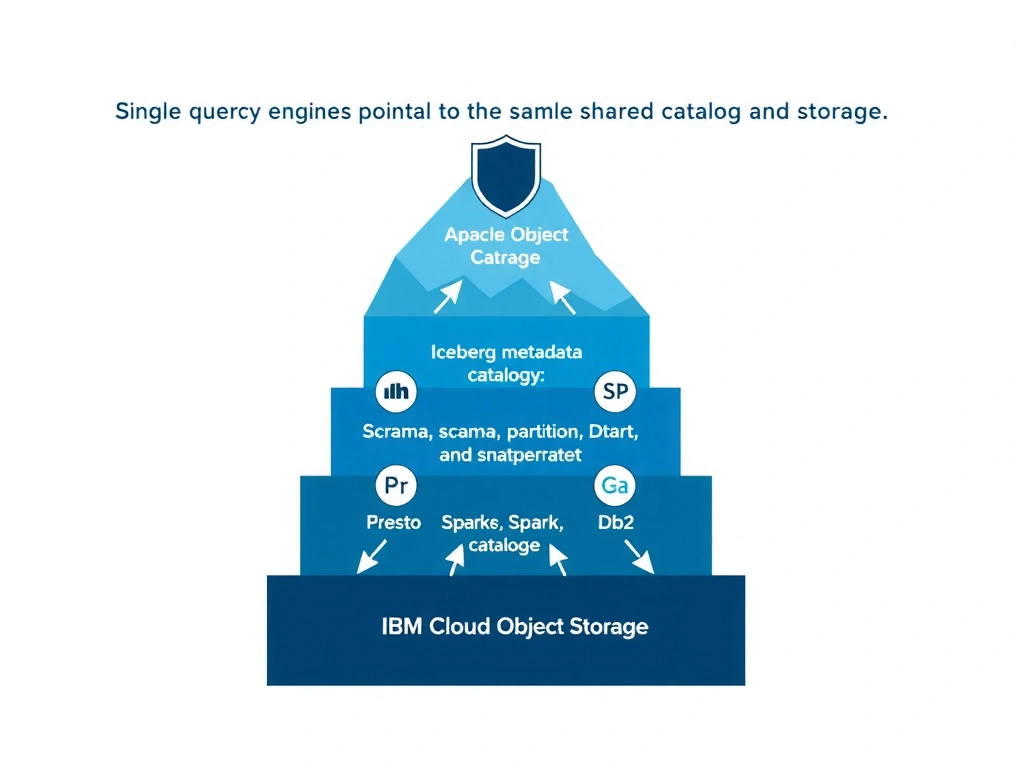
Here's the deal: the open lakehouse is not a product — it's an architectural philosophy. Think of it like a shared library versus a private bookshelf: open table formats (Apache Iceberg, Delta) on object storage let multiple query engines — Presto, Spark, Db2 — all read the same data without copying it first. That's the entire point of 'open': one dataset, many engines, zero data silos.
Full explanation below image
Full Explanation
The open lakehouse architecture in IBM watsonx.data uses open table formats such as Apache Iceberg stored on object storage (IBM Cloud Object Storage or S3-compatible), with governance and query engines layered on top. This architecture allows Presto, Spark, Db2 Warehouse, and other engines to operate on the same dataset simultaneously without data duplication. Moving every workload into a proprietary warehouse (Option B) recreates the data silo problem the lakehouse is specifically designed to eliminate, locking data in vendor-specific formats. Storing only raw files with no table metadata (Option C) produces an unmanaged data swamp where queries are slow, schema is unknown, and governance is impossible. Copying data into separate marts for every engine (Option D) reintroduces data inconsistency, multiplies storage costs, and defeats the purpose of sharing governed storage. The open lakehouse architecture is the foundational IBM design pattern that the entire watsonx.data platform is built to deliver.