
A consultant is advising a customer that wants a scalable implementation. Which approach best demonstrates SQL access in a IBM Certified watsonx Data Lakehouse Engineer environment?
Select an answer to reveal the explanation.
Short Explanation and Infographic
In watsonx.data, consumption is a governed act — users query through supported SQL interfaces like Data Virtualization or directly through Presto, data scientists use notebooks integrated with the platform, and business analysts connect BI tools via certified connectors. Each of these paths respects the access policies and lineage metadata that governance configured. Bypassing the governed paths to query flat files directly might feel faster in a demo but creates blind spots in your audit trail.
Full explanation below image
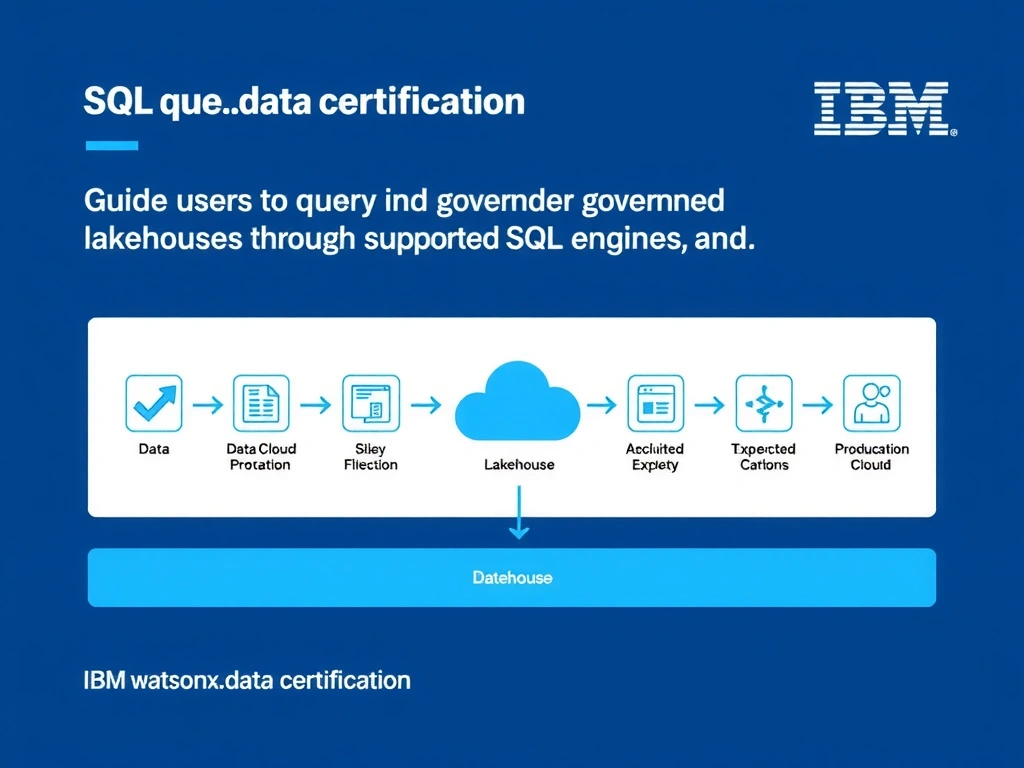
Full Explanation
The correct answer is option A: Guide users to query governed lakehouse tables through supported SQL engines and interfaces.. This aligns with IBM's Data consumption and analytics guidance, which emphasizes guide users to query governed lakehouse tables through supported sql engines and interfaces as the recommended approach for production deployments. Option B (Tell users to download raw object files) is incorrect because it either bypasses IBM's recommended architecture or introduces operational risk that the correct approach is specifically designed to avoid. Option C (Require application teams to bypass metadata catalogs) is incorrect because it either bypasses IBM's recommended architecture or introduces operational risk that the correct approach is specifically designed to avoid. Option D (Use only screenshots for data delivery) is incorrect because it either bypasses IBM's recommended architecture or introduces operational risk that the correct approach is specifically designed to avoid. Understanding this distinction is critical for the C9007300 exam: IBM watsonx.data is designed to enforce governance, performance, and operational best practices through its built-in architecture, and the correct answers consistently reflect those architectural constraints rather than shortcut alternatives.