
A senior engineer reviews the current plan and notices that one key control is missing. Which approach best demonstrates governance practices in a IBM Certified watsonx Data Lakehouse Engineer environment?
Select an answer to reveal the explanation.
Short Explanation and Infographic
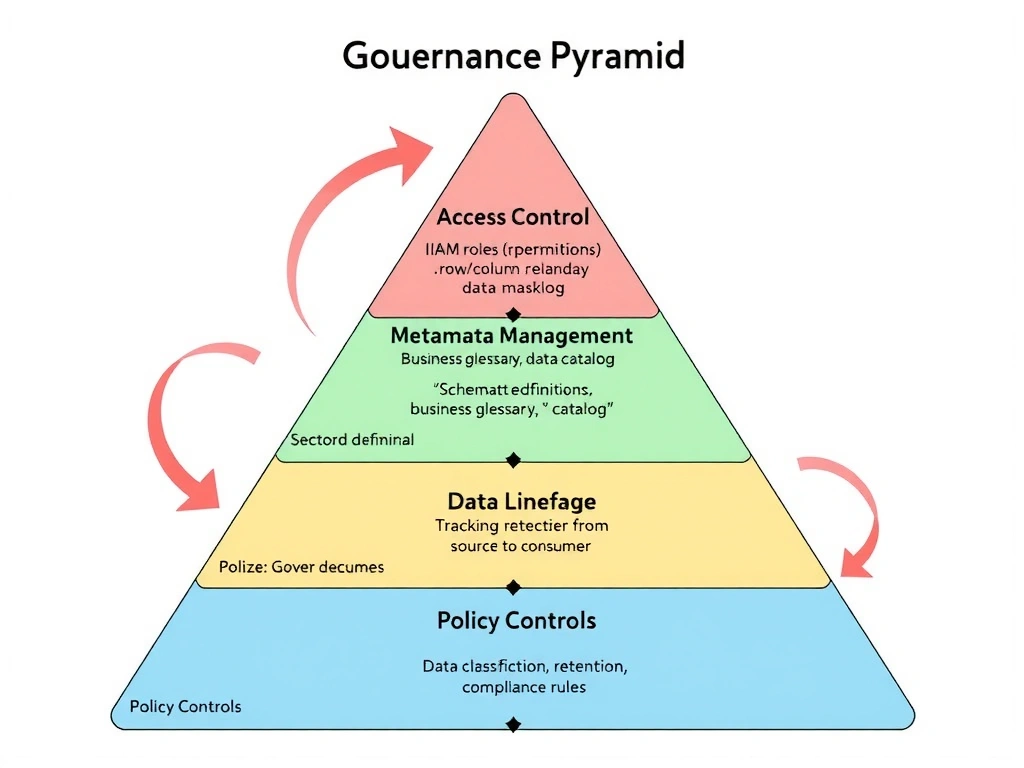
Here's the deal: governance in watsonx.data isn't a single dial you turn to 'on' — it's a four-layer cake: access control, metadata management, data lineage tracking, and policy enforcement. Think of it like a hospital records system: you need role-based access so nurses don't see billing, you need metadata so you know what each field means, you need lineage so you can trace where a number came from, and you need policies so HIPAA rules are enforced automatically.
Full explanation below image
Full Explanation
The correct answer is to apply access control, metadata, lineage, and policy controls so lakehouse data remains trustworthy. In watsonx.data, governance is enforced through IBM OpenPages integration, Unity Catalog-style policies, and the platform's built-in role-based access control on schemas and tables. Option A (analysts managing permissions via copied CSVs) is wrong because manual spreadsheet-based permission management is error-prone, unauditable, and cannot enforce fine-grained column or row-level security. Option B (removing schema definitions) is wrong because schemas are the backbone of governance — without them, you cannot enforce data types, apply masking policies, or track lineage. Option C (governing only dashboard outputs) is wrong because governance must be applied at the source data layer to prevent unauthorized access at the engine level — dashboard-only governance is easily bypassed by direct SQL queries.