
A consultant is advising a customer that wants a scalable implementation. For IBM Certified watsonx Data Lakehouse Engineer, the topic is Infrastructure Manager. What should the team do?
Select an answer to reveal the explanation.
Short Explanation and Infographic
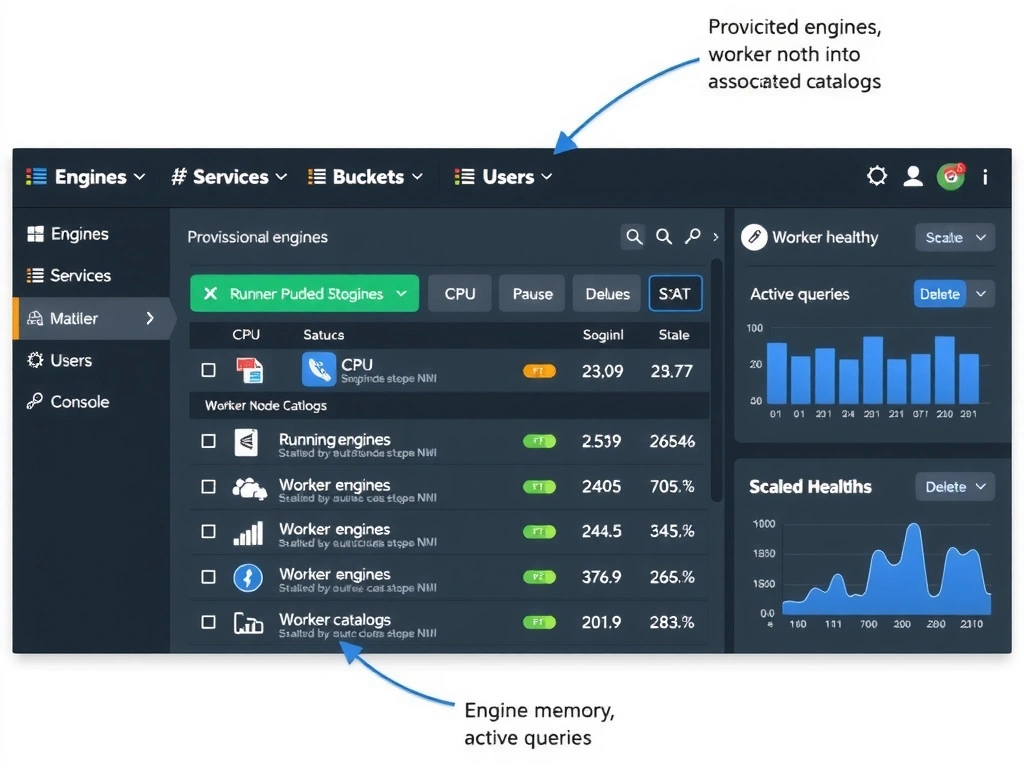
Here's the deal: Infrastructure Manager in watsonx.data is your engine control room — it's where you provision, scale, pause, and delete Presto engines, Spark clusters, and other compute services. Think of it like the electrical panel in your building: you don't debug a lighting problem by looking at the tenant's desk; you go to the panel and check the breakers. Infrastructure Manager is that panel for your lakehouse compute.
Full explanation below image
Full Explanation
The correct answer is to use Infrastructure Manager to manage engines, services, and related platform resources. Within the watsonx.data console, Infrastructure Manager provides controls for: provisioning new Presto or Spark engines, scaling engine worker node counts, associating engines with catalogs, monitoring engine health and resource utilization, and decommissioning unused services. Option B (using query history to provision engines) is wrong because query history is a read-only log of past executions — it has no controls for infrastructure provisioning. Option C (editing raw object files to start services) is wrong because watsonx.data services are managed through the control plane API, not through file editing — there are no 'service start' scripts in object storage. Option D (creating BI dashboards to manage infrastructure) is wrong because BI dashboards are for data visualization, not for issuing control plane commands to compute services.