
A senior engineer reviews the current plan and notices that one key control is missing. The team is focused on watsonx.data components. Which recommendation is most appropriate?
Select an answer to reveal the explanation.
Short Explanation and Infographic
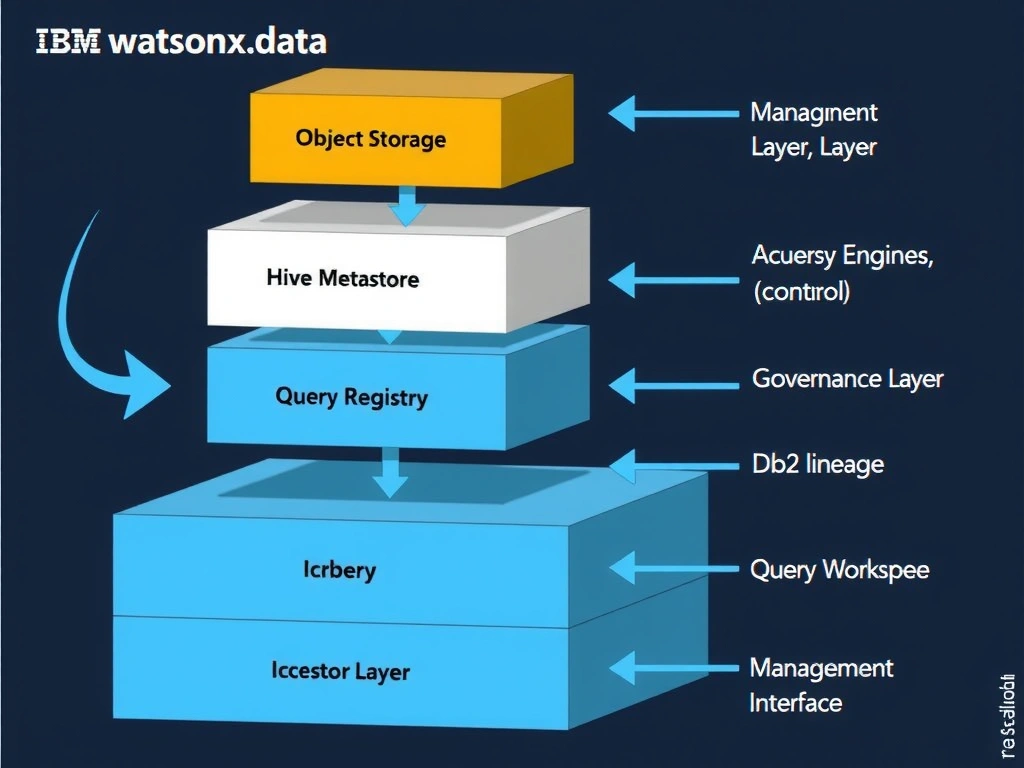
Here's the deal: watsonx.data is not just a SQL engine — it's a full platform stack that you have to understand as a system, not a collection of independent tools. Think of it like a modern office building: you need the foundation (object storage), the filing system (metadata catalog), the workers (query engines), the security desk (governance), and the building management system (Infrastructure Manager and Data Manager). Any one piece alone doesn't get you to production.
Full explanation below image
Full Explanation
The correct answer is to coordinate storage, metadata, query engines, governance, and management interfaces as parts of one platform. The key components of IBM watsonx.data include: object storage (IBM COS or S3), the Hive Metastore (HMS) for metadata, Presto and Apache Spark as query engines, IBM OpenPages or built-in policy controls for governance, Data Manager for asset management, and Infrastructure Manager for engine/service lifecycle. Option A (treating only the query workspace as the component) is wrong because the query workspace is one UI surface in a multi-layer platform; ignoring storage, catalog, and governance creates an unworkable architecture. Option C (managing access only in external BI tools) is wrong because BI tool row filters don't apply to direct SQL access — governance must be enforced at the platform layer. Option D (putting all metadata in spreadsheets) is wrong because external spreadsheets have no enforcement capability, version control, or integration with query engines.