
What is the key difference between keyword search and semantic search for knowledge base integration?
Select an answer to reveal the explanation.
Short Explanation and Infographic
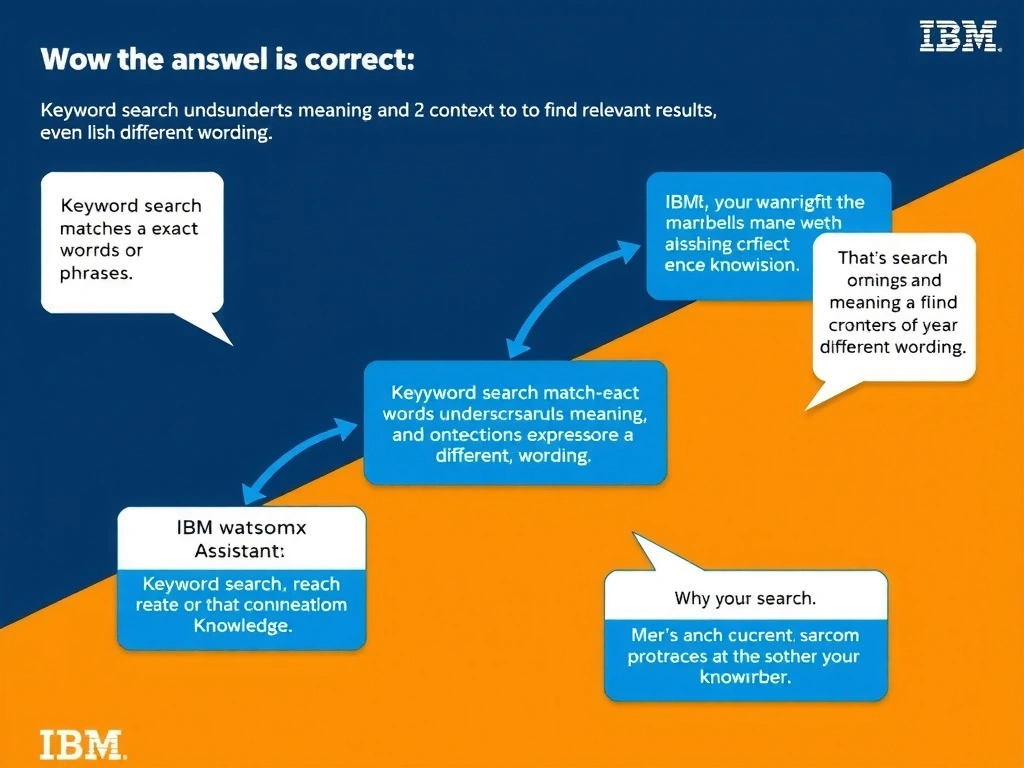
Todd Lammle: 'Imagine you're building a chatbot and this exact situation comes up — keyword search matches exact words or phrases; semantic search understands meaning and context to find relevant results even with different wording is your go-to move. Semantic search uses vector embeddings or dense retrieval to find conceptually related content even when phrasing differs; while keyword search requires lexical matches. This is a classic Domain 3: Connect AI and External Knowledge concept you'll want locked in before exam day.'
Full explanation below image
Full Explanation
Semantic search uses vector embeddings or dense retrieval to find conceptually related content even when phrasing differs; while keyword search requires lexical matches. Both approaches can be used with various connectors. Real-time vs batch processing and entity type selection are unrelated to this distinction. The correct answer, "Keyword search matches exact words or phrases; semantic search understands meaning and context to find relevant results even with different wording", directly satisfies the scenario because it aligns with watsonx Assistant's design principles and the specific capability being tested. The incorrect options ("Keyword search only works with Watson Discovery; semantic search only with Elasticsearch", "Keyword search is real-time; semantic search requires batch processing", "Keyword search uses pattern entities; semantic search uses dictionary entities") may appear relevant but each misses a key requirement or introduces a step that is either unnecessary or belongs to a different workflow. Mastering the distinction between these approaches is essential for effective watsonx Assistant implementations and is a core focus of the Domain 3: Connect AI and External Knowledge section of the certification exam.