
An intent has 15 training examples but frequently misclassifies casual scheduling inquiries. What is the most likely fix?
Select an answer to reveal the explanation.
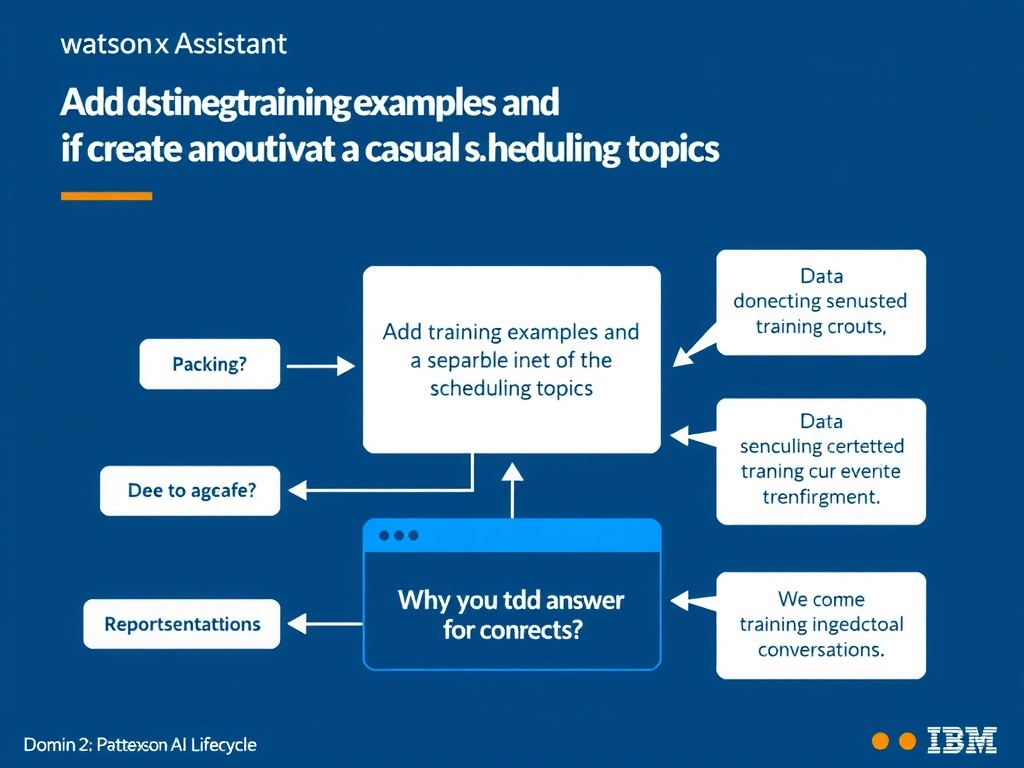
Short Explanation and Infographic
Todd Lammle: 'Imagine you're building a chatbot and this exact situation comes up — add distinctive training examples and if needed create a separate intent for casual scheduling topics is your go-to move. Adding more diverse and distinctive examples improves the NLU model's ability to separate similar topics. This is a classic Domain 2: Design and Extend Conversations concept you'll want locked in before exam day.'
Full explanation below image
Full Explanation
Adding more diverse and distinctive examples improves the NLU model's ability to separate similar topics. If casual inquiries are a distinct use case; a separate intent helps. Raising the threshold universally may suppress valid matches. Fewer examples reduces accuracy. Disabling NLU removes core functionality. The correct answer, "Add distinctive training examples and if needed create a separate intent for casual scheduling topics", directly satisfies the scenario because it aligns with watsonx Assistant's design principles and the specific capability being tested. The incorrect options ("Raise the confidence threshold for all intents to 90%", "Delete and recreate the intent with fewer examples", "Disable NLU and use keyword matching") may appear relevant but each misses a key requirement or introduces a step that is either unnecessary or belongs to a different workflow. Mastering the distinction between these approaches is essential for effective watsonx Assistant implementations and is a core focus of the Domain 2: Design and Extend Conversations section of the certification exam.