
A developer wants to route a user to a human agent after detecting frustration expressions more than twice in a conversation. How can the occurrence count be tracked?
Select an answer to reveal the explanation.
Short Explanation and Infographic
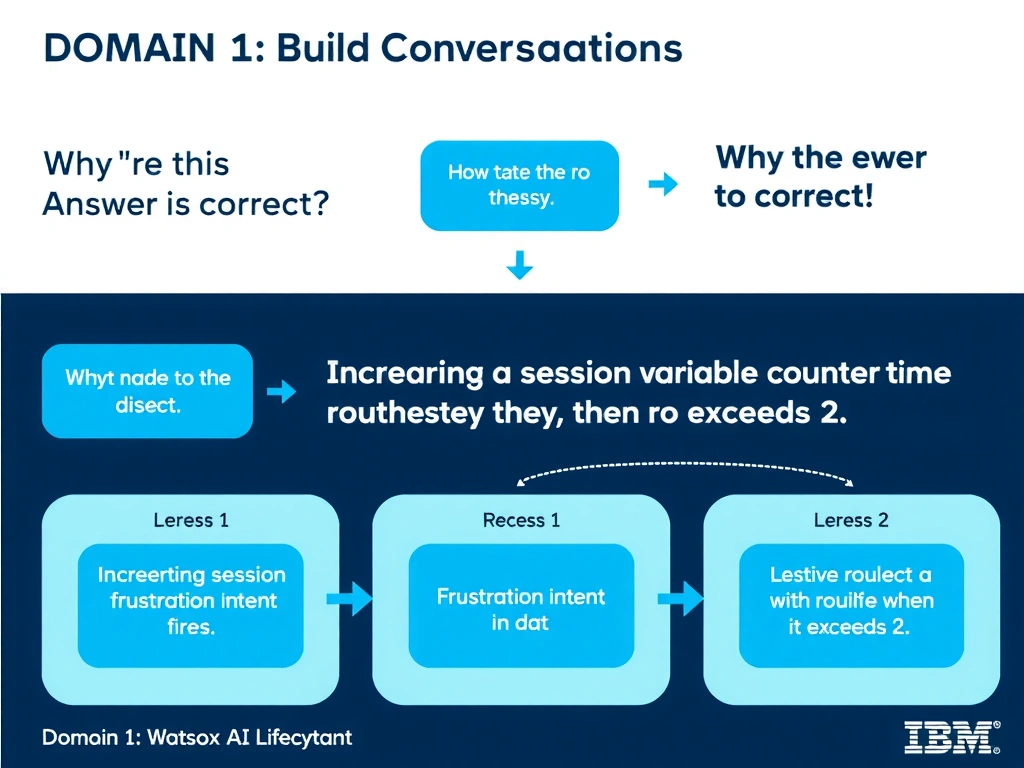
Todd Lammle: 'Imagine you're building a chatbot and this exact situation comes up — incrementing a session variable counter each time a frustration intent fires; then routing when it exceeds 2 is your go-to move. A session variable counter incremented on each frustration intent detection and checked in a condition step is the correct implementation. This is a classic Domain 1: Build Conversations concept you'll want locked in before exam day.'
Full explanation below image
Full Explanation
A session variable counter incremented on each frustration intent detection and checked in a condition step is the correct implementation. A pattern entity detects the presence of keywords in one message but does not count occurrences across multiple turns. The containment rate is a post-conversation metric. Digression is for topic switching; not counter tracking. The correct answer, "Incrementing a session variable counter each time a frustration intent fires; then routing when it exceeds 2", directly satisfies the scenario because it aligns with watsonx Assistant's design principles and the specific capability being tested. The incorrect options ("Using a pattern entity to detect the word 'frustrated'", "Using the containment rate metric to flag high-frustration sessions", "Enabling digression on the escalation step") may appear relevant but each misses a key requirement or introduces a step that is either unnecessary or belongs to a different workflow. Mastering the distinction between these approaches is essential for effective watsonx Assistant implementations and is a core focus of the Domain 1: Build Conversations section of the certification exam.