
A developer needs to pass a session variable as a REST API path parameter (e.g.; /orders/{orderId}). How is this done?
Select an answer to reveal the explanation.
Short Explanation and Infographic
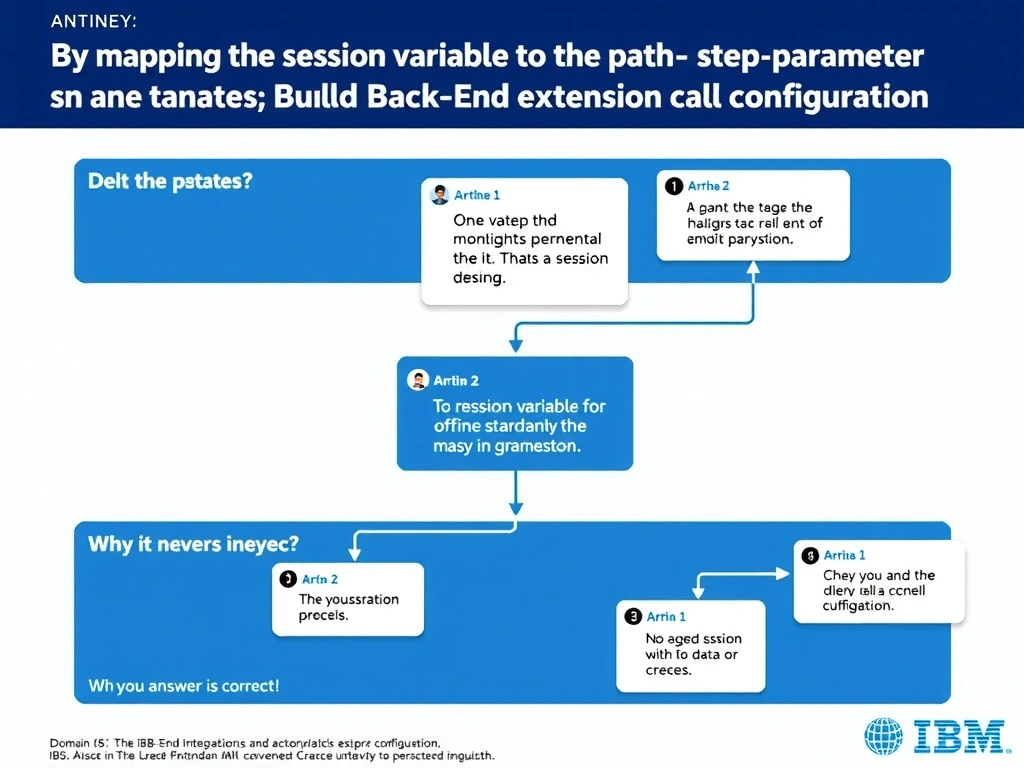
Todd Lammle: 'Imagine you're building a chatbot and this exact situation comes up — by mapping the session variable to the path parameter in the action step extension call configuration is your go-to move. The extension call configuration in the action step allows the developer to map session variables to specific parameters including path parameters. This is a classic Domain 6: Build Back-End Integrations concept you'll want locked in before exam day.'
Full explanation below image
Full Explanation
The extension call configuration in the action step allows the developer to map session variables to specific parameters including path parameters. The OpenAPI spec defines the parameter name; the action step provides the runtime value. The embed script and dialog nodes are not the correct locations for this mapping. The correct answer, "By mapping the session variable to the path parameter in the action step extension call configuration", directly satisfies the scenario because it aligns with watsonx Assistant's design principles and the specific capability being tested. The incorrect options ("By embedding the variable directly in the extension OpenAPI spec path", "By including the variable in the web chat embed script URL", "By using a dialog node to construct the URL before calling the extension") may appear relevant but each misses a key requirement or introduces a step that is either unnecessary or belongs to a different workflow. Mastering the distinction between these approaches is essential for effective watsonx Assistant implementations and is a core focus of the Domain 6: Build Back-End Integrations section of the certification exam.