
A developer wants an entity to track a dynamically changing product catalog. Which entity type is most appropriate?
Select an answer to reveal the explanation.
Short Explanation and Infographic
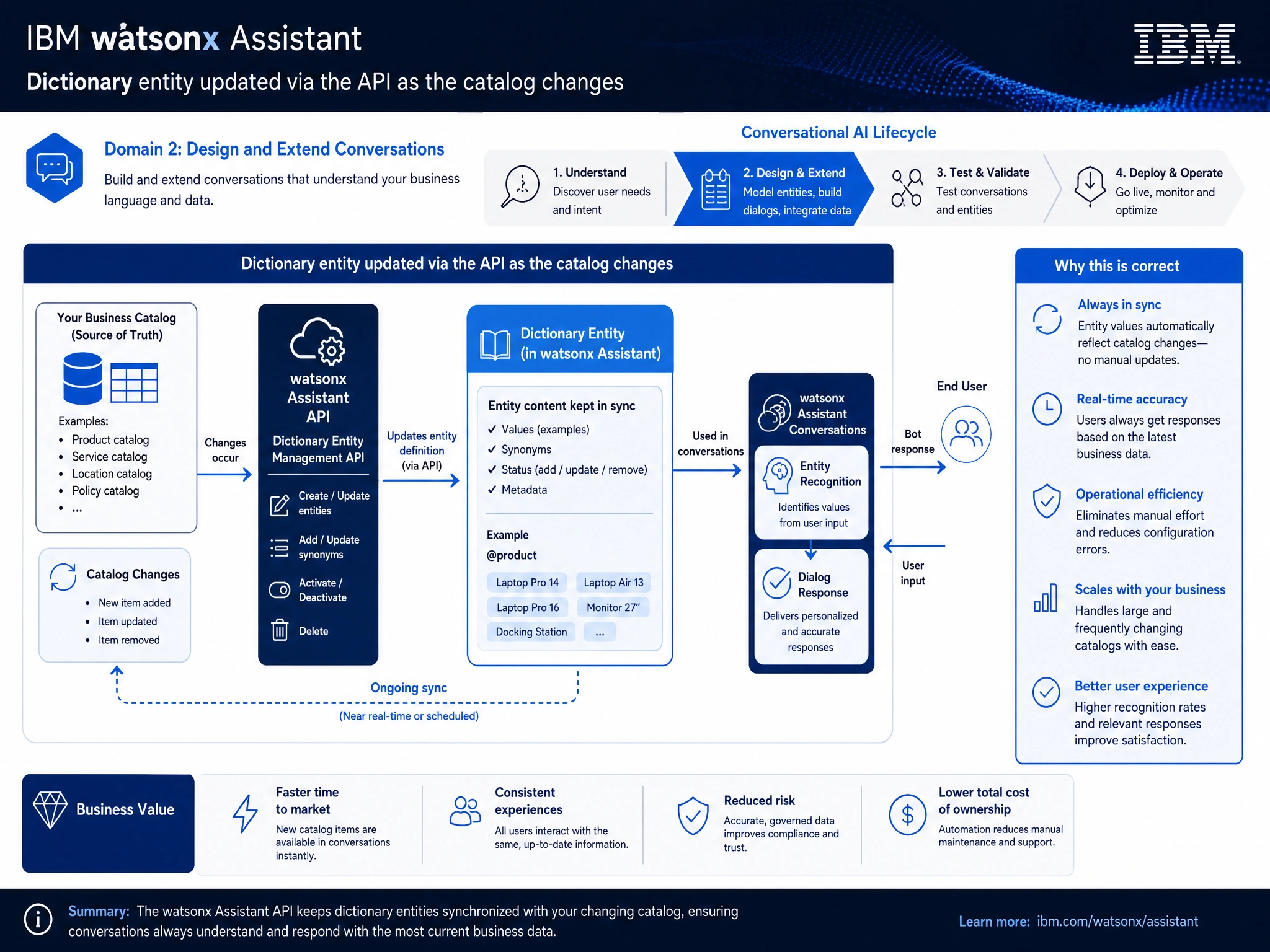
Todd Lammle: 'Imagine you're building a chatbot and this exact situation comes up — dictionary entity updated via the api as the catalog changes is your go-to move. A dictionary entity managed via the API allows programmatic updates as products are added or removed; keeping the entity current without manual edits. This is a classic Domain 2: Design and Extend Conversations concept you'll want locked in before exam day.'
Full explanation below image
Full Explanation
A dictionary entity managed via the API allows programmatic updates as products are added or removed; keeping the entity current without manual edits. Pattern entities handle structured code formats; not dynamic product names. @sys-any is not a standard system entity. Context variables store session data; not entity value definitions. The correct answer, "Dictionary entity updated via the API as the catalog changes", directly satisfies the scenario because it aligns with watsonx Assistant's design principles and the specific capability being tested. The incorrect options ("Pattern entity with product code regex", "System entity @sys-any", "Context variable populated by the web chat script") may appear relevant but each misses a key requirement or introduces a step that is either unnecessary or belongs to a different workflow. Mastering the distinction between these approaches is essential for effective watsonx Assistant implementations and is a core focus of the Domain 2: Design and Extend Conversations section of the certification exam.