
What does the digression setting on an action step allow?
Select an answer to reveal the explanation.
Short Explanation and Infographic
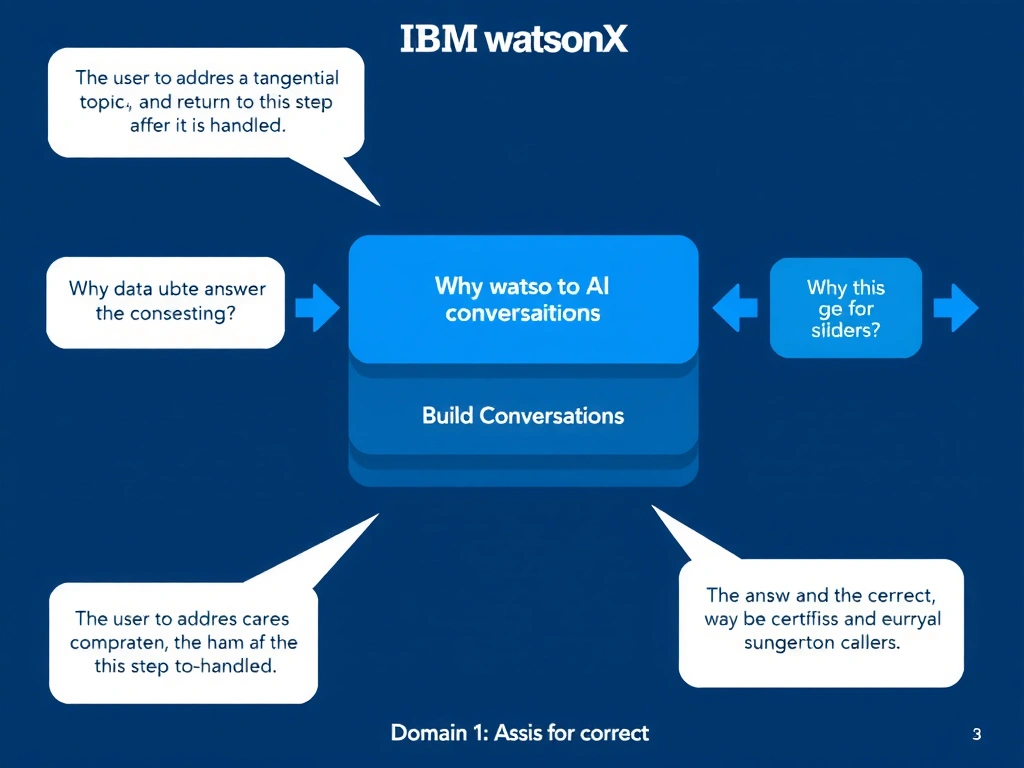
Todd Lammle: 'Imagine you're building a chatbot and this exact situation comes up — the user to address a tangential topic and return to this step after it is handled is your go-to move. Digression on a step allows the conversation to leave it; handle an off-topic query; and return to continue from that point. This is a classic Domain 1: Build Conversations concept you'll want locked in before exam day.'
Full explanation below image
Full Explanation
Digression on a step allows the conversation to leave it; handle an off-topic query; and return to continue from that point. Without digressions; the action would not resume after the tangential topic. The skip scenario; ambiguity repetition; and environment routing are separate concepts. The correct answer, "The user to address a tangential topic and return to this step after it is handled", directly satisfies the scenario because it aligns with watsonx Assistant's design principles and the specific capability being tested. The incorrect options ("The step to be skipped when the user says 'skip'", "The step to repeat if user input is ambiguous", "The conversation to route to the Live environment") may appear relevant but each misses a key requirement or introduces a step that is either unnecessary or belongs to a different workflow. Mastering the distinction between these approaches is essential for effective watsonx Assistant implementations and is a core focus of the Domain 1: Build Conversations section of the certification exam.