
What is the key advantage of using environment variables for API base URLs across Draft and Live?
Select an answer to reveal the explanation.
Short Explanation and Infographic
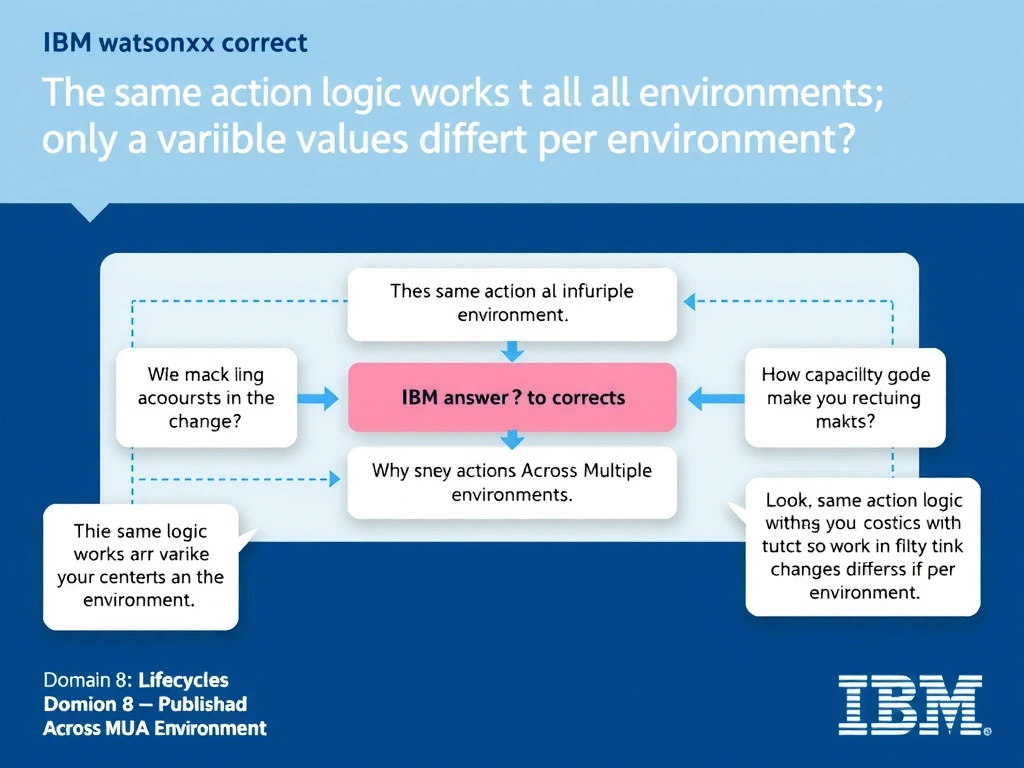
Todd Lammle: 'Imagine you're building a chatbot and this exact situation comes up — the same action logic works in all environments without code changes; only the variable values differ per environment is your go-to move. Environment variables externalize configuration from action logic; allowing the same action to resolve the correct API endpoint per environment at runtime. This is a classic Domain 8: Publish Across Multiple Environments concept you'll want locked in before exam day.'
Full explanation below image
Full Explanation
Environment variables externalize configuration from action logic; allowing the same action to resolve the correct API endpoint per environment at runtime. This reduces maintenance overhead. They do not replace snapshots; handle multi-language responses; or guarantee FIPS encryption. The correct answer, "The same action logic works in all environments without code changes; only the variable values differ per environment", directly satisfies the scenario because it aligns with watsonx Assistant's design principles and the specific capability being tested. The incorrect options ("Environment variables are automatically encrypted with FIPS-grade keys", "Environment variables eliminate the need for version snapshots", "Environment variables enable multi-language response configuration") may appear relevant but each misses a key requirement or introduces a step that is either unnecessary or belongs to a different workflow. Mastering the distinction between these approaches is essential for effective watsonx Assistant implementations and is a core focus of the Domain 8: Publish Across Multiple Environments section of the certification exam.