
How do environment variables in watsonx Assistant differ from session variables?
Select an answer to reveal the explanation.
Short Explanation and Infographic
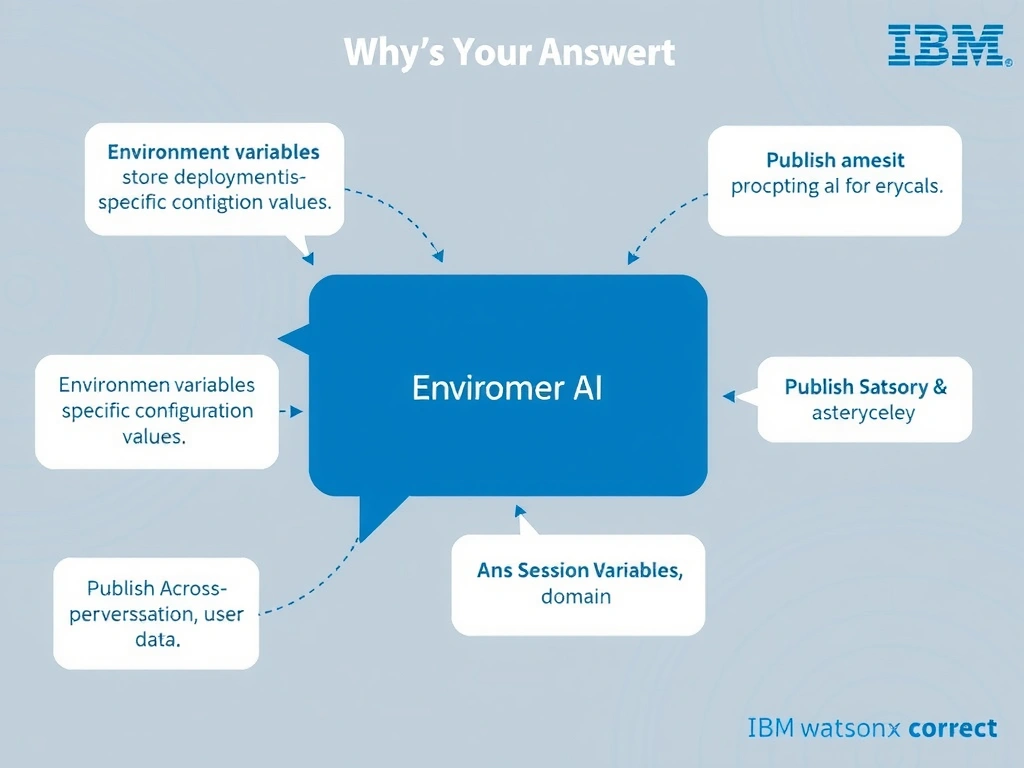
Todd Lammle: 'Imagine you're building a chatbot and this exact situation comes up — environment variables store deployment-specific configuration values; session variables store per-conversation user data is your go-to move. Environment variables hold deployment-specific configuration such as API base URLs or feature flags and can differ between environments. This is a classic Domain 8: Publish Across Multiple Environments concept you'll want locked in before exam day.'
Full explanation below image
Full Explanation
Environment variables hold deployment-specific configuration such as API base URLs or feature flags and can differ between environments. Session variables hold user-specific data for the duration of a single conversation. Their scopes and purposes are distinct. The correct answer, "Environment variables store deployment-specific configuration values; session variables store per-conversation user data", directly satisfies the scenario because it aligns with watsonx Assistant's design principles and the specific capability being tested. The incorrect options ("Environment variables store conversation context; session variables store deployment configuration", "Environment variables are visible to users; session variables are hidden", "Environment variables are only available in Draft; session variables work in both") may appear relevant but each misses a key requirement or introduces a step that is either unnecessary or belongs to a different workflow. Mastering the distinction between these approaches is essential for effective watsonx Assistant implementations and is a core focus of the Domain 8: Publish Across Multiple Environments section of the certification exam.