
What is retrieval-augmented generation (RAG) in the context of watsonx Assistant?
Select an answer to reveal the explanation.
Short Explanation and Infographic
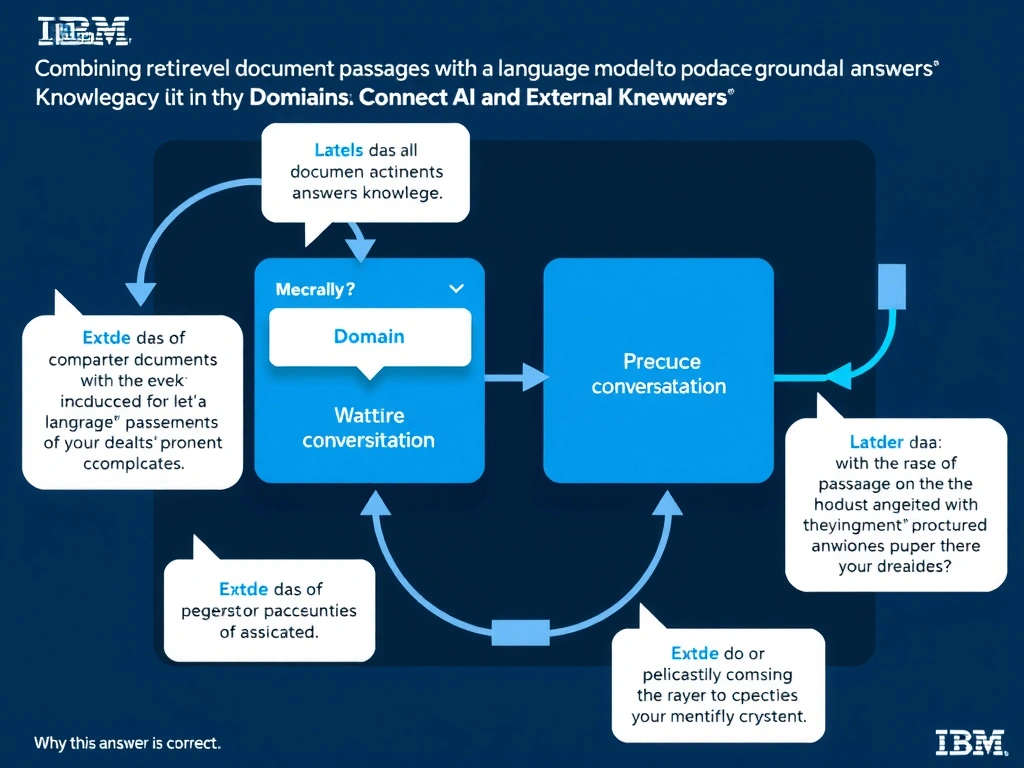
Todd Lammle: 'Imagine you're building a chatbot and this exact situation comes up — combining retrieved document passages with a language model to produce grounded answers is your go-to move. RAG retrieves relevant passages from a knowledge base and passes them to a language model which then generates an answer grounded in that source content. This is a classic Domain 3: Connect AI and External Knowledge concept you'll want locked in before exam day.'
Full explanation below image
Full Explanation
RAG retrieves relevant passages from a knowledge base and passes them to a language model which then generates an answer grounded in that source content. This reduces hallucinations compared to purely generative answers. RAG is not about product generation; augmenting entity detection; or log retrieval for retraining. The correct answer, "Combining retrieved document passages with a language model to produce grounded answers", directly satisfies the scenario because it aligns with watsonx Assistant's design principles and the specific capability being tested. The incorrect options ("Generating new product descriptions using fine-tuned models", "Using intent detection to augment entity recognition", "Retrieving conversation logs for model retraining") may appear relevant but each misses a key requirement or introduces a step that is either unnecessary or belongs to a different workflow. Mastering the distinction between these approaches is essential for effective watsonx Assistant implementations and is a core focus of the Domain 3: Connect AI and External Knowledge section of the certification exam.