
A financial services company needs their assistant's answers to be strictly based on internal policy documents, with no information fabricated by the LLM. Which watsonx Assistant capability best ensures this grounding?
Select an answer to reveal the explanation.
Short Explanation and Infographic
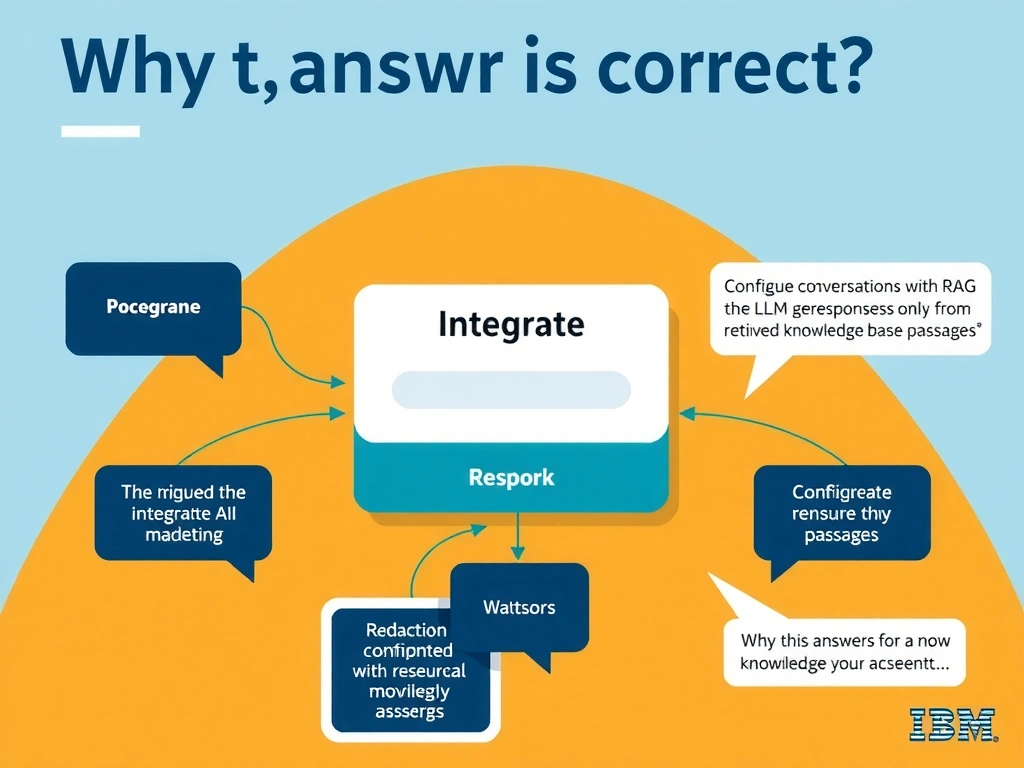
Todd Lammle: 'Imagine you're building a chatbot and this exact situation comes up — configure conversational search with rag so the llm generates responses only from retrieved knowledge base passages is your go-to move. RAG grounds LLM output in retrieved passages from the enterprise knowledge base. This is a classic Domain 4: Integrate with watsonx concept you'll want locked in before exam day.'
Full explanation below image
Full Explanation
RAG grounds LLM output in retrieved passages from the enterprise knowledge base. Because the model is instructed to synthesize its answer from those passages, the risk of hallucination is significantly reduced compared to open-ended generation. This is the primary mechanism in watsonx Assistant for ensuring factual accuracy tied to authoritative enterprise content. The correct answer, "Configure conversational search with RAG so the LLM generates responses only from retrieved knowledge base passages", directly satisfies the scenario because it aligns with watsonx Assistant's design principles and the specific capability being tested. The incorrect options ("Enable dialog disambiguation to confirm user intent before every answer", "Set the NLU confidence threshold to 0.9 to reduce incorrect intent matches", "Use slot filling to collect all required policy parameters before the LLM responds") may appear relevant but each misses a key requirement or introduces a step that is either unnecessary or belongs to a different workflow. Mastering the distinction between these approaches is essential for effective watsonx Assistant implementations and is a core focus of the Domain 4: Integrate with watsonx section of the certification exam.