
A user interacting with an insurance company's AI assistant asks: 'What is the best stock to buy right now?' This topic is entirely outside the assistant's defined scope. What is the BEST fallback response design for this scenario?
Select an answer to reveal the explanation.
Short Explanation and Infographic
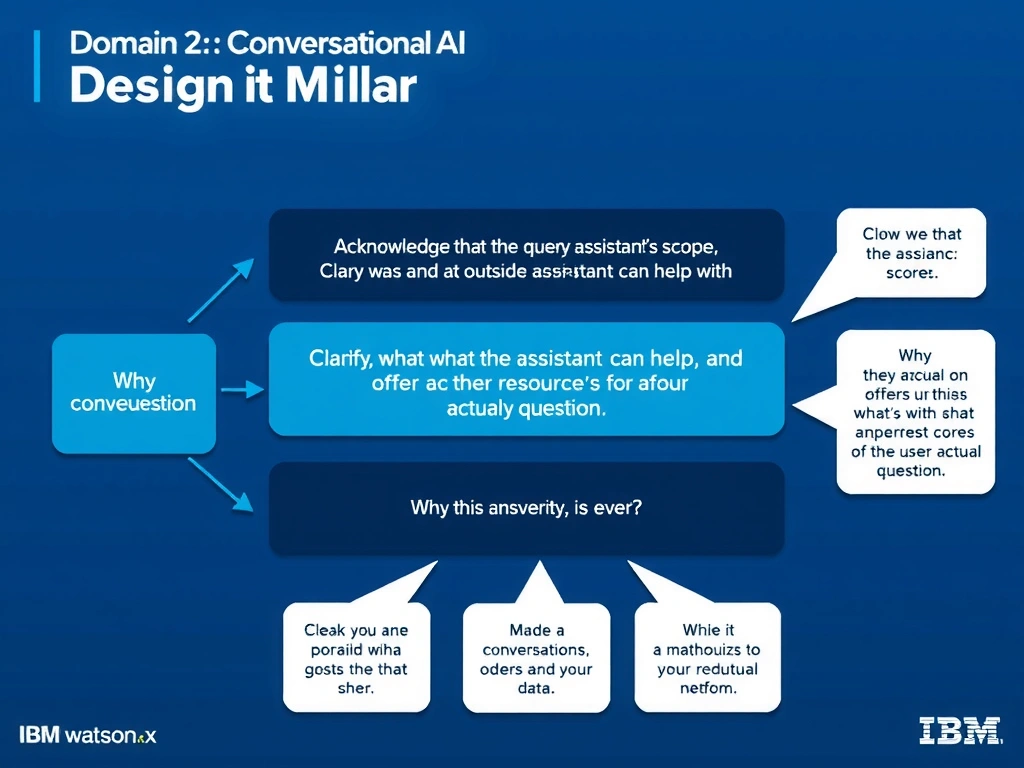
Todd Lammle: 'Imagine you're building a chatbot and this exact situation comes up — acknowledge that the query is outside the assistant's scope, clarify what the assistant can help with, and offer a redirect or resource for the user's actual question is your go-to move. Effective out-of-scope fallback design follows three steps: acknowledge the query without dismissing the user, clarify the assistant's actual scope, and provide a helpful redirect. This is a classic Domain 2: Conversational AI Design concept you'll want locked in before exam day.'
Full explanation below image
Full Explanation
Effective out-of-scope fallback design follows three steps: acknowledge the query without dismissing the user, clarify the assistant's actual scope, and provide a helpful redirect. Answering out-of-scope questions risks misinformation and scope creep. An abrupt 'I don't know' with no context frustrates users and wastes the interaction. Ignoring messages creates a confusing dead end. The correct answer, "Acknowledge that the query is outside the assistant's scope, clarify what the assistant can help with, and offer a redirect or resource for the user's actual question", directly satisfies the scenario because it aligns with watsonx Assistant's design principles and the specific capability being tested. The incorrect options ("Provide stock investment recommendations based on the assistant's general knowledge to appear helpful to the user", "Simply reply that the assistant does not know and end the conversation session immediately", "Ignore the message entirely and prompt the user to rephrase their question without any explanation") may appear relevant but each misses a key requirement or introduces a step that is either unnecessary or belongs to a different workflow. Mastering the distinction between these approaches is essential for effective watsonx Assistant implementations and is a core focus of the Domain 2: Conversational AI Design section of the certification exam.