
During a support flow, the user provides their eight-digit account number in response to a prompt. The engineer needs to retain this value so later steps and extensions can reference it. What is the correct way to store the account number in watsonx Assistant?
Select an answer to reveal the explanation.
Short Explanation and Infographic
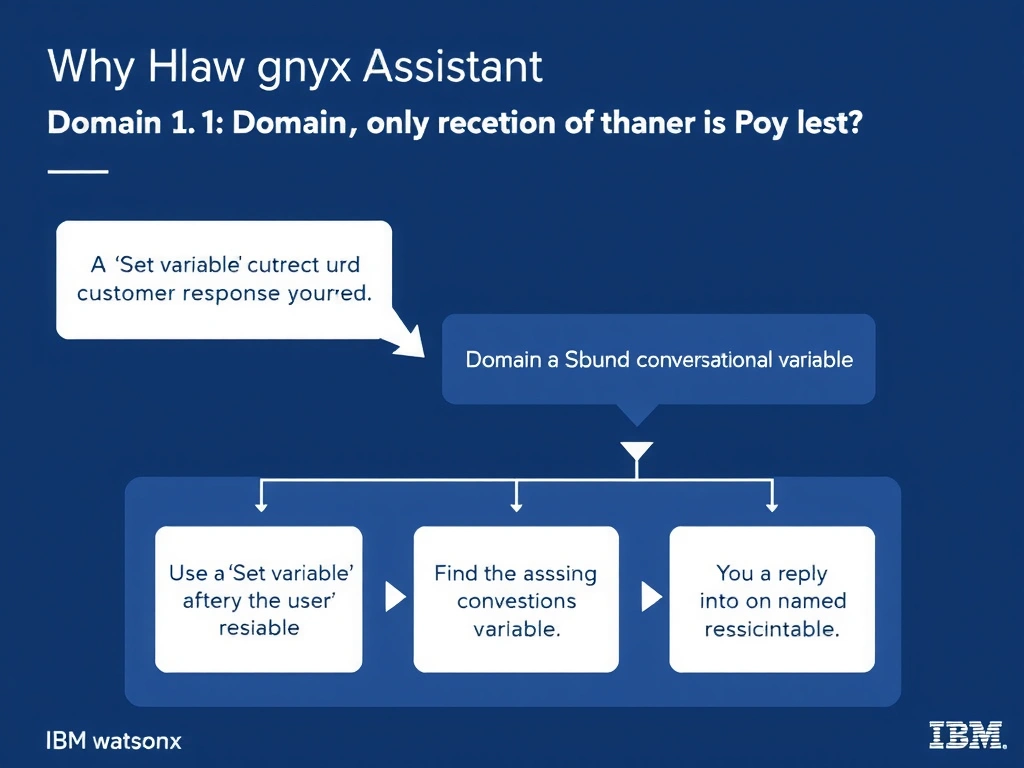
Todd Lammle: 'Imagine you're building a chatbot and this exact situation comes up — use a 'set variable' step immediately after the customer response step to assign the user's reply to a named session variable is your go-to move. After a 'Customer response' step captures input, a 'Set variable' step assigns that input expression (e. This is a classic Domain 1: Build Conversational Flows concept you'll want locked in before exam day.'
Full explanation below image
Full Explanation
After a 'Customer response' step captures input, a 'Set variable' step assigns that input expression (e.g., the action step's output) to a named session variable. Session variables persist throughout the conversation and can be referenced in conditions, response text, and extension calls. Passing values as URL query parameters is not a session-persistence mechanism and exposes data unnecessarily. The correct answer, "Use a 'Set variable' step immediately after the customer response step to assign the user's reply to a named session variable", directly satisfies the scenario because it aligns with watsonx Assistant's design principles and the specific capability being tested. The incorrect options ("Pass the value directly as a query parameter appended to the webhook URL in the same step", "Log the value to the assistant's built-in debug console so it persists for the session", "Store the value in a custom dialog context property using legacy dialog node syntax") may appear relevant but each misses a key requirement or introduces a step that is either unnecessary or belongs to a different workflow. Mastering the distinction between these approaches is essential for effective watsonx Assistant implementations and is a core focus of the Domain 1: Build Conversational Flows section of the certification exam.