
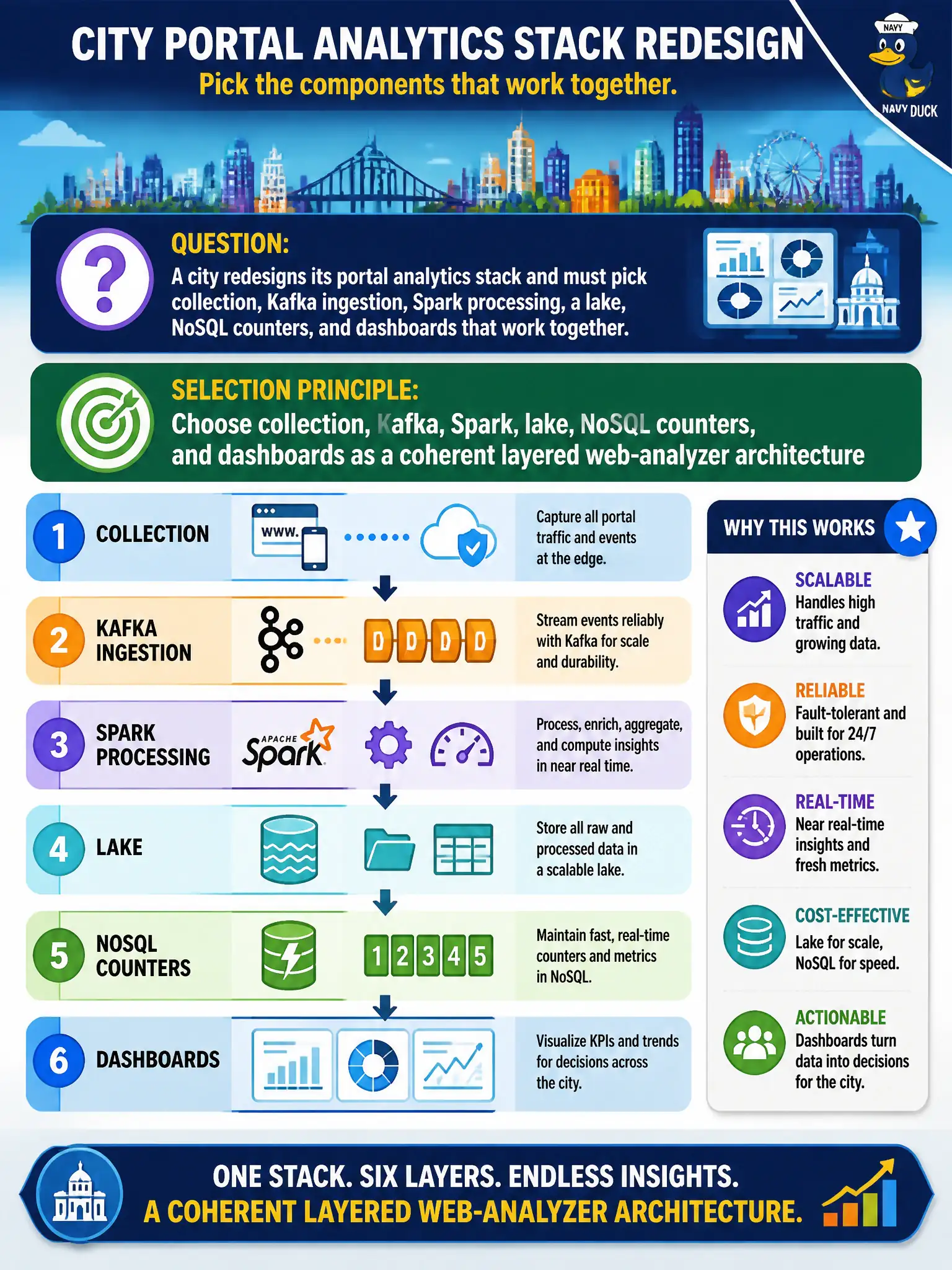
A city redesigns its portal analytics stack and must pick collection, Kafka ingestion, Spark processing, a lake, NoSQL counters, and dashboards that work together. What selection principle should guide the capstone design?
Select an answer to reveal the explanation.
Short Explanation
Modernizing civic portal analytics is an orchestra, not a junk drawer. Collection, Kafka, Spark, lake, hot counters, and dashboards have to play the same score. Pick the pieces so the layered story hangs together from beacon to boardroom.
Full Explanation
Choose collection, Kafka ingestion, Spark processing, a lake, NoSQL counters, and dashboards as a coherent layered web-analyzer architecture when redesigning a city’s portal analytics stack. Capstone selection is about an integrated score from beacon to boardroom, not a junk drawer of unrelated tools. That principle closes Cap. 10 with BDPC’s layered story applied to civic digital services.
Selecting unrelated point tools with no shared events, layers, or serving contracts guarantees integration pain and inconsistent metrics. Standardizing only on printed monthly surveys skips digital telemetry residents already generate on the portal. Using cloud billing dashboards alone as a substitute for portal event analytics measures spend, not citizen journeys through municipal services.
Exam caveat: coherence does not require a single vendor—open interfaces and shared event contracts can unite best-of-breed components if layers and ownership are explicit. Operational check: for the redesign, map each selected tool to one primary layer, verify a single sample citizen task flows through all layers into a dashboard metric, and reject any component that cannot name its contract with adjacent layers. Document the verified decision in the municipal architecture runbook so future on-call and audit staff inherit the same standard.