
Council asks how machine-to-machine water meters turn into dollar savings. What narrative should staff present?
Select an answer to reveal the explanation.
Short Explanation
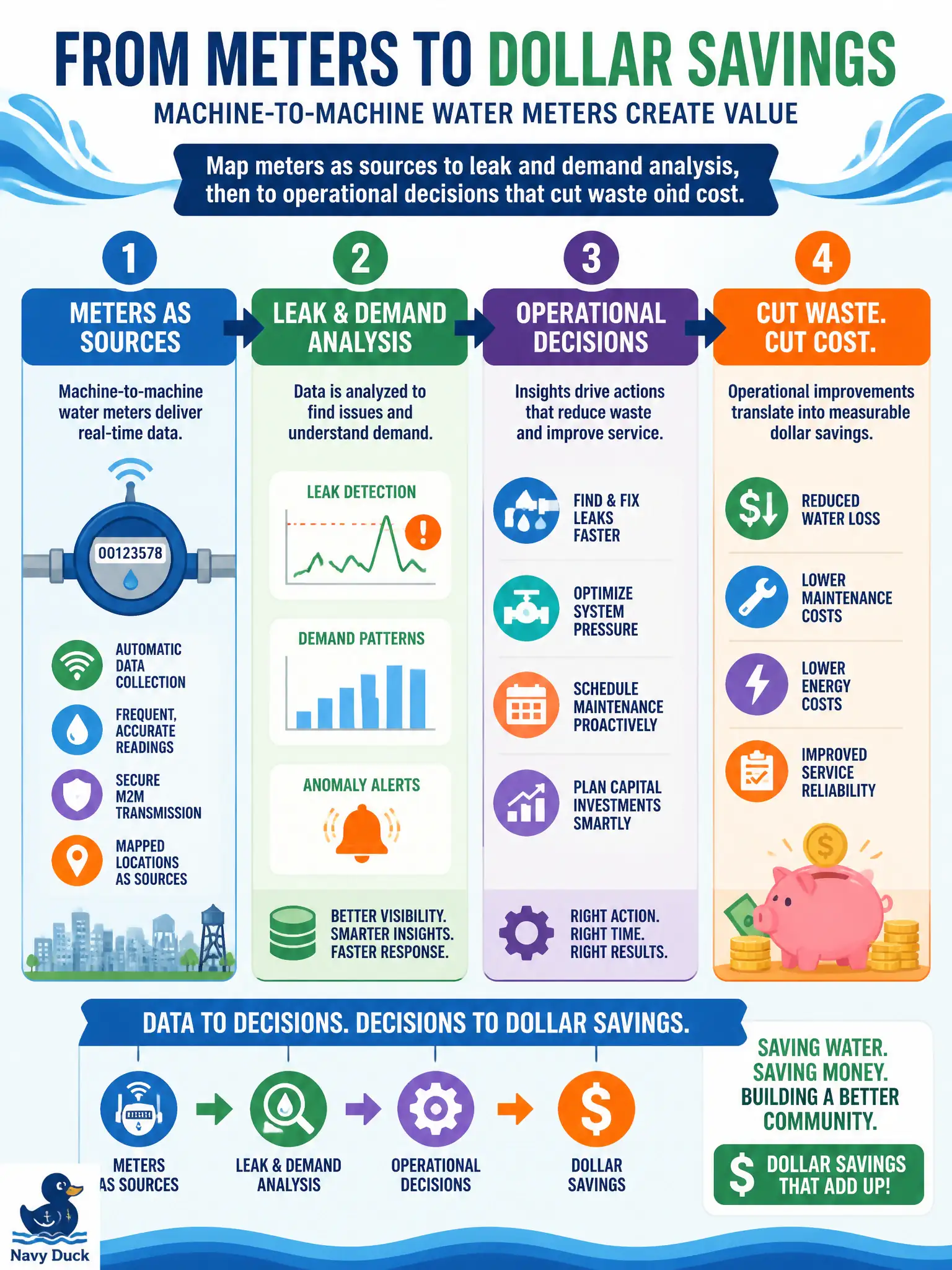
A meter does not print money by itself. Staff need the story: source readings, analysis that spots leaks or waste, then a decision that turns the wrench. Parking files in a bucket is not a savings plan.
Full Explanation
Value narratives connect source classes to analyses and then to decisions. Water-meter M2M data supports leak detection, demand profiling, and targeted interventions that reduce loss and cost for ratepayers. Clear source-to-decision mapping helps councils fund and govern the pipeline instead of hoping files on disk spontaneously save money.
Claiming savings appear automatically when any CSV lands in object storage fails by concept: landing without analysis yields no decisions. Arguing meters only create Variety and never support operational decisions fails by concept: meters enable leak and demand decisions. Showing only the procurement invoice and skipping analysis and decision steps fails by concept: purchase alone is not value realization.
Exam caveat: Map meters → leak/demand analysis → operational decisions that cut waste—do not equate object-storage landing or invoices with realized savings.
Operational check: Present a one-page value chain (meters, analyses, decisions, dollar metrics), assign owners per stage, and report verified leak reductions to council. Document residual risk for civic operators and revisit after the next production change window. Confirm owners, SLAs, and rollback criteria in the runbook before go-live.