
In a MapReduce tally of transit delay reason codes, what is the reducer's primary responsibility?
Select an answer to reveal the explanation.
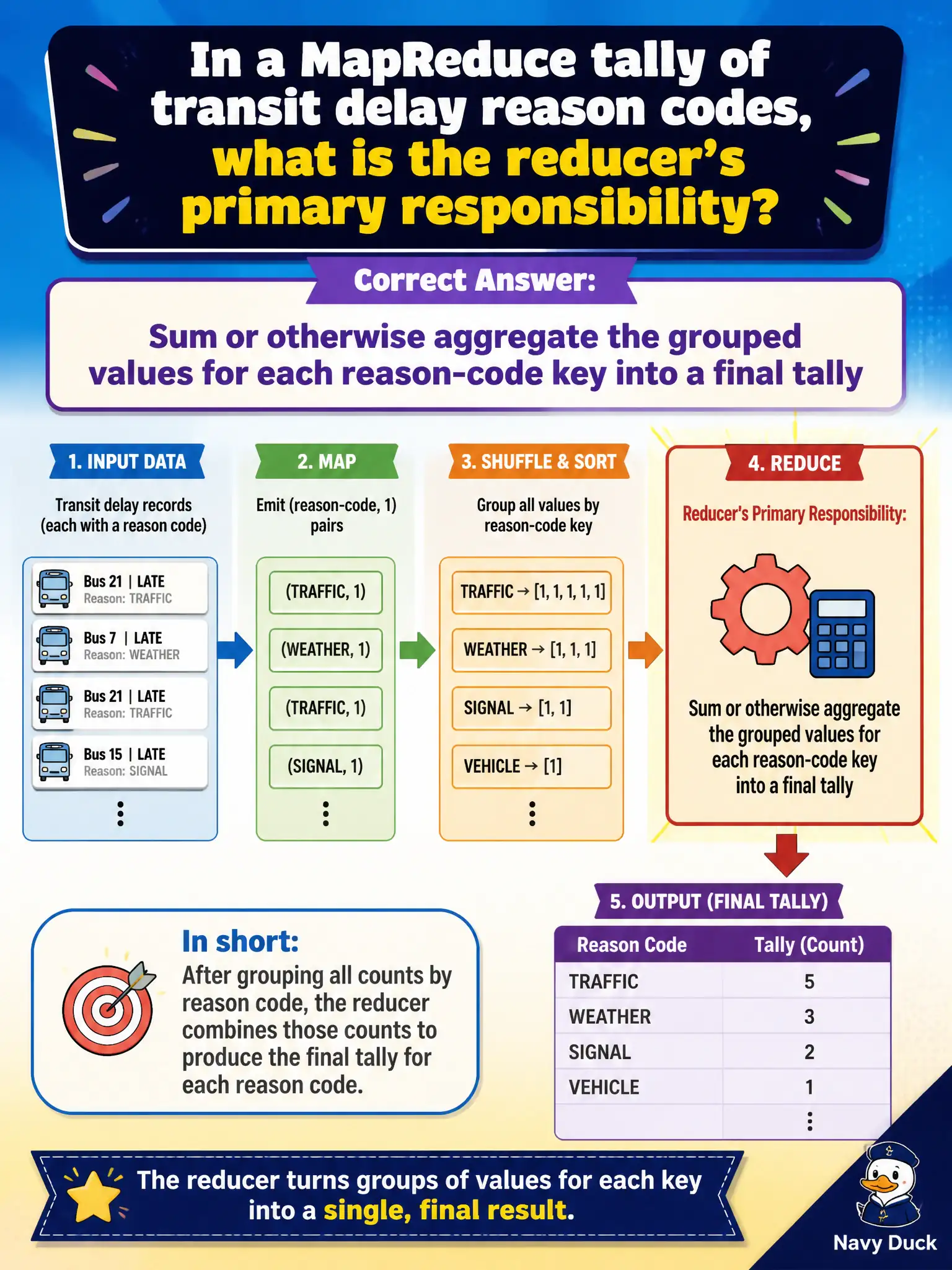
Short Explanation
Once every sticky note for "signal failure" lands in one pile, the reducer adds them up. That aggregation—summing the ones into a final tally—is the reduce phase's job. Splitting input and babysitting HDFS or Kafka live elsewhere.
Full Explanation
In a MapReduce tally of transit delay reason codes, the reducer’s primary responsibility is to sum or otherwise aggregate the grouped values for each reason-code key into a final tally that operations and planning can trust. Splitting the raw HDFS input file into equal-sized blocks before any map work starts is an input-split/HDFS concern, not the reducer’s job. Retrying failed NameNode heartbeats is an HDFS operations concern, not reducer aggregation logic. Replacing Kafka brokers when a payment stream falls behind is streaming infrastructure work unrelated to this batch reducer’s role. Exam caveat: reducers aggregate grouped intermediates; they do not split inputs or run the NameNode. Operational check: verify reducer output totals per delay reason against a sampled week of AVL exceptions before publishing the transit reliability briefing. In municipal platform operations, record the rationale in the architecture decision record so future on-call staff know which pattern was chosen and which failure modes the rejected options would create for city services. Re-validate after the next maintenance window that monitoring, access paths, and recovery steps still match the documented design for agencies that depend on this platform.