
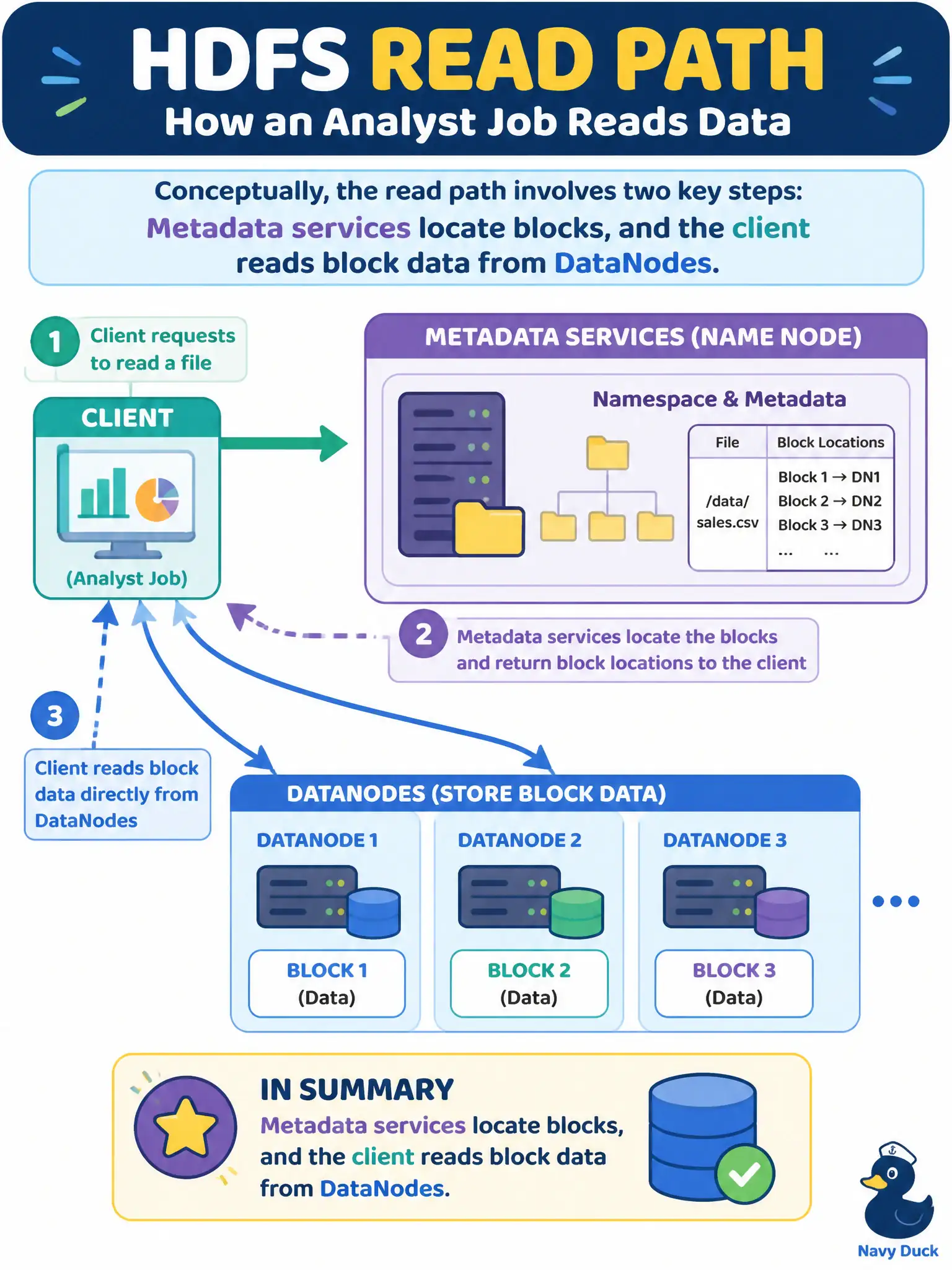
An analyst job reads a large HDFS dataset. Conceptually, how does the read path involve cluster roles?
Select an answer to reveal the explanation.
Short Explanation
Ask the librarian where the volumes live, then pull the books from the shelves—not from the librarian’s desk drawer. Metadata points; DataNodes deliver the bytes.
Full Explanation
Conceptually, an analyst job reading a large HDFS dataset asks metadata services such as the NameNode where blocks live, then the client reads block bytes from DataNodes that hold those replicas. The librarian points to the shelves; the shelves deliver the volumes. NameNode memory is not the bulk data path for municipal archive scans, and confusing those roles leads to wrong troubleshooting and wrong capacity purchases. The client does not receive all file bytes exclusively from the NameNode’s memory heap as if metadata were the file contents. DataNodes do not only store logs while all bytes always stream from a single USB drive attached to one host in the rack. Reads do not ignore metadata and randomly probe IP addresses until a file appears by luck on the municipal network. Exam caveat: separating the metadata path from the data path is a core HDFS reading-model question on BDPC-style exams and platform interviews. Operational check: during troubleshooting, confirm the NameNode returns block locations and that network traffic to DataNodes carries the bulk read; investigate NameNode heap pressure as a metadata problem, not as a missing file-payload store; and update the NOC runbook with that distinction for on-call staff.