
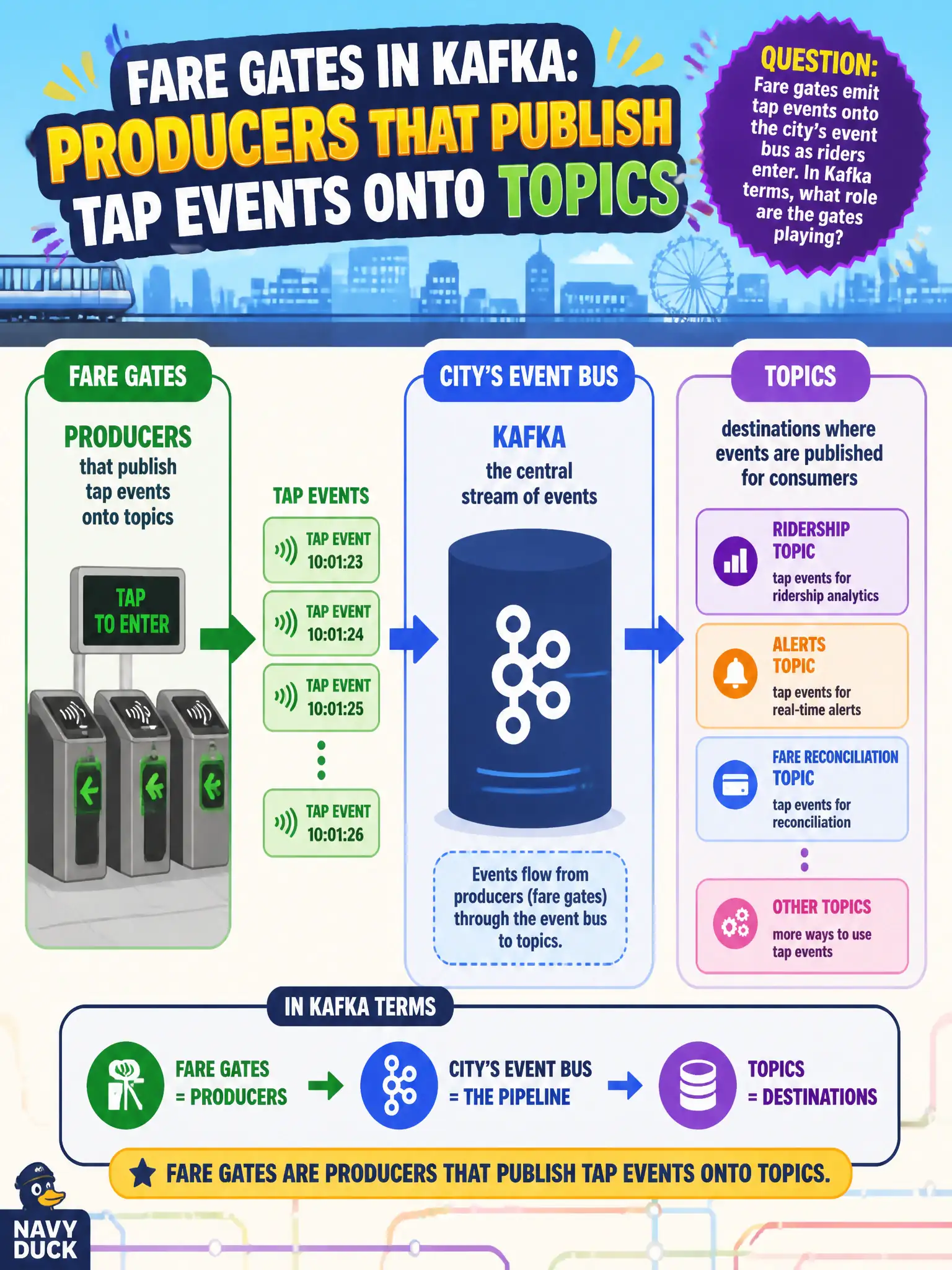
Fare gates emit tap events onto the city's event bus as riders enter. In Kafka terms, what role are the gates playing?
Select an answer to reveal the explanation.
Short Explanation
Producers are the talkers. Fare gates speak first—they publish each tap onto the topic so everyone else can listen later.
Full Explanation
Fare gates that emit tap events onto the city’s event bus are producers in Kafka terms: they publish tap events onto topics for downstream consumers. They are not brokers storing partitions for the cluster, nor consumer groups that only read, nor admin consoles without a data path. Clear role separation helps transit teams reason about scaling gates versus brokers. Exam caveat: producer hardening (retries, idempotence, keys for partition affinity by card or gate id) matters as much as broker count when tap spikes hit stadium egress. Operational check: identify gate producer client configuration, publish a test tap, and confirm the message appears on the expected topic partition with the intended key. In production terms for Kafka producers on fare gates, assign an owning team, wire a dashboard that shows the pattern is healthy under peak civic load, and require a staging drill that rehearses failure and recovery before resident impact. Revisit the choice when traffic shape, retention, or integrity needs change, and keep a named rollback owner on the change record. Re-test both the happy path and the failure path for Kafka producers on fare gates after material dependency upgrades so regressions are caught before the next public release.