
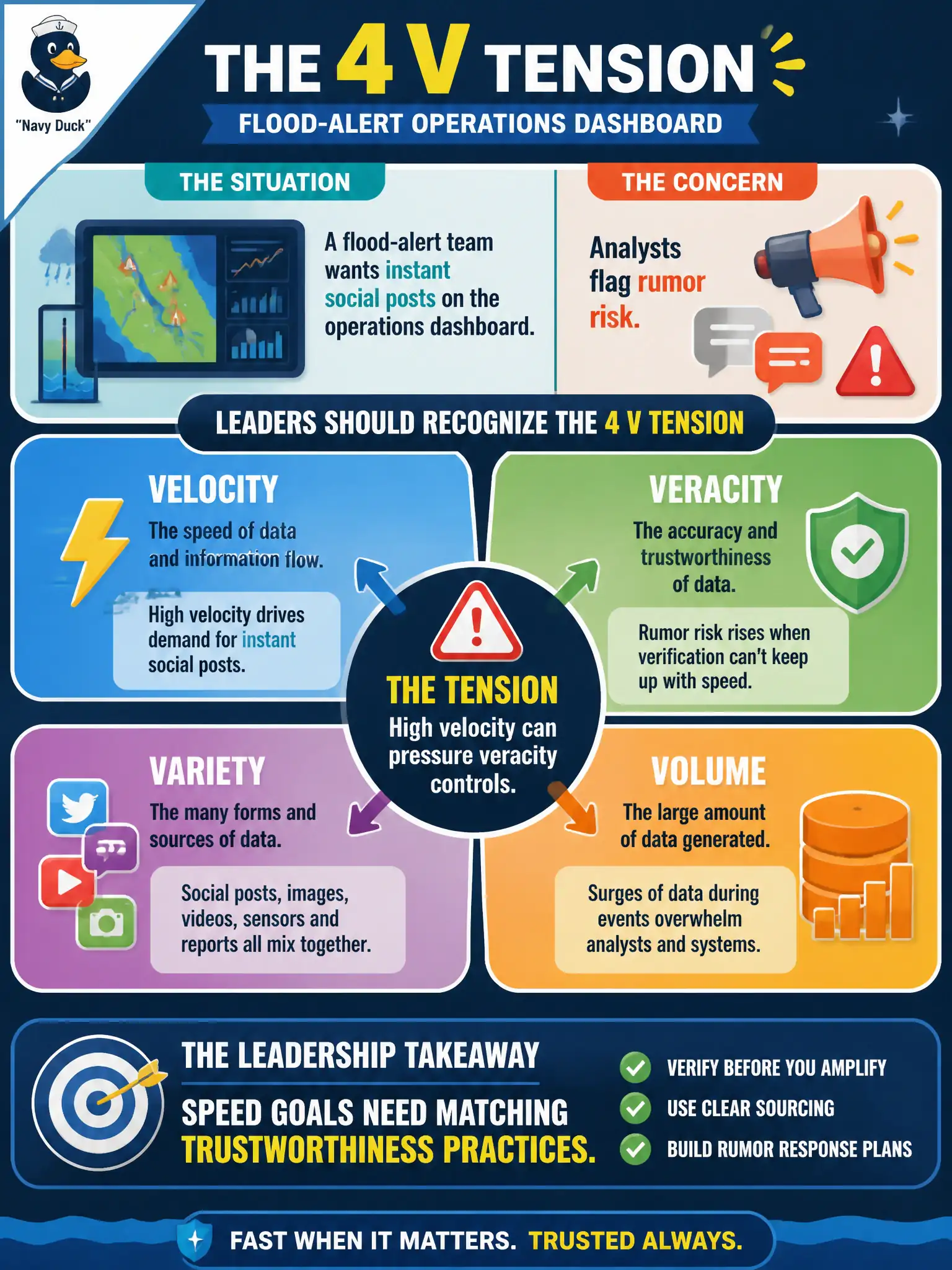
A flood-alert team wants instant social posts on the operations dashboard, but analysts flag rumor risk. Which 4 V tension should leaders recognize?
Select an answer to reveal the explanation.
Short Explanation
The faster you pour social posts onto the wall, the easier rumors sneak in with the useful tips. Velocity without a veracity seatbelt is how dashboards become rumor amplifiers. Leaders can want speed—and still fund the trust checks.
Full Explanation
Velocity and veracity often tension: accelerating ingestion of social content for flood awareness can admit unverified or misleading posts. BDPC-level judgment is to recognize that tradeoff and pair speed objectives with quality, validation, or confidence controls. Civic flood ops need timely tips without letting rumors drive evacuations or resource misallocation.
Claiming volume always cancels veracity so quality checks are unnecessary fails by concept: more data does not erase trustworthiness duties. Claiming velocity and veracity never interact fails by concept: speed goals routinely pressure quality controls. Claiming high veracity automatically produces high velocity with no tradeoffs fails by concept: trustworthy curation can slow release relative to raw fire-hose display.
Exam caveat: High velocity can pressure veracity; exam answers that deny the interaction or cancel quality checks are wrong.
Operational check: For flood social ingest, define confidence tags, human or automated authenticity filters, and a maximum dashboard latency that still allows Veracity gates before public or ops-facing alerts. Document residual risk for civic operators and revisit after the next production change window.