
A sheet-metal worker slices a forearm on ductwork flashing, and an urgent care physician closes the wound with four stitches before releasing the worker to full duty immediately. How must the site supervisor classify this case?
Select an answer to reveal the explanation.
Short Explanation
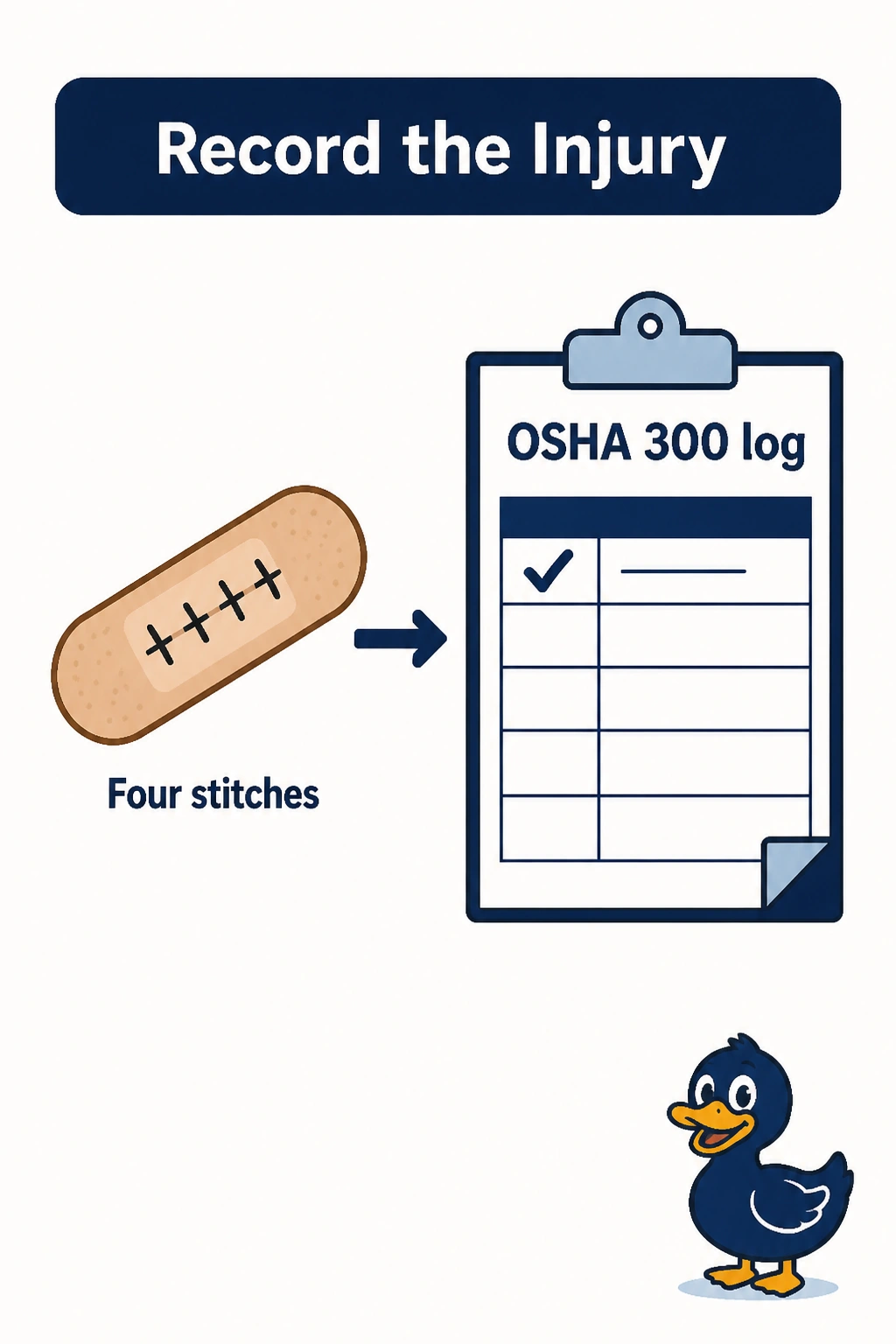
You should record this case because stitches are medical treatment beyond first aid, even though the worker returns to full duty immediately. A quick return to work does not keep the injury off the OSHA 300 log.
Full Explanation
Under 29 CFR 1904.7, a work-related injury requiring medical treatment beyond first aid must be recorded. Wound-closing devices such as sutures, staples, or surgical glue are classified as medical treatment, so the supervisor must record this injury on the OSHA 300 log within seven calendar days of receiving the information. Logging it only as a first-aid case on the daily clinic sheet is incorrect because OSHA’s closed list of first-aid treatments includes bandages, butterfly strips, and Steri-Strips, but not stitches. Excluding it from the OSHA 300 log because no workdays were missed confuses days away from work with the medical-treatment trigger; either criterion alone can make a case recordable. Waiting thirty days to see if an infection develops violates the seven-calendar-day recording deadline, since stitches have already been provided. Exam caveat: the worker’s immediate return to full duty does not change the recordability decision when medical treatment beyond first aid has occurred. Practical check: review the clinic discharge paperwork on the day of the visit and verify that stitches were used before updating the OSHA 300 log.
Prefer to study offline? Printable PDF study book + test engine ($7.50, unofficial). These questions stay free here.