
During a commercial steel erection project, a safety supervisor notices that a morning Job Hazard Analysis (JHA) was signed by every crew member in the trailer, but nobody has checked the workface since work began. What is the best action for the supervisor to take?
Select an answer to reveal the explanation.
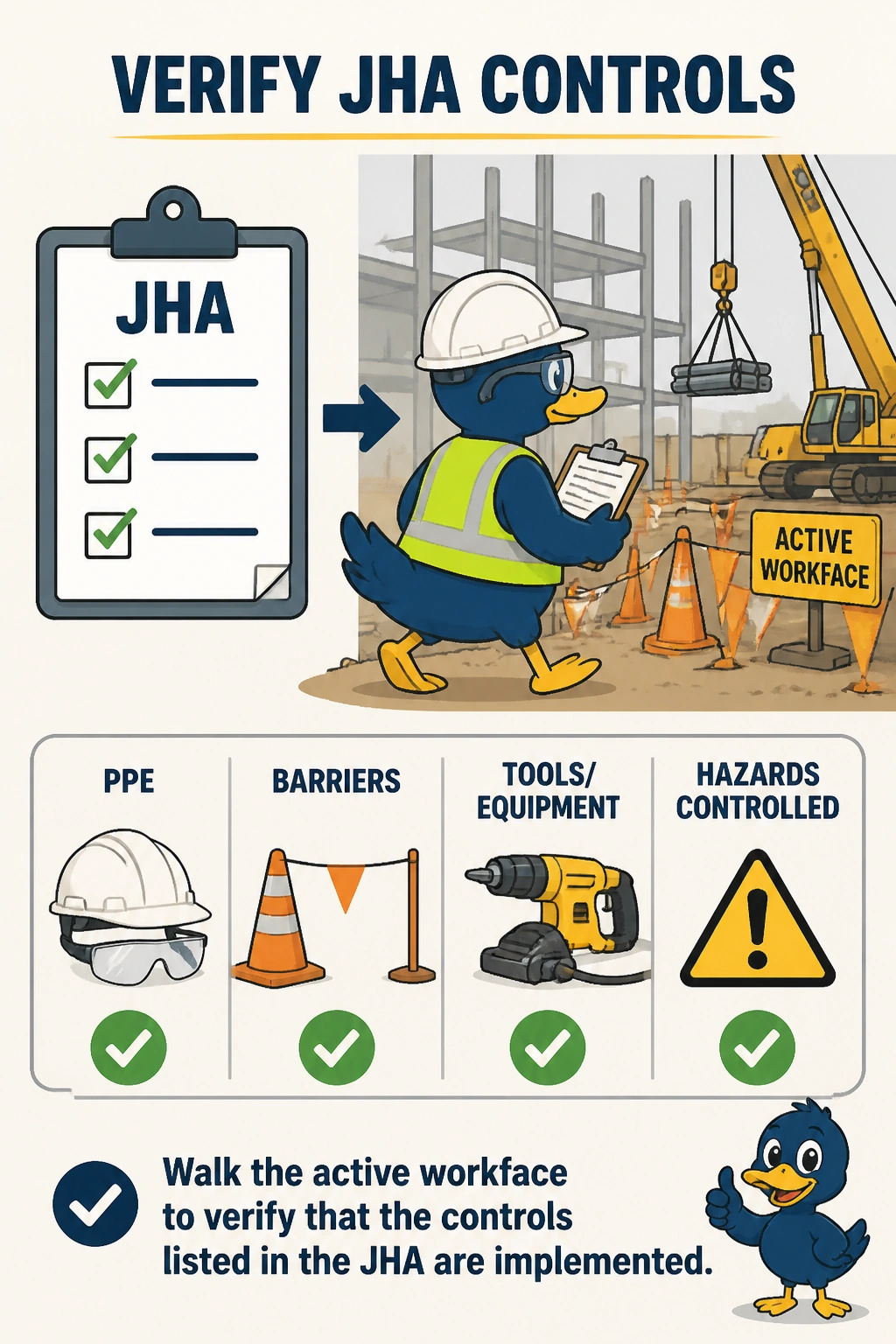
Short Explanation
A signed piece of paper in the trailer never stopped a falling beam on its own. When you audit a Job Hazard Analysis, the trap is treating signatures as proof of protection instead of walking the workface to verify every control is actually in place.
Full Explanation
A Job Hazard Analysis only protects workers when its controls are physically present at the workface, so the right move is to Walk the active workface to verify that the controls listed in the JHA are implemented. Field conditions, rigging setups, and crew positions shift throughout the day, and a paper plan cannot catch missing tie-offs, unbarricaded swing zones, or improvised tools unless a supervisor observes the actual work. Choosing to Collect the signed JHA form and file it in the project safety binder treats hazard planning as a paperwork exercise and leaves unverified field gaps untouched. If you Ask the crew foreman by radio whether the morning JHA is still valid, you rely on secondhand reassurance rather than direct observation, which often misses normalized shortcuts. Choosing to Have the crew re-sign the same JHA form after their afternoon break adds signatures without checking whether conditions changed or controls failed. Caveat: if the workface audit reveals a new hazard or altered sequence, pause the task and update the JHA with the crew before resuming. Operational check: compare each step on the morning JHA against the live work area, confirm physical barriers and PPE match what was planned, and coach the crew immediately on any discrepancy.
Prefer to study offline? Printable PDF study book + test engine ($7.50, unofficial). These questions stay free here.