
After a near-miss in which a telehandler load shifted on a muddy ramp, the site supervisor completes the investigation and updates the site material-handling procedure. What is the supervisor's essential next program step?
Select an answer to reveal the explanation.
Short Explanation
An updated safety procedure sitting in a binder helps nobody when the next shift rolls onto the same muddy ramp. Once you identify what went wrong and fix the process, you need to get those lessons out to the crews right away. The trap is thinking paperwork alone closes the loop.
Full Explanation
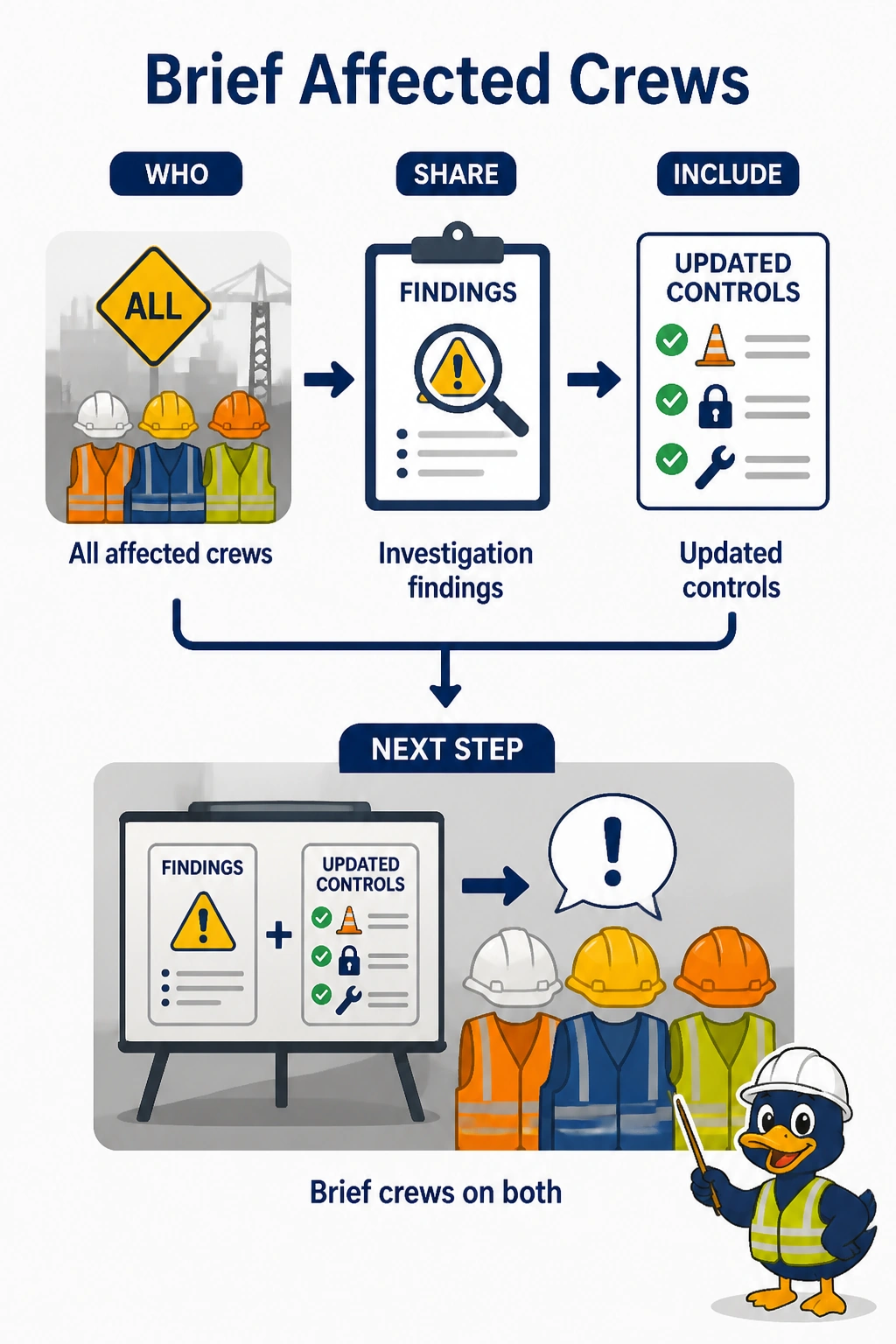
Closing the loop on a safety program improvement requires that the supervisor "Brief all affected crews on the findings and updated controls" so operators, riggers, and ground spotters understand why the load shifted and what new ramp-grading or load-securing steps are now mandatory. Choosing to "File the report in the main office binder until the annual audit" leaves other shifts and trades repeating the exact same hazardous ramp practices for months. Choosing to "Share the new procedure only with the operator involved" ignores relief operators, ground spotters, and other subcontractors who also use the haul ramp and stage materials. Choosing to "Post a generic safety slogan without explaining the incident" fails to communicate specific, actionable controls and does not build shared hazard awareness. As a program caveat, keep the briefing focused on system fixes and factual conditions rather than shaming the individual operator. For a concrete operational check, record attendance at the toolbox briefing and spot-check the ramp conditions during the next delivery cycle.
Prefer to study offline? Printable PDF study book + test engine ($7.50, unofficial). These questions stay free here.