
During a commercial interior buildout, a painting foreman assigns a worker to apply a solvent-based epoxy primer in a mechanical room, and the worker asks to wear a disposable N95 filtering facepiece instead of a reusable elastomeric respirator for comfort. What should the foreman require?
Select an answer to reveal the explanation.
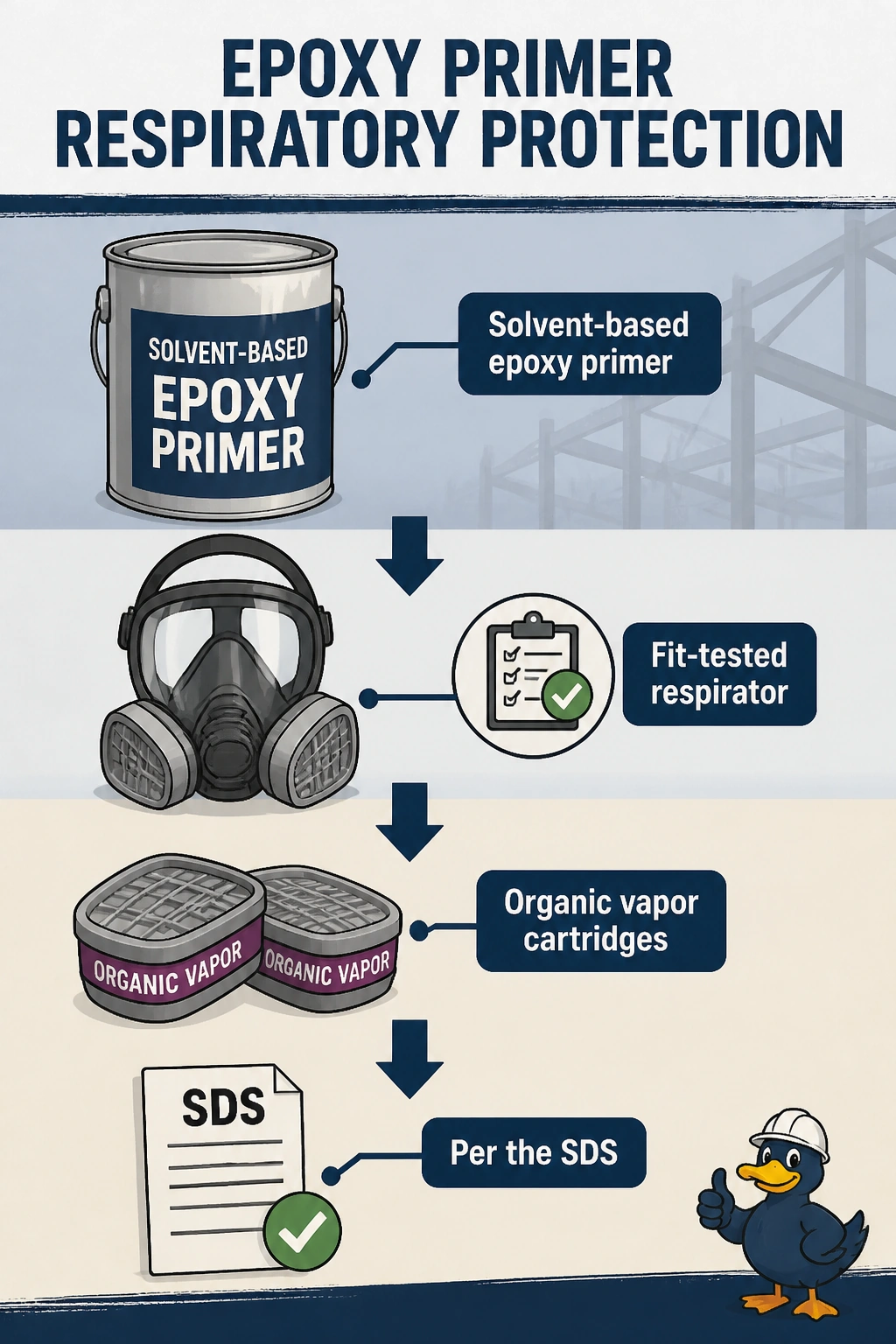
Short Explanation
Think of an N95 like a screen door against smoke—it catches solid particles, but chemical vapors pass right through. When your crew applies solvent-based coatings, comfort never overrides matching the respirator to the actual airborne hazard. The classic trap is assuming a higher-rated particulate filter or extra room fan makes a dust mask safe for vapors, so always verify chemical cartridge protection against the Safety Data Sheet.
Full Explanation
Under OSHA 29 CFR 1910.134, supervisors must select respiratory protection matched to the specific airborne contaminant. Solvent-based epoxy primers release organic vapors, which are gases rather than solid particulates. Choosing to Require a fit-tested respirator equipped with organic vapor cartridges per the SDS works because chemical sorbent cartridges capture organic vapors before they reach the breathing zone, provided the worker is medically cleared and fit-tested for that facepiece. Choosing to Allow the N95 respirator as long as portable exhaust fans keep the room ventilated fails because an N95 filters only particulates and provides no protection against organic vapors, even with dilution fans running. Choosing to Issue a P100 particulate filtering facepiece with an exhalation valve for better airflow fails for the same reason: P100 media traps fine particulates, not chemical vapors. Choosing to Permit the N95 respirator after the worker reviews the voluntary-use Appendix D handout also fails because Appendix D applies only to optional use below exposure limits, not required solvent protection. As a caveat, organic vapor cartridges have a finite capacity and require a documented change-out schedule rather than relying on odor. Before work begins, check the Safety Data Sheet respiratory section, inspect the cartridges, and verify the worker's current fit-test record.
Prefer to study offline? Printable PDF study book + test engine ($7.50, unofficial). These questions stay free here.