
A plumber strains a wrist tightening overhead pipe hangers on Tuesday, visits an urgent care clinic that afternoon, and receives a prescription-strength anti-inflammatory medication with no work restrictions. What must the site supervisor ensure for OSHA recordkeeping?
Select an answer to reveal the explanation.
Short Explanation
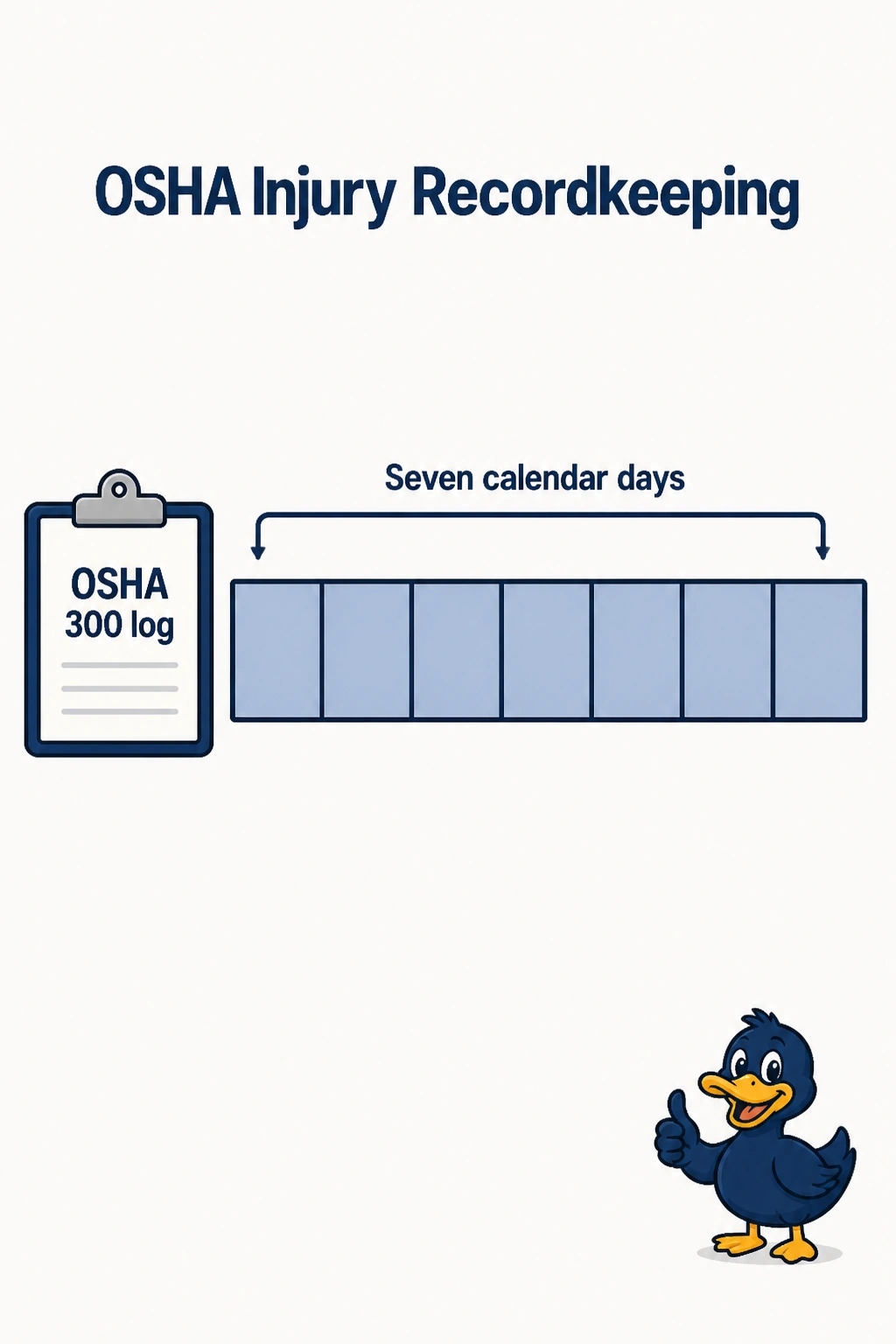
You should log the injury within seven calendar days of learning about it: a prescription-strength medication counts as medical treatment beyond first aid, even when you return to full duty. The key trigger is the prescription, not missed work or the annual summary deadline.
Full Explanation
Under 29 CFR 1904.7 and 29 CFR 1904.29, a prescription medication—even a single dose—counts as medical treatment beyond first aid, so the employer must record the injury on the OSHA 300 log within seven calendar days of learning about the case. Prompt entry keeps injury tracking accurate while details are fresh. Waiting until the annual summary posting in February violates the seven-calendar-day deadline and delays hazard-trend visibility. Omitting the case because the plumber returned to full duty confuses days-away or restricted-work criteria with medical-treatment criteria, which independently trigger recordability. Treating the prescription as first aid unless the worker misses a shift is incorrect: only non-prescription medications used at non-prescription strength qualify as first aid under 29 CFR 1904.7. As an exam caveat, verify whether the employer is partially exempt from routine recordkeeping because of its size or industry before finalizing logs, though most construction firms with more than ten employees must keep them. As a practical check, confirm the clinic discharge paperwork, enter the case on the OSHA 300 log and 301 report within seven days, and review ergonomic tool options for overhead wrenching.
Prefer to study offline? Printable PDF study book + test engine ($7.50, unofficial). These questions stay free here.