
On a retail renovation site, a general contractor's site supervisor observes a subcontractor's apprentice working near an energized, uncovered 480-volt junction box, and the subcontractor's lead refuses to de-energize it due to a concrete pour deadline. What should the site supervisor do?
Select an answer to reveal the explanation.
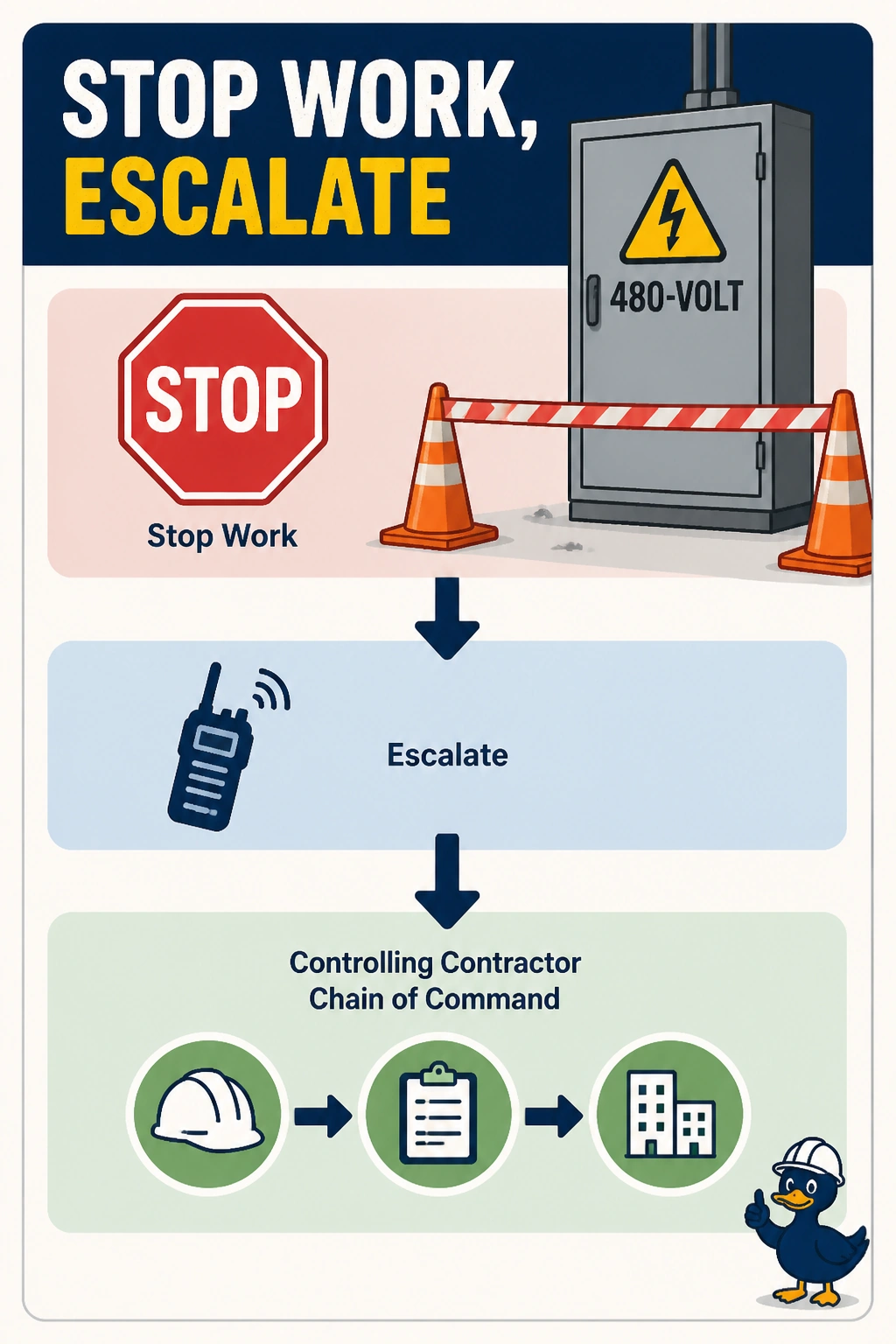
Short Explanation
When a subcontractor's deadline collides with a live 480-volt hazard, your authority on the floor has to hold the line. You must stop work in the affected zone and escalate through the controlling contractor chain of command until the circuit is made safe. The trap is letting another company's schedule pressure talk you into watching an imminent shock hazard unfold.
Full Explanation
Under multi-employer jobsite coordination and site safety program rules, a controlling supervisor cannot permit exposed workers to remain near an imminent electrical hazard. Choosing to Stop work in the affected zone and escalate through the controlling contractor chain of command removes the apprentice from danger immediately and engages project leadership to enforce compliance with the subcontractor's management. Selecting to Allow the apprentice to finish quickly while standing nearby as an observer leaves the worker exposed to arc-flash and electrocution hazards without engineering controls. Choosing to Wait until the end-of-shift progress meeting to log the dispute in writing delays intervention until after an injury may have already occurred. Choosing to Order the apprentice directly to cut the feeder cable with insulated pliers creates a severe electrocution and arc-blast risk and bypasses proper lockout/tagout verification. As a caveat, stopping work applies only to the hazardous zone while the rest of the site continues safely unless broader hazards exist. For an operational check, barricade the room, notify the project superintendent and electrical foreman, and verify zero-energy lockout before lifting the stop-work hold.
Prefer to study offline? Printable PDF study book + test engine ($7.50, unofficial). These questions stay free here.