
A site supervisor notices the project's monthly report tracks only OSHA-recordable injury rates, so crews hear nothing about safety performance until someone gets hurt. How should the supervisor improve safety tracking?
Select an answer to reveal the explanation.
Short Explanation
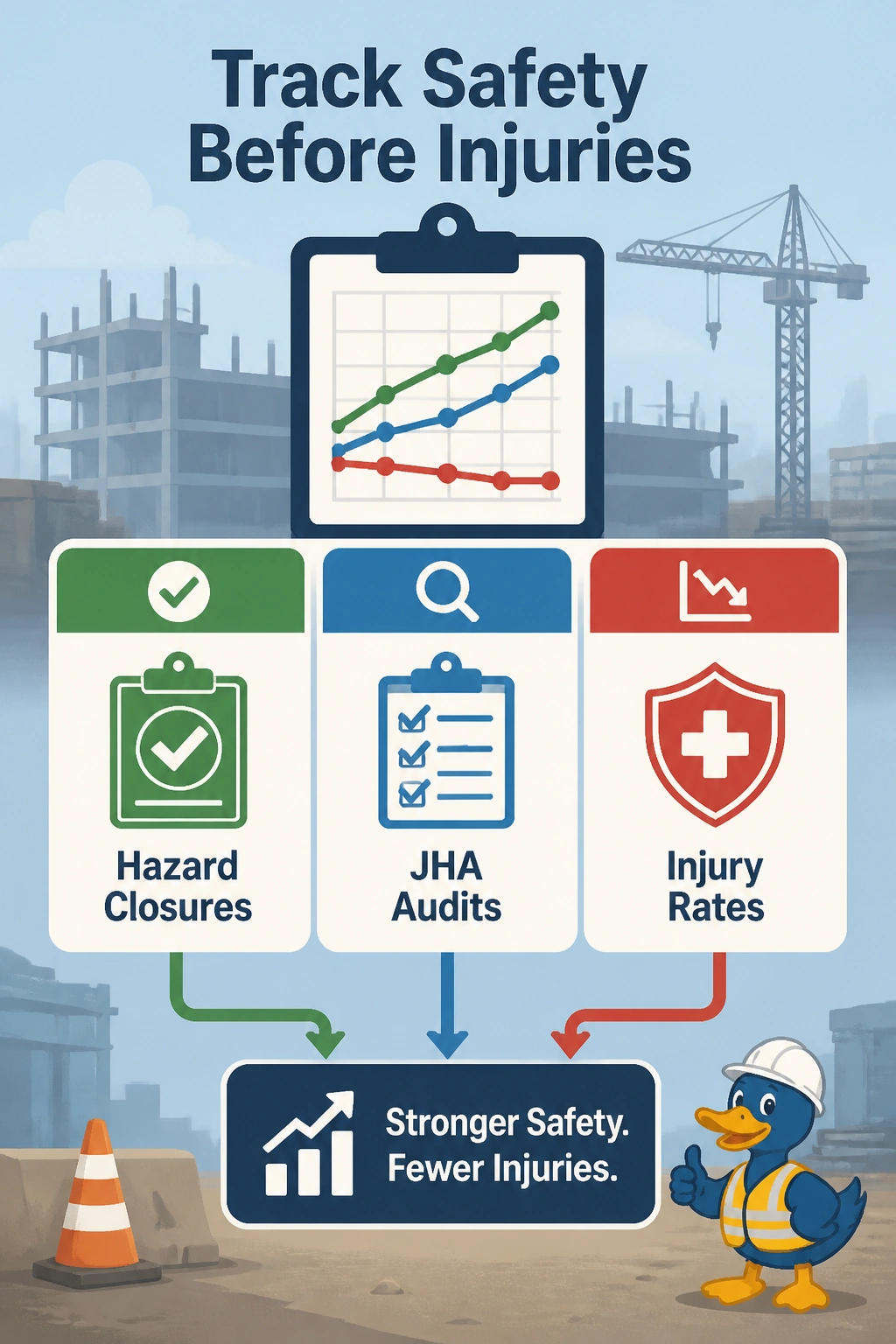
Relying only on injury rates is like driving by looking only in the rearview mirror. You want leading indicators—like hazard closures, training completion, and JHA audits—to show where your program is working before an injury occurs. The trap is thinking a zero-injury month proves no hazards are building up.
Full Explanation
Effective safety program implementation pairs lagging outcomes with proactive measures, so the supervisor should Track leading indicators like hazard closures and JHA audits alongside injury rates. Leading indicators measure daily preventive actions—such as near-miss reporting, pre-task briefings, and corrective-action turnaround—before an incident happens. Choosing to Stop recording minor first-aid incidents so the monthly injury rate stays at zero suppresses early warning signs and distorts site safety data. Opting to Compare only year-end workers' compensation premiums across all subcontractors relies on a slow, backward-looking financial metric that cannot guide daily field supervision. Deciding to Post the lagging injury rate in larger font at the gate without adding other metrics still gives crews zero feedback on proactive behaviors or open hazards. Even with strong leading metrics, supervisors must still maintain accurate injury and illness logs. As an operational check, review weekly hazard-correction completion rates and JHA quality scores with foremen during the Monday coordination meeting.
Prefer to study offline? Printable PDF study book + test engine ($7.50, unofficial). These questions stay free here.