
A new electrical foreman is drafting a Job Hazard Analysis (JHA) before a crew pulls medium-voltage feeder cable into an underground duct bank and asks what makes the JHA effective at the crew huddle. How should the JHA be structured?
Select an answer to reveal the explanation.
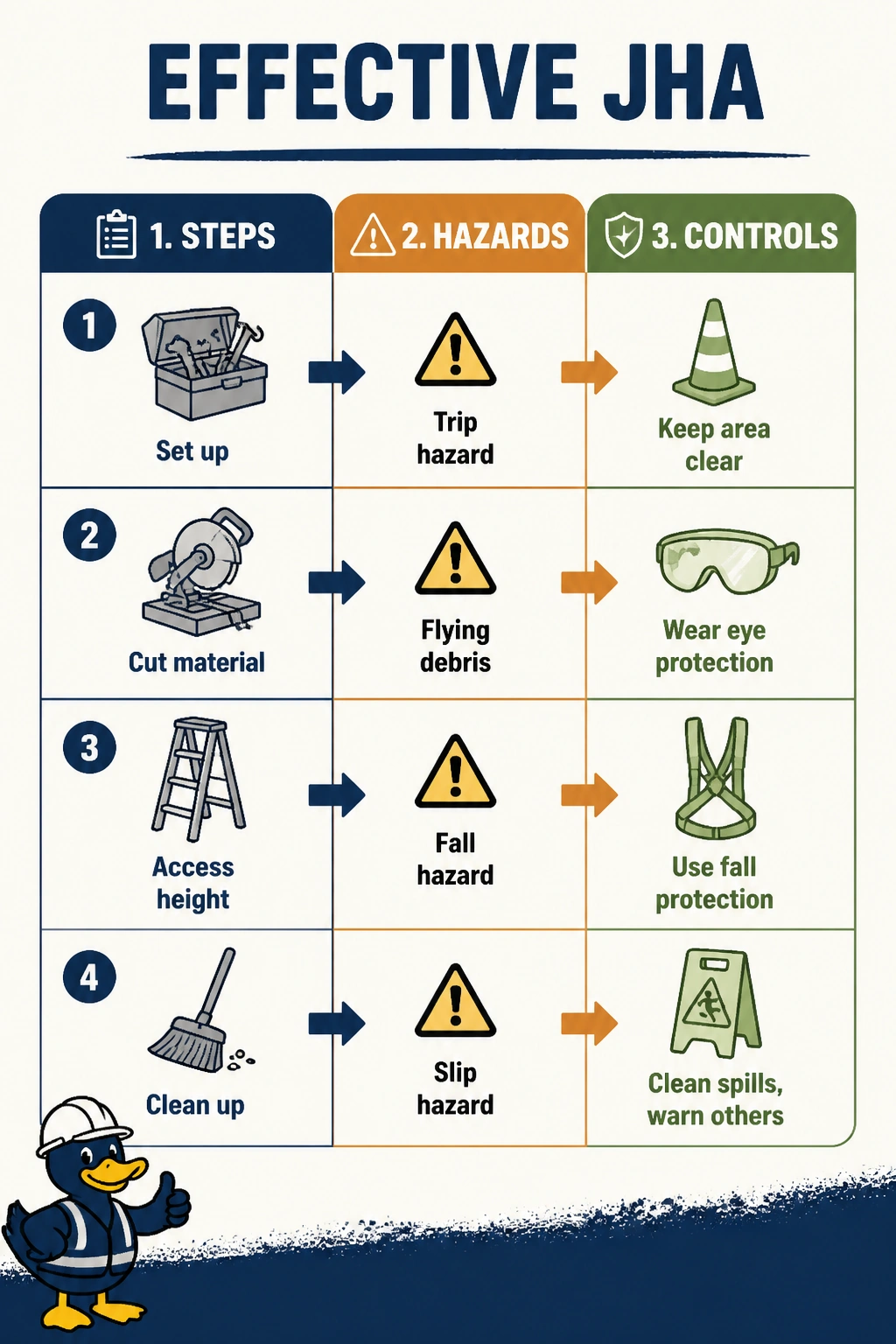
Short Explanation
Handing a crew a generic policy sheet before a high-voltage pull is like giving a pilot a brochure instead of a pre-flight checklist. The trap is treating paperwork as compliance when you need a step-by-step breakdown that ties each hazard to a control.
Full Explanation
An effective JHA connects how the work is performed to the exact protections required, so the foreman should "Break the task into sequential steps, list the hazards for each step, and assign specific controls" before the pull starts. Mapping each step—from manhole atmospheric testing and rigging tugger sheaves to feeder pulling—ensures crew members know which hazard appears when and how to control it. Choosing to "Copy a generic company safety policy statement onto a sign-in sheet for the crew to initial" provides no task-specific guidance for duct-bank pulling hazards. Choosing to "List only the personal protective equipment required without describing the task steps" skips engineering and procedural controls such as tugger anchorage and communication signals. Choosing to "Record only past OSHA citations from other projects without reviewing the duct-bank steps" ignores the actual conditions and sequence of today's pull. One caveat is that a JHA is a living document and must be revised with the crew whenever field conditions, equipment, or steps change. Walk the duct-bank alignment with the crew before starting the pull to verify every listed control is in place.
Prefer to study offline? Printable PDF study book + test engine ($7.50, unofficial). These questions stay free here.