
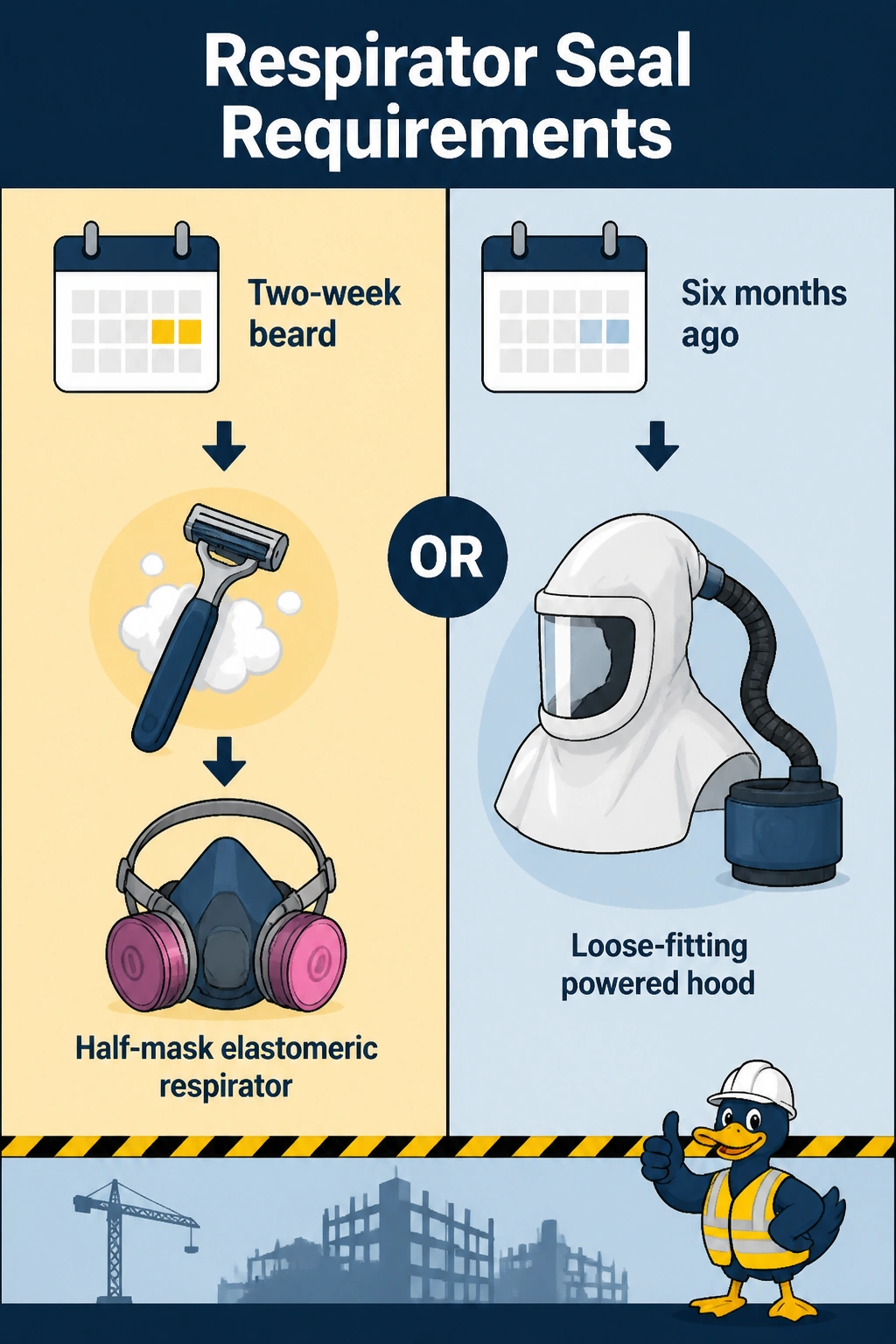
A concrete finisher arrives for silica grinding work wearing a half-mask elastomeric respirator over a full two-week beard, stating they passed a fit test six months ago while clean-shaven. What must the foreman require?
Select an answer to reveal the explanation.
Short Explanation
A past fit test means nothing if a beard is propping the mask off your face today like a screen door in a dust storm. The trap is thinking tighter straps or fresh filters can overcome facial hair, when you must clear the seal or switch to a loose-fitting hood.
Full Explanation
Under 29 CFR 1910.134, tight-fitting respirators must not be worn by employees who have facial hair that comes between the sealing surface of the facepiece and the face. Even short beard growth creates microscopic channels that pull unfiltered silica dust around the gasket during inhalation. Selecting Require shaving the seal area or assign a loose-fitting powered hood directly complies with the standard by either restoring a clean skin-to-facepiece seal or moving to a loose-fitting powered air-purifying respirator that does not rely on a face seal. Choosing Tighten the respirator head straps two notches to compress the beard cannot seal gaps around coarse hair and distorts the facepiece. Choosing Perform a quick positive-pressure user seal check and allow grinding violates the facial-hair prohibition and allows hazardous leakage under normal breathing. Choosing Issue a fresh pair of P100 filter cartridges for the existing facepiece addresses filter efficiency, not perimeter seal leakage. One caveat is that if the worker switches to a loose-fitting hood, they still need medical clearance and training on that specific respirator. As an operational check, inspect respirator seals during the morning huddle before silica grinding begins.
Prefer to study offline? Printable PDF study book + test engine ($7.50, unofficial). These questions stay free here.