
During a busy commercial buildout, a site supervisor conducts thorough daily fall-protection audits on a newly hired framing subcontractor but skips inspecting an adjacent veteran steel crew because they have a strong safety record. Which ethical and leadership principle is the supervisor failing to uphold?
Select an answer to reveal the explanation.
Short Explanation
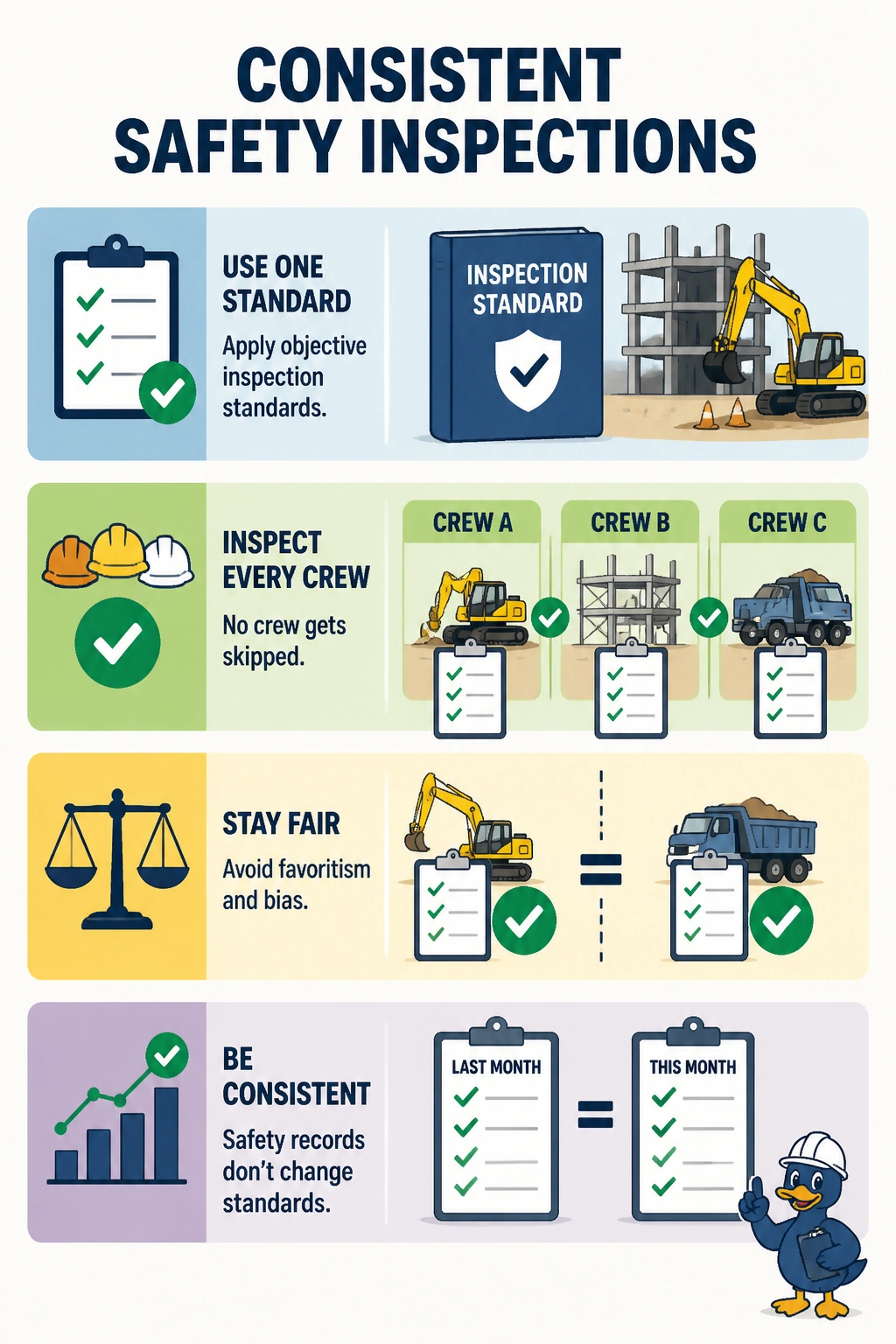
Even the most experienced crew can slip into shortcuts when production heats up. When you run site inspections, guard against the trap of letting a strong past record excuse a veteran team from the same objective checks you give everyone else.
Full Explanation
Effective safety leadership and professional ethics require Applying objective safety inspection standards consistently without favoritism or bias. Confirmation bias can trick a supervisor into assuming a familiar, high-performing crew never cuts corners, leaving unrecognized hazards like unhooked lanyards or missing perimeter cables unchecked. Choosing to focus on Delegating all safety inspection duties to the project superintendent avoids personal accountability rather than addressing the unequal treatment of crews. Thinking in terms of Allowing veteran crews to set their own site fall-protection rules undermines uniform site standards and creates a two-tier safety culture where seniority overrides hazard control. Waiting and Scheduling safety audits only after an injury or near-miss occurs is reactive management that fails to prevent foreseeable falls across any trade. Caveat: consistent enforcement does not mean treating every coaching conversation identically, but every crew must be inspected against the exact same hazard criteria. Operational check: use a standardized inspection checklist across every active work zone on your route, rotate which crew you visit first each day, and document findings uniformly regardless of crew tenure.
Prefer to study offline? Printable PDF study book + test engine ($7.50, unofficial). These questions stay free here.