
After a general contractor's crane clips a scaffold frame, a project manager asks the site safety supervisor to rewrite the incident report so it blames the scaffolding subcontractor's layout instead of the crane crew's missing spotter. What is the supervisor's most ethical action?
Select an answer to reveal the explanation.
Short Explanation
An incident report is a compass for preventing the next injury, not a shield for the company's checkbook. If you let schedule or contract pressure bend the facts, the trap is fixing the paperwork while leaving the missing spotter hazard wide open for tomorrow's pick.
Full Explanation
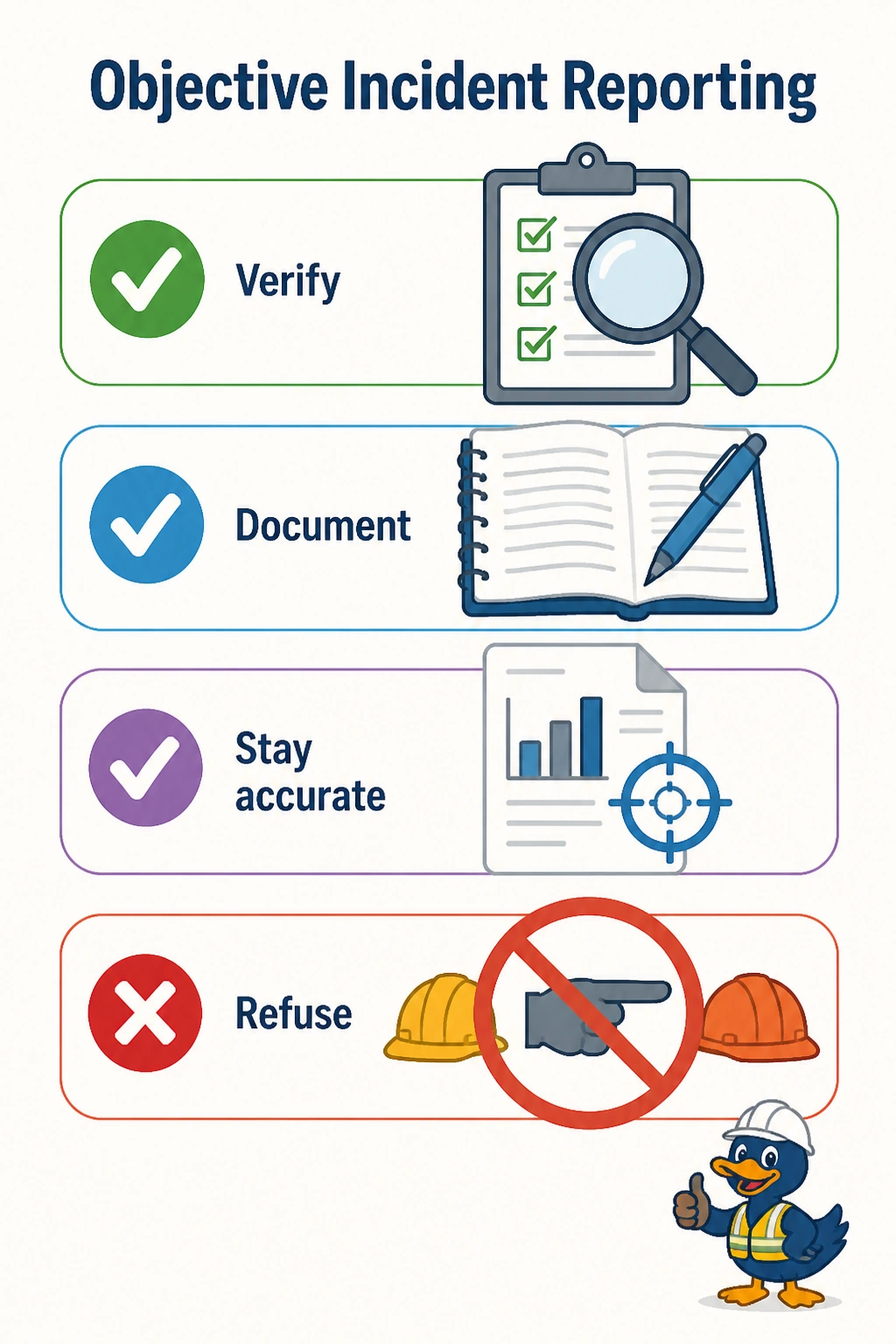
Under the BCSP Code of Ethics, safety professionals must uphold integrity, honesty, and objectivity in all records and investigations, which means you must document the verified facts objectively and refuse to shift blame onto another party. Accurate root-cause documentation ensures corrective actions—such as enforcing crane spotter protocols—actually address what failed rather than hiding organizational gaps. Choosing to edit the report as requested so the general contractor avoids a client contract penalty falsifies an official safety record and leaves the crane hazard uncorrected. Choosing to delete the spotter section and submit a brief summary without naming any root causes conceals a critical contributing factor and undermines future hazard prevention. Deciding to ask the scaffolding foreman to co-sign a shared-fault statement to settle the dispute trades factual truth for political convenience. As a caveat, objective reporting does not mean ignoring genuine multi-employer factors if evidence supports them, but every finding must rest on verified facts. For an operational check, review the final report against witness statements and site photos, archive the evidence, and escalate the manager's pressure through corporate safety leadership if needed.
Prefer to study offline? Printable PDF study book + test engine ($7.50, unofficial). These questions stay free here.