
After an ironworker suffers a wrist fracture, a project manager realizes no Job Hazard Analysis was signed that morning and asks the site supervisor to backdate a blank form to look compliant. What is the supervisor's most ethical action?
Select an answer to reveal the explanation.
Short Explanation
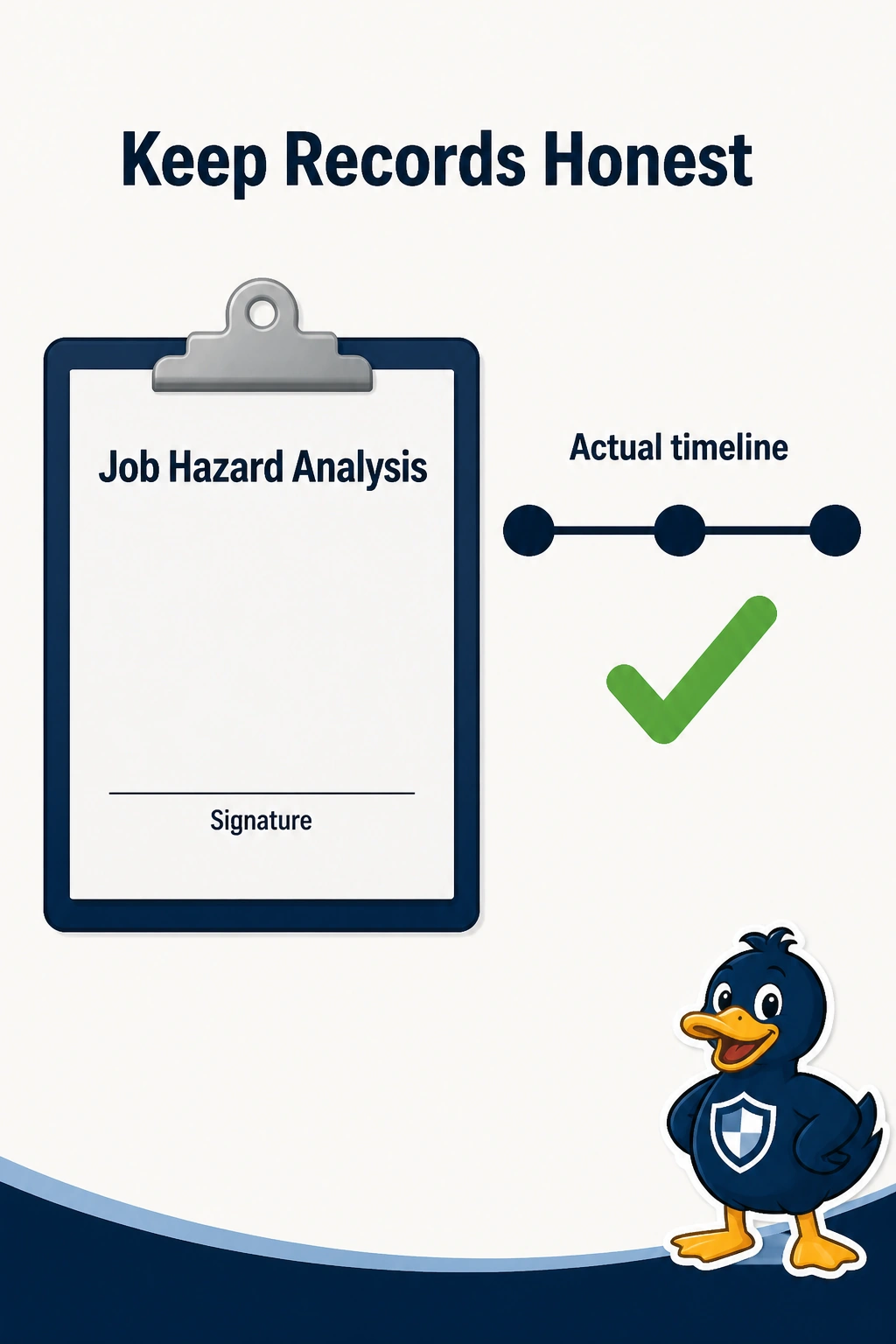
When an injury hits, pressure to clean up missing paperwork can tempt you into a quiet shortcut that ruins your credibility. The trap is thinking a harmless-looking date tweak protects the project when it actually constitutes record falsification. Refuse to backdate the form and keep the investigation record completely honest.
Full Explanation
Under the BCSP Code of Ethics, safety professionals must uphold honesty, integrity, and objectivity, and must never issue false or misleading safety records. When you Refuse to backdate the form and document the actual timeline honestly, you preserve the integrity of the incident investigation and help the organization fix the real breakdown in pre-task planning. Choosing to Sign the form with yesterday's date so the crew's paperwork appears continuous falsifies a safety record, undermines worker trust, and creates serious legal and ethical liability. Choosing to Ask the injured worker to sign a fresh JHA at the clinic before returning pressures a hurt employee into creating a misleading compliance record after the fact. Choosing to Fill out the form with the current date and leave the signature column blank still fabricates a pre-task review that never occurred before the injury. As a caveat, documenting the missing JHA honestly does not mean blaming the crew; it means identifying why pre-task planning failed that morning. For an operational check, record the true date and time of all post-incident forms and immediately conduct a genuine JHA with the crew before resuming work.
Prefer to study offline? Printable PDF study book + test engine ($7.50, unofficial). These questions stay free here.